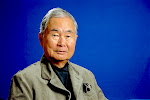
My Mensa talk began with:
HOW TO GAIN FORTUNE AND/OR
FAME IN PARADISE
Patrick Takahashi
Ala Moana Hotel Carnation Room
October 2017
I indicated that Mensans could upgrade their status in society:
1. Intertel - the top 1 percent
of IQs
2. Top One Percent Society
3. Infinity International
Society - the top 0.37
percent
4. Cerebrals Society - the top 0.3 percent
5. CIVIQ Society - the top 0.13 percent
6. Triple Nine Society - the top 0.1 percent
7. Prometheus Society - the top 0.0003 percent
8. Epimetheus Society - the top .0003
percent
9. Mega Society - the top .0001 percent
10. Giga Society - the top .0000001 percent
I tried to explain that the upcoming ideas I would be presenting would be great, even though I was not yet rich nor famous. And I went into why this was not so.
I was first uncertain how to lay out my "great ideas," It was important to appreciate how ideas come to be, and the best way to explain was tell them my life story. I was born 77 years ago at Queen's Hospital in Honolulu and grew up in Kakaako:
Kakaako has experienced two totally different kinds of renaissance. First, are those tall buildings today. Second is the
outdoor art gallery. None of this was there in my early days. I went to Pohukaina Elementary School:

This school was moved to Kaimuki. However, the tallest building in the state was supposed to have been built on these grounds. This extravagance was somewhat reduced, but the first vertical school in Hawaii is now to be a key part of the structure, perhaps to be re-called Pohukaina, for the fronting street is Pohukaina:
Then I went on to Central Intermediate School, now called Central Middle School. I related how I walked barefeet to school until I graduated from the 9th grade. Amazing how I don't ever remember stepping on a piece of glass or anything.
But then, came McKinley High School, with shoes:
I was an average student and spent with my gang an hour after school a lot as punishment for showing up tardy. However, my family moved to Kalihi in my sophomore year, and my life changed. What were the odds, but my next stop was Stanford University:


I happened to mention that in 1958 all my friends on campus were Caucasian, and in the previous Mensa talks I went to, there was a similar percentage of whites. I might have irritated a few with this statement, but my point was that this ethnic dominance actually helped me during my entire professional career, for getting along with people and personal relationships are important keys to success. Perhaps this is what I gained most from Stanford, plus confidence. In every environment I later worked--University of Hawaii, Lawrence Livermore National Laboratory, NASA Ames Research Center and the U.S. Senate--the leadership was also all white. Social comfort is an important part of professional and personal success. Ironically, three years ago I moved to to 15 Cragside, a seniors' community, and just like Kakaako, I would say 90% living here are Oriental.

Anyway, I went on to say that when I graduated in 1962, President John Kennedy had just created the Peace Corps, and many of my close friends joined. They made $99/month to live in regions of the world that just did not appeal to me.
But I had to do something humanitarian, and the Hawaiian sugar industry was desperate to hire chemical engineers, so I went back to Hawaii, all the way down to Naalehu on the Big Island, for $500/month:

A nurse named Pearl was working in the next town of Pahala. The manager of Hutchison Sugar Company (
where I worked), Bill Baldwin, introduced me to her. We met in September and got married in December. A decade after we left Kau, Bill and I shared the same office for the U.S. Senate in DC.
We eventually were shipped off to Kilauea, Kauai, where our trainee cottage backyard was the Slippery Slide, where
South Pacific was filmed. This is where Bloody Mary sang
Happy Talk to France Nuyen and John Kerr. Pearl and France looked remarkably alike and were born in the same year. After 47 years of marriage, Pearl passed away eight years ago.
One of my amazing accomplishments in Kilauea was great idea #1, to grow giant sunflowers. Here is Pearl with one:

I baked these kernels in place, added some salt, and served them at receptions. How do you grow them? Contact me.
While on Kauai, the plantation newsletter indicated I was a trainee in their factory. One day a very old man came up to me and said he knew my grandfather, and told me that he had built a hydroelectric power plant at Wainiha. I later found out that it was in 1900 when he arrived on this island from "America", got married, bore my father, and just three months before the facility was completed, fell at the site and died. Later, in my discussion about future books, I mentioned my roots search on
The Search for Kenjiro's (my name is Kenji, so I was named after him) Grandmother, who was rumored to be a female samurai. I also recently visited the power plant and found that more than a century later it was, with mostly the same equipment, still producing 3 MW.
C. Brewer then offered to send me to graduate school, paying my salary during my studies, but I had to go to Louisiana State University because they had the only sugar school in the world. These were the days of Pete Maravich and Tiger Football.
I did my dissertation using a tunable laser for a micro reactor to catalyze the growth and/or sterilization of
E. coli:


I then came home to the University of Hawaii, where I taught courses: environmental engineering, renewable energy, computer programming and technology/society. Early in my career I became associate dean of engineering and academic advisor to the chancellor.

My first major project was as the reservoir engineer for the Hawaii Geothermal Project. We successfully discovered the hottest geothermal well at that time, and produced 3 megawatts. The effluents were an eyesore, which gave me an idea to form Pacific Geo-Spa, to build Hawaii onsens, GI (
great idea) #2 for ecotourism. We got funding and the Japanese economic bubble burst. But this remains a huge opportunity for someone. And I know where geo-fluids can be found, even on Maui and Oahu.


In 1976 I went to NASA Ames Research Center on a project to detect extrasolar planets. At that time, no one had yet found a planet outside our solar system. The group designed an interferometer to indirectly find exoplanets. I was allowed to be creative and, with Nobel Prize winner Charles Townes, came up with a concept to not only directly discover planets, but also determine the atmospheric composition. This was GI#4.
I next talked about three books: one the product of one of my Technology and Society classes, a second on solar/wind energy and a third of ocean thermal energy conversion, the latter two with co-authors:

Having a laser background, I was then able to spend two summers at Lawrence Livermore National Laboratory to work on laser fusion, my pick at that time as the future of energy. If stars utilize this process, using hydrogen, the most abundant element in the Universe, as the fuel, then these must be clues about what is to come. However, I gave up, thinking that commercialization was one or two generations away. Forty years later today, fusion commercial commercialization is still forty years away, at best.
My next stop was with U.S. Senator Spark Matsunaga in DC, just when the second energy crisis was in full swing. I was able to become involved with legislation on seabed resources, OTEC, wind energy and hydrogen. This three-year period was perhaps the pivotal experience providing the foundation for many of my future efforts and ideas.

Returning to the Manoa Campus in 1982, I helped establish the Pacific International Center for High Technology Research (
PICHTR), and attained the directorship of the Hawaii Natural Energy Institute. We were able create two $25 million projects for PICHTR.

The 210 kW Open Cycle OTEC experiment at the Natural Energy Laboratory of Hawaii Authority was the most successful experiment of this concept till today. We produced electricity and freshwater.

The second was the conversion of bagasse into biomethanol at the HC&S sugar mill on Maui. While the project itself did not produce any methanol, the key points were:
•A
fuel cell car will take it at least twice the distance of any battery vehicle.
•Hydrogen
will for a long time to come be too expensive.
•Methanol
is around five times cheaper than hydrogen.
•Methanol
is the only liquid fuel capable of being directly consumed by a fuel cell.
•There
is no hydrogen infrastructure.
•Methanol
can easily use a gasoline supply system.
•WHAT
IS MISSING IS THE DIRECT METHANOL FUEL CELL!
Thus, GI#4 is the
direct methanol fuel cell for ground transport. If anyone wants to gain fame, and, perhaps, too, fortune, this is the technology to advance.
I then moved on to the Natural Energy Laboratory of Hawaii Authority (
NELHA), here to the left showing microalgal raceways. The attractive feature of microorganisms is that they are up to ten times more efficient in converting sunlight into biomass compared to land crops.

Thus, GI#5 was to find a way to make a liquid fuel from microorganisms. I actually had a raceway project at NELHA a third of a century ago. However, I indicated that more recently I headed a U.S. Department of Energy study to project the future cost of biofuels from algae. We decided not to publish, for petroleum had to sell for at least $125/barrel to make this option competitive, and more likely $200/barrel. It was too depressing. Here is a quick
HuffPo summary.

Thus, a more promising GI#5 was to consider nutraceuticals and biopharmaceuticals, high value products, instead of any biofuel. The Hawaii Natural Energy Institute was selected by the National Science Foundation to become the national
Marine Byproducts Engineering Research Center, a grant of $5 million/year for 5 years.
I next moved on to the
Blue Revolution, for
Hawaii's Exclusive Economic Zone is larger than the state of Texas with its EEZ:
•The
Green Revolution only produced grains on land to feed the world.
•The
Blue Revolution will develop a cornucopia of sustainable products in the ocean
to also remediate global warming while providing future habitats (cities,
Disney at Seat, etc.)
in harmony with the natural environment.
•At
sea depths of 3000 feet and below, seawater is
•at 4
F
•pathogen
free
•high
in nutrients at the exact Redfield ratio to serve as “free” fertilzer if
brought into the photic zone (note the green line--1000 meters is the depth from which the deep ocean water is extracted)
What will be the sustainable products of the Blue Revolution?
•Electricity
 •Freshwater
•Marine
Biomass Plantations (ocean farming?)
•Hydrogen
•Biofuels
•Biopharmaceuticals
•Next
Generation Fisheries
•Global
Warming Remediation
•Hurricane
Prevention
Then, in time, combined into ocean cities.
Enterprise can perhaps begin with GI#6, the Ultimate Ocean Ranch:
•All
farm products today require an input of energy.
•An
ocean ranch will be sustainable through engineering control of deep ocean
fluids in the photic zone, using temperatures barriers (no
cages) and
closing the total growth cycle, with a final product feeding at low trophic
level.
•A
quarter century ago I actually incorporated Pacific Ocean Resources Corporation
to do this.
More specifically, what about the whale shark to replace cattle?
•Just
one example is a whale shark, which consumes mostly plankton
•A cow
produces mostly only one calf—a whale shark gives live birth to several
hundred.
•Each sea calf grows quickly.
Or, perhaps something less complicated like GI#7,
Rainbow Pearls International:
•George
Ariyoshi,
Paul Yuen and I formed a pearl culture company in 1990.
•We
hired Neil Sims to run the operation at NELHA.
•Pearls
were produced at half the time required in nature.
•Neil
now operates Kona Kampachi.
•A
team I formed developed a technique (confidential) to
produce colored pearls
•Burnt
orange if you live in Austin, Texas
•Chinese
Red, Kelly Green, etc.

It would be wonderful if funds can be found for the
Pacific International Ocean Station (
PIOS), proposed by Blue Revolution Hawaii. As governments and companies seem reluctant to proceed, development can be incremental, perhaps beginning with PIOS:
GI#8 was to find funding for PIOS. Cost? $1.5 billion. However, the International Space Station, which has not created even one company in outer space,
cost $150 billion and will
crash to Earth in 2025. As governments and companies are not inclined to come up with only 1% of that total--the $1.5 billion--the only hopeful source would be that mythical billionaire. Incidentally, future floating cities will be built near the equator, for no hurricane has ever crossed this line.

GI#9 was to design and build that
next generation hydrogen aircraft. Physically, hydrogen is the ideal fuel for aviation.
Rinaldo Brutoco has formed a company to build a faster dirigible. He wants to shuttle passengers between the West Coast and Hawaii. Hydrogen would be produced on those OTEC platforms, and directly loaded into this aircraft to deliver to future markets.
GI#10 is a concept to help build a
mass transit system and thereby become a world headquarters:
•In
1995 I served on a Kansai advisory group to plan for a mass transit system
around Osaka Bay.
•They
liked my idea about having international consortia build the stations featuring
different countries.
•The
result would be something like Epcot Center
•Unfortunately,
the Great Hanshin Earthquake devasted the area.
•So
I proposed this concept to the Honolulu Rail Transit Authority.
•If
ten international consortia can be given planning rights around their station,
they would finance their construction.
•China
might bring a couple of pandas.
•The
rail system would be used at nights, for the best restaurants and hotels would
be located at each station.
•The
plan was to seek hosting the 2020 World Expo.
•Maybe
this concept can be re-visited for 2030 to catalyze expansion to Wahiawa,
Hawaii Kai and Kailua/Kaneohe. Certainly, this concept should have applicability anywhere.
I then showed the three Simple Solution books I more recently published:


Explaining the cover page, it began with my family mon, which symbolizes the family name. A connecting bridge would be ideal to take the high road to cooperation, and Takahashi means high bridge. I photoshopped this crest and ended up with the rainbow pattern.
I essentially indicated that I could use some help in writing some future books, beginning with GI#11,
The Search for Kenjiro's Grandmother, explained earlier.
#12 would be a novel based on Chapter 6 of
SIMPLE SOLUTIONS FOR PLANET EARTH.
SIX HOURS TO SEATTLE would be based on the Hilo side of the Big Island falling into the ocean, generating a mega-tsunami. A flight taking off from Hilo or Kona for Seattle just before this cataclysm occurs will travel at the same speed as the jet.
GI#13 is called
THE VENUS SYNDROME. This would probably be a docu-novel as suggested in
one of my Huffington Post articles. It is not carbon dioxide that is the extinction problem. There is more energy in the methane at the bottom of the ocean kept in place under metastable conditions, than all the known coal, oil and natural gas on land. Methane is 25 times worse than carbon dioxide for global warming, and only a slight temperature increase could cataclysmically catalyze flow of methane to the sea surface.
GI#14 would be called
THREE STRIKES AND YOU'RE DEAD. While socially impossible, of course, this is one way to check crime on a global scale, and maybe a future PUS (
President of the United States) could well be an advocate. Can't be any worse than the current leader of the free world. The U.S., incidentally, has the most people in jail/capita...and our taxpayer's money is being used to keep them fed and protected in an air-conditioned environment.
GI#15 is my
10% Solution for World Peace, which I introduced in my very first
Huffington Post article more than seven years ago. President Obama, and all the leaders of China ignored me, but I
recently suggested how Kim Jung-un can one-up me:
First he says my missiles were always an attempt at going to Mars. He argues, though, that his country would stop testing them and disarm all their nuclear bombs if ALL other nations do so too.
He would deserve a Nobel Peace Prize if this ploy works.

GI#16 is my E-book on
Pearl's Ashes. Not sure exactly how anyone can take advantage of this, but I do plan one more around the world trip to finalize this effort. Perhaps there is an enterprising writer who might want to accompany me to publish something. The first ash ceremony was held at Rainbow Falls, Hilo, birthplace of Pearl.
#17 has to do with my experience that razor blades can essentially be used for a very long time. This was one of the two modern miracles I mentioned in
SIMPLE SOLUTIONS FOR HUMANITY. Read
about them here. To summarize, I think marketing and conventional practice convince people to change blades too quickly. I think this is a profit opportunity for someone.
Infinity Razor can be bought on Amazon, but they are everywhere deprecated. I think Schick and Gillette get third parties to write stink about this product.
The second modern miracle has to do with placing a
soap bar in a bag, using a safety pin to secure it at the bottom your bed below the sheets. It seems to prevent leg cramps. Why? I don't think there is anything physical. The human mind is complexed, and there is some psychosomatic mechanism that seems to work. Even
Snopes can't figure out why. How do you make a profit with this idea? Up to you to come up with something.
The Dow Jones Industrial Average again broke its all-time high, up 42 to 22,873. Apparently, all those geopolitical flares mean nothing, compared to high company earnings growth. Incidentally, tomorrow I'll be in Japan, and their Nikkei closed up 58 to 20,881, the highest close since 5 December 1996.
-
By the way, Tropical Storm Ophelia has lingered about for some time in the Atlantic, and strangely enough, will soon attain hurricane status and HEAD FOR EUROPE!
-


 Flight schedules could then be changed without penalty, so I did show up in Denver and walked into an already darkened room of the wind experts, at which I made a short comment about seeking their assistance for a future Hawaii wind power program. An hour later I was elected chairman of the Wind Energy Division of the American Solar Energy Society. How did this happen? I learned an important lesson, that kept repeating in different ways throughout my career. What was that lesson? Not sure, but being confident while asking for help might be a clue.