Total Pageviews

Wednesday, August 31, 2022

ARE MORE TREES THE SOLUTION TO GLOBAL WARMING?

 First, a few pandemic graphics from the New York Times this morning:


Also:


The federal government is likely to approve the next generation of booster shots— designed to be even more effective against the latest variants — in coming days. Within a week or two, these new shots will probably be available to Americans 12 and older.

Tomorrow I'll focus on, next to death, the most concerning COVID-19 worry:  LONG-HAUL.


Today is Wednesday science day, so I start with a Time magazine recently published article, Trees Are the Secret Weapon of America's Historic Climate Bill:

  • Trees and forests are the key to natural carbon removal.
  • An average tree will capture 1200 pounds of carbon dioxide over its lifetime.
  • Together, trees and forests capture and store 17% of the USA's carbon dioxide.
  • The Nature Conservancy found potential to increase tree-based carbon capture across American by nearly half if we reforest 133 million acres of ecologically suitable land to grow more than 60 billion trees.
  • Trees will provide habitat for threatened and endangered species.
  • Tree canopies cool the area beneath them by more than 20 F in cities like Phoenix.

  • This latest congressional package provides:
    • $1.5 billion for urban trees.
    • $1.25 billion for private landowners to protest forestland and $3 billion to restore ecosystems and prevent forest fires.
    • $20 billion to help farmers and other landowners to increase carbon in soils.  The Farm Lobby scored again.

How great, right?  How can you argue against the above benefits?

Well, for a long time now I, for one, have wondered if planting more trees could actually be bad.  Read my postings explaining this contrary position:
You can read them for details, but here is a crystallization of those articles:
  • Methane...is from 20 to 62 times more dangerous than carbon dioxide in causing the Greenhouse Effect, depending on which reference you use and the parameters of consideration.  Begins at 100 times worse when first released into the atmosphere.
  • The worst mass extinction in history, killing off 95% of all marine species and 70% of terrestrial life, occurred 251 million years ago, according to Gregory Ryskin of Northwestern University. Methane from bacterial decay or from frozen methane hydrates, stimulated by a meteorite impact, earthquake or volcano, could have triggered a catastrophic eruption of methane gas.
  • A team from Germany, the Netherlands and Northern Ireland reported in 
    Nature in 2006 that ordinary plants produce significant amounts of methane, both in the growth cycle and the decay process. The latter was previously known, but trees being a contributor to global warming just by growing, thus contributing up to 30% of all the methane generated?
  • In any case, that 2006 "bombshell" indicated above was quietly suppressed by the Max Planck Society, possibly because an anti-tree message subverted the Kyoto Protocol strategy, and nothing much surfaced after that neutralizing declaration. 
  • The fact of the matter is that there are 
    green myths, and one of them is that trees consume carbon dioxide and emit oxygen, so they must be good for the environment.  The problem is that if methane is 20-62 times worse, per molecule, than carbon dioxide to cause the Greenhouse Effect, plus there are other detrimental products being produced--AND, WHATEVER CARBON DIOXIDE CAPTURED BY THE TREE IS IN TIME ALL RELEASED BACK TO THE ATMOSPHERE WHEN THEY DECAY--maybe we shouldn't plant trees to reduce global warming.

That bottom bullet is a point that environmentalists miss.  All biomass, like trees, eventually die.  And much of this is in an environment where, in the normal process of degradation, all the captured carbon dioxide is released back into the atmosphere, but worse, in a slightly moist environment, a fair percentage of the decay ends up as methane.  So here is the total picture:

  • Trees do take carbon dioxide from the atmosphere and generate oxygen.  That's good.  This what we all learned in school.
  • However, they eventually die, and return all this carbon dioxide into the air.  That's very bad.  Worse, instead of carbon dioxide, some of this emittance is methane, which is terrible.
  • Thus, what we gain is time, and only that.  And this can be from 50-100 years, so that's okay, for by then one hopes that technology will have overcome the problem.  But can we be sure?
  • Of course, as I have been underscoring, some of this returned carbon dioxide actually end up as methane, so on balance, over time, we actually increase the prospects for global warming by growing a tree.  I haven't seen one analysis of the ultimate balance.  Maybe I'm over worrying.
Mind you, I'm not the only one sending warning messages.  While the popular media, and most citizens, love trees, here is a recent article saying trees are not a cure-all.

So far,  offset protocols and markets have not really grappled with this updated scientific understanding of the risks that forests face from climate change. This tells us that climate policymakers and offset developers need to be very careful about how they count on  offsets to deliver benefits.

But this article never mentions methane, which makes the above even more a concern.  Perhaps I should just go away and let well-meaning experts do what they think is right.  That is the current pathway.  Most of what I have advocated, such as a Hydrogen Society and the Blue Revolution, will not reach any kind of prominence for maybe a century.  Such is my legacy and plight.


Ah, why end so depressingly.  Here, some elephant fun:


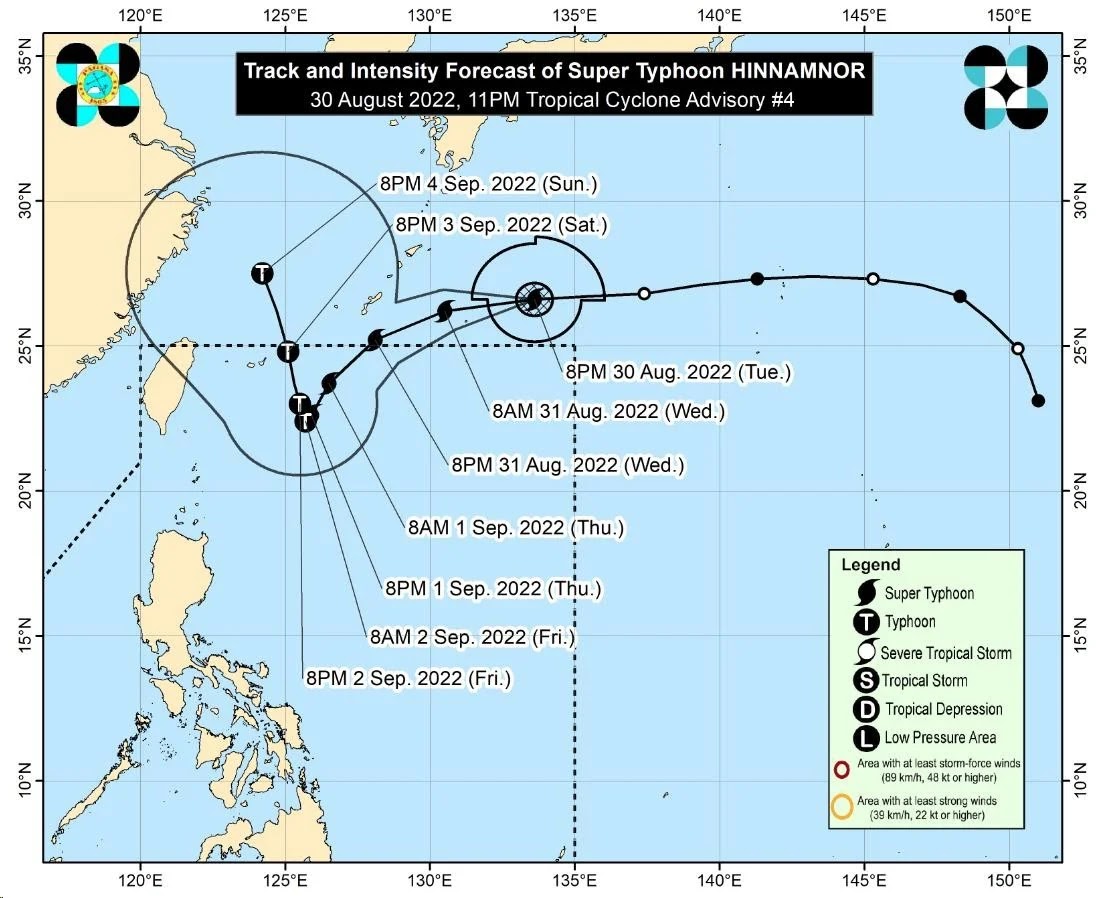
Super Typhoon Hinnamnor reached 160 MPH yesterday, but has dropped to 145 MPH today.  Still predicted to make a right turn into the East China Sea.
-

Tuesday, August 30, 2022

MY NEARLY HALF A CENTURY SEARCHING FOR EXTRATERRESTRIAL INTELLIGENCE


Today I reach back to three postings, the first a dozen years ago, 23 May 2010:

A HALF A CENTURY SEARCHING FOR ALIEN SIGNALS


Why this topic?  Perhaps some stimulation sparked by the James Webb Space Telescope, which has begun a search for extraterrestrial intelligence (SETI).  Just another in my primary quests seeking ultimate answers on topics like peace (The 10% Solution), energy (Starpower for Humanity) and Planet Earth (Geoengineering for Climate Change).  Yesterday set the stage for this future with The Three Grand Miracles.  

My professional career was dedicated to those above interest areas. For SETI, it all began with an assignment at NASA's Ames Research Center in 1976.  Answering the question of Are We Alone? to the potential of receiving The Encyclopedia Galactica from superior space civilizations fascinated my imagination.

In many ways that first paper on SETI by Philip Morrison and Giuseppe Cocconi in 1959 set the stage for what we have today.  My first step:


In 1974 I participated in a NASA activity called Earth 2020, and became close friends of the leaders of another project entitled Project Cyclops, a $10 billion effort to conduct the search.  One of the first questions in the early days was:  Are there other planets in the Universe?  So in 1976 I joined 19 other faculty members at the NASA Ames Research Center, and while the others focused on an interferometric technique, I was allowed to find a more direct method.


The one major effort  since then was the Allen Telescope Array, mostly financed by Microsoft co-founder Paul Allen for about $25 million in 2007, now being managed by the Stanford Research Institute with the cooperation of the SETI Institute.

In 2015 Russian billionaire Yuri Milner provided most of the funding for various Breakthrough Prizes to search for intelligent extraterrestrial life and transmitting messages into space:

  • Breakthrough Listen received $100 million and dedicated telescope time beginning in 2016 for a decade.
  • Breakthrough Message will study the ethics of sending messages into deep space.  There will be an open competition with a $1 million prize pool to design a digital message.
  • To the right, Milner with wife Julie.
  • Breakthrough Starshot is another $100 million program, co-funded with Mark Zuckerberg, to develop a proof-of-concept light sail spacecraft fleet to Alpha Centauri at 20% the speed of light with a 20-year journey time.
  • Breakthrough Enceladus will work with NASA to explore the possibility of life on Saturn's moon Enceladus.

What am I doing today for SETI?  Just a cheerleader.


Super Typhoon Hinnamnor is today at 150 MPH, with the eye heading for Miyakojima.  It is the first Category 5 ocean storm of the season.  The path is moving southwest, but soon will essentially make a right turn and move between Taiwan and Naha into the Taiwan Strait.  Not sure today whether landfall will be China, South Korea or Japan.  Watch this exciting video.

This brings back further memories you can read in my posting on Okinawa for 3 September 2019:


....my first trip to Miyakojima.  This was more than two decades ago, and I was one of the leaders of an international effort entitled Green Enertopia to select an island for each country to serve as the symbol of energy self-sufficiency.  Miyakojima seemed to be the ideal site for Japan, so I flew there and met with the Mayor over dinner.  He seemed disinterested in what I was saying until I noted that the island had something called Strongman, the triathlon of Japan.  While it ends with a marathon, the other two segments are shorter than the Iron Man.  Anyway, it turns out that, like Kailua-Kona, this is their biggest event of the year.  While the Mayor's face lit up when I mentioned Strongman, he then practically gave me the key to the city when I mentioned that, by the way, Judy and John Collins, the inventors of the concept, were good friends of mine.  This interaction went a long way into making Miyakojima, now, the solar island of Japan. 


In that article was a photo of a lunch I had with Bob Nakasone, John Tasato and Tomoyo Nonaka three years ago at Orchids.

  • Bob and John are the leaders of that Okinawa Festival we were planning to attend at the end of October.  However, we decided to bypass Okinawa because Japan is having a terrible time with the pandemic, and Okinawa has been the worst hit prefecture/capita.  John and his wife recently moved into Arcadia, while we are still working on Bob and his wife to join 15 Craigside.
  • Tomoyo Nonaka (here with Henk Rogers of Hawaii) is a former female anchor on NHK and was chairperson of Sanyo Electric.  I had earlier met her in 2013 at an OTEC gathering, and she was serving as an honorary ambassador from Kumejima, which has an OTEC facility. 
  • Professor Mac Takahashi (bottom right) of Tokyo University and I somewhat seriously urged Tomoyo to run for Japan Prime Minister.  He is to the right below with Professor Yasu Ikegami (at the top of the photo) from Saga University, who is currently the OTEC professor for the world.

-

Monday, August 29, 2022

THE THREE GRAND MIRACLES...LEADING TO US

My posting today is all about those three grand miracles that led to us, Homo sapiens today.  You either believe in religious creationism or science, for how we humans came to be.  This posting will focus on the latter.

  • The history of guessing the age of Planet Earth and the Universe goes back to the beginning of our species, and in the early 18th century, was only speculated to be on the order of millions of years old.
  • The first scientific theories began to appear around the time of the U.S. Civil War.
  • Until as recently as 1999, astronomers thought the age of our universe was between 7 and 20 billion years old
    • In 1929 Edwin Hubble observed that the universe was expanding.  So the thinking was, if space is expanding, what if we trace backwards to the beginning.  
    • It was a Catholic priest and Belgian cosmologist, Georges Lemaitre, who in 1931 published an original paper on this subject.
    • But Miracle #1, the Big Bang, was coined in 1949 by a British astrophysicist who in time became Sir Fred Hoyle, even though he himself had some doubts about the concept.
    • It was not until 1958, when I graduated from high school, that Allan Sandage came up with the Hubble Constant, estimating that the oldest known star was close to 14.5 billion years old.
    • The microwave cosmic background radiation was discovered in 1965, a low level noise from the Big Bang, offering another clue.
  • Space probes--WMAP in 2001 and Planck in 2009--led to refinement of the Hubble constant, arriving at 13.772 and 13.813 billion years, respectively.
  • A decade later, the current estimated age of our universe is 13.787 plus or minus 0.02 billion years.
So let me summarize what happened from Miracle #1 to the present.

In time stars, planets and galaxies formed.  Nothing particularly special there.  However one gigantic step around 3.5 billion years ago was the rather sudden presence of bacteria and archaea, which is 
Miracle #2:  the emergence of life.

  • In 1952, Stanley Miller (left), supervised by Harold Urey at the University of Chicago, concocted a primordial soup by combining methane, ammonia, water and hydrogen in a reaction vessel, subjecting the combo to continual sparks to simulate lightning.  The result was the production of amino acids.
  • Miller followed up with another experiment in 1958 not widely recognized, adding cyanamide to the mix, but did not bother to analyze the results.
  • When Miller in 2007 passed away, a former graduate student, Jeffrey Bada, inherited Miller's samples, and in 2011, his student Eric Parker (right), found 22 amino acids five amines and 10 dipeptides.
  • There have been numerous abiogenesis experiments, and one, in 2021 conducted by Spanish-Italian scientists, added silicates to refine the effort.
  • Abiogenesis means spontaneous generation, but clearly there were linked chemical steps that evolved to allow for that one fabulous Miracle #2.  However, no life has yet been created in a lab.  
Life began as bacteria or archaea 3.5 billion years ago.  The two are somewhat similar, but archaea were only discovered in 1977 and tend to survive best in harsh environments.  It is not clear which one came first.

Here is how we came to be through evolution, which can be considered to be Miracle #3, intelligent life that changed Planet Earth, and looms to conquer the Universe.

That elongated graphic above shows a hand, representing humans evolving 1.8 million years ago.  A recent study, though, indicated that an ape-man called Sahelanthropus tchadensis, began to walk upright in Africa more than 7 million years ago.  This is an important enhancement because bipedalism led to bigger brains to better control now freed-up forelimbs.  Plus, walking is more efficient than climbing, allowing you to forage when the climate changes.  Thus came us today.

While we await proof for Miracle #2, an equally intriguing experiment would be to recreate Miracle #1, the Big Bang, in a laboratory.  What was the nature of matter and energy at time zero?  Nearly a decade ago, again at the University of Chicago, Cheng Chin conducted an experiment.  Nothing much developed.

The Large Hadron Collider at CERN in Europe, which discovered the Higgs boson in 2012, might well be on the verge of smashing heavy ions, which could lead to quarks and gluons, thought to have existed shortly after the Big Bang. This would be getting close to mimicking what happened nearly 14 billion years ago.


By 2050 CERN is planning for the Future Circular Collider at a cost of $24 billion to prove the existence of dark matter and maybe spark a Big Bang.  But will this just wipe out Planet Earth and re-initiate the parade of miracles, leading to a new form of intelligence tens of billion years into the future?

-