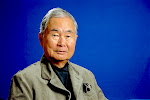
The following comes from the EPILOGUE of SIMPLE SOLUTIONS for Humanity:
-
The simple solution is for each person to try to make a positive difference. It is as simple as that. Can one individual, for example, do anything about poverty?
In 2005, The Lancet reported on a study showing that $5.1 billion could save 6 million kids.163 That sum is 6% of the expenditures for tobacco products. The average smoker does a pack a day. If these individuals can smoke only one less cigarette a day, and a way is found to effectively apply that savings, poof, we solve that poverty problem, and, maybe start the process of saving your life (if you smoke or are in poverty), too. How simple can it get?
There is, of course, the other side of the coin, for most of these children live in sub-Saharan Africa, where living is torture. What is the rationale for keeping a child alive for another week when the rest of his life could well be agony? If you make the decision that any life saved for however short is justified, then, read on. If you think that curing poverty will only cause more anguish for the rescued, you miss the point, for you need to attain step one to reach the ultimate.
Jeffrey D. Sachs wrote, The End of Poverty: Economic Possibilities for our Time. It’s a New York Times bestseller. Says Business Week, “Sensible, often brilliant analysis of poverty’s root causes and potential solutions…leaves you with hope that this crisis is more curable than it seems.” Is Jeffrey Sachs that individual that should be crediting to ending poverty? Nope, although it takes a village, and he is an important part of the ultimate solution.
Well, consider Live 8, which occurred on July 2, 2005, as one of the most momentous concerts ever and one of the greatest political lobby ever formed, all for the cause of poverty in Africa. It was timed a week before the G8 summit in Scotland to resolve the African matter. The message was received, as these world leaders agreed on double the aid to Africa, although some quibble that this would have happened anyway.
But Live 8 was preceded by Live Aid on July 13, 1985—60 artists in London and Philadelphia, 1.5 billion television viewers in 120 countries to raise $140 million for famine relief in Africa--which derived from the Band Aid Trust organized by Bob Geldorf to record “Do They Know It’s Christmas,” which inspired USA for Africa’s “We are the World.” Is Geldorf that spark? Known for starring on screen in The Wall, Sir Bob raised three children after his wife, Paula Yates, ran off with INXS singer Michael Hutchence, but become the guardian of their (Paula/Michael’s) daughter after their accidental deaths. Real hero, right? Most definitely!
However, Sir Geldorf did not really start all this. It might have been an aid worker in Ethiopia, Claire Bertschinger. Claire, a nurse for the Red Cross, making life and death decisions on who to feed, was filmed by Michael Buerk and his BBC crew. Her clearest memory of that momentous recording day was taking an anemic baby to the hospital for a blood transfusion. “They had no blood, so I gave him one unit of mine and my diary entry was that ‘today I have done something.’.” This clip was seen by Geldorf, who was moved to also do something. Bertschinger’s story can be read in Moving Mountains.
For most, just donating blood is beyond duty to humanity. But to have done both without any thought to inspiring Live 8 or later receiving the Florence Nightingale Medal, is what each individual can do. A key point here is that, if you care, don’t stop at one good deed. Do what you can, but some element of perseverance is also necessary. Over time, someone will notice. If no one ever notices, well…anything is connected to everything else, and something you do can affect the future, what is called the butterfly effect. Every step you take, every move you make, if done with good will, will only benefit humanity over time.
This can happened in the negative too, as in Ray Bradbury’s Sound of Thunder. In this short story and movie, a tour guide some time in the future takes a couple of hunters in a time machine to shoot a dinosaur just at the moment it was supposed to die anyway. Unfortunately, one of them steps on a butterfly, and when they return home, they find a world significantly changed for the worse, different kind of butterfly effect.
Has Claire Bertschinger cured poverty? Hardly, but what she started sparked the beginning of the solution, even if she originally had no clue as to what she was doing, except with good conscience helping humanity. You do have a clue, so you should be able to be more effective.
So, if Claire and the heavy footed hunter so monumentally can change the future without even knowing what they had done, why bother? Think about that. If you do something terrible, the future will be probably be negatively influenced. But, if you do anything purposeful and good, and keep at it, the odds are that you can, and will, change the future for the better. Claire Bertschinger’s act of sacrifice brought early initial dividends. Yours might take a millennium or more, but Planet Earth is good for another 5 billion years, and probably longer.
Live Earth and Global Warming
In 2007, Al Gore borrowed Bob Geldorf’s concept to stimulate the remediation of Global Climate Warming with Live Earth, which some reported as the biggest benefit concert ever, as the kick-off point for a three year campaign for Planet Earth. TV (in Hawaii on wide-screen high definition HDUNI) and the internet carried over a 22-hour period 150 acts from twelve locations, including, after beating off the Republicans, Washington, D.C., and from all seven continents (six, if you’re from Europe, for they combine North and South into one America), even Antarctica. This was an incredible carbon light rock spectacle, interspersed with Green messages from 60 short films. Geldorf, himself, labeled this as a “hollow spectacle,” Roger Daltrey of The Who said, “the last thing the planet needs is a rock concert,” and the People for the Ethical Treatment of Animals demanded that hot dogs and hamburgers not be served. Oh well, you can’t please everyone all the time. But this act helped gain Gore a Nobel Prize, but more importantly, provided a well needed galvanizing spark.
While Tipper has long served to censor music, Al, since the days of Bob Dylan’s Blowin’ in the Wind, has felt that music was an agent of change. But it was Kevin Wall, an American concert promoter, who really invented Live Earth. He was involved with Live 8 in 2005, the effort by Geldorf and Bono to pressure the G8 about African poverty. Wall saw that millions viewed Inconvenient Truth, so why not billions? But, maybe it was Wall’s secretary, or her son, who planted the idea. In any case, this is all good for Planet Earth. Listen to the critics, but move on from here. In the long term, the repercussions will be significantly positive.
Do You Believe in Miracles: The End of the Cold War
But the war on poverty has just begun and interest in the environment is but a budding concept. Many have called the end of the Cold War as the one most significant attainment to preserve civilization. Who was responsible for affecting this magnificent accomplishment?
The Bulletin of the Atomic Scientists (founded by a group of Manhattan Project scientists in 1945) created the Doomsday Clock in 1947 to draw attention to the potential for nuclear Armageddon. In the 60 years, the time has only been reset on 17 occasions. In 1947 it was initially placed at 7 minutes to midnight, clearly meaning that in the span of 24 hours, or 1440 minutes, we were then close to the end of civilization. Today it is actually at 5 minutes to midnight, the situation is supposedly worse. However, I might mention that the clock advanced to 3 minutes after the Soviet Union exploded its first atomic bomb in 1949, then to 2 minutes in 1953 when both the U.S. and S.U. tested hydrogen bombs. The time jumped to 12 minutes in 1972 when the first Strategic Arms Limitation Treaty (SALT I) was signed and to 17 minutes in 1991 when the Strategic Arms Reduction Treaty was signed. The time did not change when the Berlin Wall fell in 1989. One would think, anyhow, that the world is now a far, far safer place, for Pakistan, India, the Middle East and North Korea do not evoke terminal fear or threat of MAD, mutually assured destruction. Yes, there are still sufficient nuclear weapons potentially ready to be reactivated to end civilization, but the politics of the times are such that I think the clock should be reversed, to at least 15 minutes.
The clock was at 9 minutes in the Fall of 1979, which was not a good time for the American Nation. I arrived in the U.S. Senate. Well, that was the best part. Earlier in the year, China had invaded Vietnam, the Three Mile Island nuclear disaster occurred not that far from the national capitol, the YMCA sued the Village People over their song of the same name and the second oil crisis with those interminable gasoline lines made life tedious. Just around the time the USA hockey team was being selected by their coach, Herb Brooks, the Iranian crisis happened, with 66 Americans held hostage in Teheran, followed the next month by the Soviets occupying Afghanistan. National pride was at an all time low and we felt powerless, when a miracle came to pass.
Early in 1980, the USA ice hockey Olympic victory accomplished by a bunch of college students over the supremely dominant Soviet team, triggered a return of will to the American people, embarrassed by the Vietnam War and weakened by the Iranian hostage crisis. This indelible moment in all of U.S. sports history, it is said, inspired President Ronald Reagan to, two years later, confront the Evil Empire (Ronald Reagan, to the British House of Commons, June 8, 1982). Actually the real Evil Empire Speech was given on March 8, 1983, to the Annual Convention of the National Association of Evangelicals (yikes!) near Disney World in Florida. Anyway, Coach Herb Brooks, who was the last cut on the 1960 American ice hockey team (which went on to win the gold medal in Squaw Valley that year), had this vision, delivered, and, perhaps, aided in ending the Cold War. In my estimation, this was the most crucial triumph for humanity ever, yet.
Maybe one other person set the stage for the end of the Cold War: Charlie Wilson. Charles Nesbitt Wilson went to Annapolis and graduated 8th from the bottom, going on to an assignment in the Pentagon analyzing the Soviet Union. A state legislator at the age of 27, he later served in the U.S. House of Representatives for 12 terms, and was known as “Good Time Charlie” for being an alcoholic womanizer. However, as a member of the subcommittee overseeing the Central Intelligence Agency, he single-handedly influenced the diversion of largely black (covert, secret) military funds to help the local patriots fight the Russians in Afghanistan, resulting in their ignominious retreat in 1981, the year Ronald Reagan first became president. You might have seen the movie: Charlie Wilson’s War, starring Tom Hanks and directed by Mike Nichols. Houston socialite Joanne Herring played by Julia Roberts, and Gust Avrakotos, the rogue CIA agent, by Philip Seymour Hoffman, might share some of the credit.
American actor Ronald Reagan played the most important role of his life as the 40th president of the USA, and is sometimes credited for ending the Cold War, as his purposeful confrontational defense budget beginning in 1981, particularly Star Wars, fundamentally terrified the Soviet Union into overspending on defense, leading to ultimate bankruptcy. But, should Edward Teller, who convinced Reagan about this strategy, be the hero? Or one of his staff members I earlier talked about at the Lawrence Livermore National Laboratory? It had to start somewhere, and inevitably this would be at some primary, if not lower, staff level. Remember, presidents, governors and legislators almost never have the time to think out simple solutions. You have to do it for them. Charlie, though, might have been that necessary spark for this difference.
When Mikhail Gorbachev rose to power in 1985, his response to Reagan was glasnost (openness to public debate) and perestroika (restructuring) policies, followed by summit offers to reduce their nuclear arms stockpile. This initiative set the mechanism in motion for arms reduction, and also to the disestablishment of the Soviet Union. Cowed, inspired, whatever, Gorbachev in 1990 won the Nobel Peace Prize. Who in Russia had the ear and mind of Gorbachev?
It is an exceptionally rare situation when the individual who gets credit actually came up with the idea. It is the leader’s position and prevailing circumstances that were essential, but someone else out there started it all. I credit Ronald and Mikhail for making the critical decisions regarding the Cold War, but nominate Herb, Charlie, the guys at LLNL, Claire and Kevin as my heroes for finding and delivering on these simple solutions for peace, poverty and Planet Earth.
There are, of course, innumerable ways to undertake your personal mission. Former president Bill Clinton wrote Giving in 2007. The book goes into vivid detail about how each of us can change the world. He wrote that six year old McKenzie Steiner organized a beach cleanup club in San Diego. Yes, 6 years old. Who knows who she will be affecting or what she will do when she turns 7.
Now, go to the various web pages. Learn a little more about the ultimate matter of your greatest interest and begin to make a difference by coming up with just one simple solution. How best to get started? Reread this appendix. Or e-mail me at PTakahas@Hotmail.com. Together, with some dedicated others, we can save Planet Earth and Humanity! Aloha, and have a great rest of your life.
In 2005, The Lancet reported on a study showing that $5.1 billion could save 6 million kids.163 That sum is 6% of the expenditures for tobacco products. The average smoker does a pack a day. If these individuals can smoke only one less cigarette a day, and a way is found to effectively apply that savings, poof, we solve that poverty problem, and, maybe start the process of saving your life (if you smoke or are in poverty), too. How simple can it get?
There is, of course, the other side of the coin, for most of these children live in sub-Saharan Africa, where living is torture. What is the rationale for keeping a child alive for another week when the rest of his life could well be agony? If you make the decision that any life saved for however short is justified, then, read on. If you think that curing poverty will only cause more anguish for the rescued, you miss the point, for you need to attain step one to reach the ultimate.
Jeffrey D. Sachs wrote, The End of Poverty: Economic Possibilities for our Time. It’s a New York Times bestseller. Says Business Week, “Sensible, often brilliant analysis of poverty’s root causes and potential solutions…leaves you with hope that this crisis is more curable than it seems.” Is Jeffrey Sachs that individual that should be crediting to ending poverty? Nope, although it takes a village, and he is an important part of the ultimate solution.
Well, consider Live 8, which occurred on July 2, 2005, as one of the most momentous concerts ever and one of the greatest political lobby ever formed, all for the cause of poverty in Africa. It was timed a week before the G8 summit in Scotland to resolve the African matter. The message was received, as these world leaders agreed on double the aid to Africa, although some quibble that this would have happened anyway.
But Live 8 was preceded by Live Aid on July 13, 1985—60 artists in London and Philadelphia, 1.5 billion television viewers in 120 countries to raise $140 million for famine relief in Africa--which derived from the Band Aid Trust organized by Bob Geldorf to record “Do They Know It’s Christmas,” which inspired USA for Africa’s “We are the World.” Is Geldorf that spark? Known for starring on screen in The Wall, Sir Bob raised three children after his wife, Paula Yates, ran off with INXS singer Michael Hutchence, but become the guardian of their (Paula/Michael’s) daughter after their accidental deaths. Real hero, right? Most definitely!
However, Sir Geldorf did not really start all this. It might have been an aid worker in Ethiopia, Claire Bertschinger. Claire, a nurse for the Red Cross, making life and death decisions on who to feed, was filmed by Michael Buerk and his BBC crew. Her clearest memory of that momentous recording day was taking an anemic baby to the hospital for a blood transfusion. “They had no blood, so I gave him one unit of mine and my diary entry was that ‘today I have done something.’.” This clip was seen by Geldorf, who was moved to also do something. Bertschinger’s story can be read in Moving Mountains.
For most, just donating blood is beyond duty to humanity. But to have done both without any thought to inspiring Live 8 or later receiving the Florence Nightingale Medal, is what each individual can do. A key point here is that, if you care, don’t stop at one good deed. Do what you can, but some element of perseverance is also necessary. Over time, someone will notice. If no one ever notices, well…anything is connected to everything else, and something you do can affect the future, what is called the butterfly effect. Every step you take, every move you make, if done with good will, will only benefit humanity over time.
This can happened in the negative too, as in Ray Bradbury’s Sound of Thunder. In this short story and movie, a tour guide some time in the future takes a couple of hunters in a time machine to shoot a dinosaur just at the moment it was supposed to die anyway. Unfortunately, one of them steps on a butterfly, and when they return home, they find a world significantly changed for the worse, different kind of butterfly effect.
Has Claire Bertschinger cured poverty? Hardly, but what she started sparked the beginning of the solution, even if she originally had no clue as to what she was doing, except with good conscience helping humanity. You do have a clue, so you should be able to be more effective.
So, if Claire and the heavy footed hunter so monumentally can change the future without even knowing what they had done, why bother? Think about that. If you do something terrible, the future will be probably be negatively influenced. But, if you do anything purposeful and good, and keep at it, the odds are that you can, and will, change the future for the better. Claire Bertschinger’s act of sacrifice brought early initial dividends. Yours might take a millennium or more, but Planet Earth is good for another 5 billion years, and probably longer.
Live Earth and Global Warming
In 2007, Al Gore borrowed Bob Geldorf’s concept to stimulate the remediation of Global Climate Warming with Live Earth, which some reported as the biggest benefit concert ever, as the kick-off point for a three year campaign for Planet Earth. TV (in Hawaii on wide-screen high definition HDUNI) and the internet carried over a 22-hour period 150 acts from twelve locations, including, after beating off the Republicans, Washington, D.C., and from all seven continents (six, if you’re from Europe, for they combine North and South into one America), even Antarctica. This was an incredible carbon light rock spectacle, interspersed with Green messages from 60 short films. Geldorf, himself, labeled this as a “hollow spectacle,” Roger Daltrey of The Who said, “the last thing the planet needs is a rock concert,” and the People for the Ethical Treatment of Animals demanded that hot dogs and hamburgers not be served. Oh well, you can’t please everyone all the time. But this act helped gain Gore a Nobel Prize, but more importantly, provided a well needed galvanizing spark.
While Tipper has long served to censor music, Al, since the days of Bob Dylan’s Blowin’ in the Wind, has felt that music was an agent of change. But it was Kevin Wall, an American concert promoter, who really invented Live Earth. He was involved with Live 8 in 2005, the effort by Geldorf and Bono to pressure the G8 about African poverty. Wall saw that millions viewed Inconvenient Truth, so why not billions? But, maybe it was Wall’s secretary, or her son, who planted the idea. In any case, this is all good for Planet Earth. Listen to the critics, but move on from here. In the long term, the repercussions will be significantly positive.
Do You Believe in Miracles: The End of the Cold War
But the war on poverty has just begun and interest in the environment is but a budding concept. Many have called the end of the Cold War as the one most significant attainment to preserve civilization. Who was responsible for affecting this magnificent accomplishment?
The Bulletin of the Atomic Scientists (founded by a group of Manhattan Project scientists in 1945) created the Doomsday Clock in 1947 to draw attention to the potential for nuclear Armageddon. In the 60 years, the time has only been reset on 17 occasions. In 1947 it was initially placed at 7 minutes to midnight, clearly meaning that in the span of 24 hours, or 1440 minutes, we were then close to the end of civilization. Today it is actually at 5 minutes to midnight, the situation is supposedly worse. However, I might mention that the clock advanced to 3 minutes after the Soviet Union exploded its first atomic bomb in 1949, then to 2 minutes in 1953 when both the U.S. and S.U. tested hydrogen bombs. The time jumped to 12 minutes in 1972 when the first Strategic Arms Limitation Treaty (SALT I) was signed and to 17 minutes in 1991 when the Strategic Arms Reduction Treaty was signed. The time did not change when the Berlin Wall fell in 1989. One would think, anyhow, that the world is now a far, far safer place, for Pakistan, India, the Middle East and North Korea do not evoke terminal fear or threat of MAD, mutually assured destruction. Yes, there are still sufficient nuclear weapons potentially ready to be reactivated to end civilization, but the politics of the times are such that I think the clock should be reversed, to at least 15 minutes.
The clock was at 9 minutes in the Fall of 1979, which was not a good time for the American Nation. I arrived in the U.S. Senate. Well, that was the best part. Earlier in the year, China had invaded Vietnam, the Three Mile Island nuclear disaster occurred not that far from the national capitol, the YMCA sued the Village People over their song of the same name and the second oil crisis with those interminable gasoline lines made life tedious. Just around the time the USA hockey team was being selected by their coach, Herb Brooks, the Iranian crisis happened, with 66 Americans held hostage in Teheran, followed the next month by the Soviets occupying Afghanistan. National pride was at an all time low and we felt powerless, when a miracle came to pass.
Early in 1980, the USA ice hockey Olympic victory accomplished by a bunch of college students over the supremely dominant Soviet team, triggered a return of will to the American people, embarrassed by the Vietnam War and weakened by the Iranian hostage crisis. This indelible moment in all of U.S. sports history, it is said, inspired President Ronald Reagan to, two years later, confront the Evil Empire (Ronald Reagan, to the British House of Commons, June 8, 1982). Actually the real Evil Empire Speech was given on March 8, 1983, to the Annual Convention of the National Association of Evangelicals (yikes!) near Disney World in Florida. Anyway, Coach Herb Brooks, who was the last cut on the 1960 American ice hockey team (which went on to win the gold medal in Squaw Valley that year), had this vision, delivered, and, perhaps, aided in ending the Cold War. In my estimation, this was the most crucial triumph for humanity ever, yet.
Maybe one other person set the stage for the end of the Cold War: Charlie Wilson. Charles Nesbitt Wilson went to Annapolis and graduated 8th from the bottom, going on to an assignment in the Pentagon analyzing the Soviet Union. A state legislator at the age of 27, he later served in the U.S. House of Representatives for 12 terms, and was known as “Good Time Charlie” for being an alcoholic womanizer. However, as a member of the subcommittee overseeing the Central Intelligence Agency, he single-handedly influenced the diversion of largely black (covert, secret) military funds to help the local patriots fight the Russians in Afghanistan, resulting in their ignominious retreat in 1981, the year Ronald Reagan first became president. You might have seen the movie: Charlie Wilson’s War, starring Tom Hanks and directed by Mike Nichols. Houston socialite Joanne Herring played by Julia Roberts, and Gust Avrakotos, the rogue CIA agent, by Philip Seymour Hoffman, might share some of the credit.
American actor Ronald Reagan played the most important role of his life as the 40th president of the USA, and is sometimes credited for ending the Cold War, as his purposeful confrontational defense budget beginning in 1981, particularly Star Wars, fundamentally terrified the Soviet Union into overspending on defense, leading to ultimate bankruptcy. But, should Edward Teller, who convinced Reagan about this strategy, be the hero? Or one of his staff members I earlier talked about at the Lawrence Livermore National Laboratory? It had to start somewhere, and inevitably this would be at some primary, if not lower, staff level. Remember, presidents, governors and legislators almost never have the time to think out simple solutions. You have to do it for them. Charlie, though, might have been that necessary spark for this difference.
When Mikhail Gorbachev rose to power in 1985, his response to Reagan was glasnost (openness to public debate) and perestroika (restructuring) policies, followed by summit offers to reduce their nuclear arms stockpile. This initiative set the mechanism in motion for arms reduction, and also to the disestablishment of the Soviet Union. Cowed, inspired, whatever, Gorbachev in 1990 won the Nobel Peace Prize. Who in Russia had the ear and mind of Gorbachev?
It is an exceptionally rare situation when the individual who gets credit actually came up with the idea. It is the leader’s position and prevailing circumstances that were essential, but someone else out there started it all. I credit Ronald and Mikhail for making the critical decisions regarding the Cold War, but nominate Herb, Charlie, the guys at LLNL, Claire and Kevin as my heroes for finding and delivering on these simple solutions for peace, poverty and Planet Earth.
There are, of course, innumerable ways to undertake your personal mission. Former president Bill Clinton wrote Giving in 2007. The book goes into vivid detail about how each of us can change the world. He wrote that six year old McKenzie Steiner organized a beach cleanup club in San Diego. Yes, 6 years old. Who knows who she will be affecting or what she will do when she turns 7.
Now, go to the various web pages. Learn a little more about the ultimate matter of your greatest interest and begin to make a difference by coming up with just one simple solution. How best to get started? Reread this appendix. Or e-mail me at PTakahas@Hotmail.com. Together, with some dedicated others, we can save Planet Earth and Humanity! Aloha, and have a great rest of your life.
-