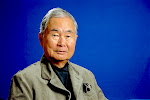
I was on my way to completing Part 3 of the series on My Family, when I instead thought I would rather today tell the story of Tony Bennett.
- About that title, he actually passed away in 2023, but if he lived, he would have turned 100 last month.
- Was born Anthony Dominick Benedetto in New York City in 1926. Father ailed, so the family grew up in poverty.
- Began singing at the age of 10, the year his father passed away.
- At 13 was a singing waiter in Italian restaurants in New York City.
- Drafted into the army near end of World War II, and spent some time in the European front line he would later described as a front-row seat in hell. Several times escaped death. Left the military as a Private First Class.
- Pearl Bailey and Bob Hope helped Tony get started in 1949, with Hope suggesting a shortened name, Tony Bennett.
- At the age of 24, signed to Columbia Records in 1950, with Mitch Miller producing and Percy Faith providing the orchestral arrangement, released in 1951 was Because of You. Hi #1 and stayed there for 10 weeks.
- Later that year covered Hank Williams' Cold, Cold Heart, doing Williams a favor, from country music was not too popular with the masses.
- Three wives and four children. In 2008 with third wife Susan Crow.
- Sold more than 50 million records, won 50 Grammys and has a star on the Hollywood Walk of Fame.
- After those two hits, Rags to Riches followed in 1953, topping the charts for 8 weeks.
- Later that year, recorded Stranger in Paradise, which also became #1.
- The rock and roll era arrived in 1955, and he lost popularity. Stayed active on TV shows.
- His signature song, I Left My Hear in San Francisco, in 1962 was a 10-year old little known song. Won him a Grammy for Record of the Year and Best Male Solo Performance. Especially memorable for me because I graduated from Stanford that year and also left the Bay area.
- Was a firm believer in the Civil Right Movement, and participated in the 1965 Selma to Montgomery marches. Performed in the rally the night before Martin Luther's Our God is Marching On speech in Alabama.
- Never really stopped entertaining, but by the end of the 70s, had no recording contract, no manager, only now and then performances in Las Vegas and problems with the Internal Revenue Service.
- Had a near-fatal cocaine overdose in 1979.
- Called his sons Danny and Dae for help.
- Danny became his manager and Dae served as recording engineer. Later, daughter Antonia joined him in shows.
- Successfully staged comebacks, and in 1999 had assets worth $15 to $20 million. Quoted to say at 73 that he had no intention of retiring, indicating that Pablo Picasso, Jack Benny and Fred Astaire kept active until the day they died.
- On tour at a rate of 100 shows per year by the end of the 1990s, making a point singing Fly Me to the Moon without microphone to demonstrate his skills at vocal projection.
- Churned out albums and kept donating his time to charitable and Democratic political causes. Gained a nickname, Tony Benefit. Received a major United Nations Humanitarian Award.
- Turned 80 in 2006 and won a Grammy. Tony Bennett: An American Classic on NBC won multiple Emmys.
- Guest-mentored in season 6 of American Idol, and performed in the finale.
- In 2008 made two appearances with Billy Joel in Shea Stadium, then a Christmas album with the Count Basie Big Band.
- In 2010, among other appearances, sand I Left My Heart in San Francisco at AT&T Park before Game 1 of the World Series, and sang God Bless America during the 7th inning stretch.
- In 2011 at the age of 85 released his first collaborative albums with Aretha Franklin, Willie Nelson, Queen Latifah and Lady Gaga. A duet with Amy Winehouse on Body and Soul, the last recording she made. Charted on the Billboard Hot 100, an album debuting at #1, making him the oldest living artist artist to appear there.
- Performed at SF City Hall commemorating the 2012 World Series victory by the San Francisco Giants.
- In 2014 performed in Israel for the first time, and later that year, released an album with Lady Gaga, Cheek to Cheek that debuted at #1 on Billboard. He was 88. Went on tour with her.
- In 2015 again performed in the World Series.
- In 2016 was diagnosed with Alzheimer's disease, but he continued performing.
- On 1August2016, at 90 was honored by the unveiling of an 8-foot statue in his likeness in front of the Fairmont Hotel In SFO. Performed I Left My Heart in San Francisco, for this is where he first sang that song, in 1961.
- His final album, again with Lady Gaga, Love for Sale, in 2021. Final live performance with her at the Radio City Music Hall on August 3 and 5, 2021. He sang his signature song.
- Retired on 12August2021, nine days after his 95th birthday. However, a final TV appearance with Lady Gaga on 16December2021.
- Continued to rehearse three time/week into 2022.
- Had some success as painter Anthony Benedetto.
- Passed away 21July2023.
- A rare 2018 interview, only published last week.
Well, now to some current events. The United Nations has been hopeless about engendering World Peace. However, this is the only organization capable of making a difference. However, President Donald Trump addressed the General Assembly in New York City this morning.
Reported TIME magazine:
On Tuesday, Trump delivered his fifth speech to UNGA. The tone of humility and the invitations for collaboration were long gone. In its place were Trump’s dark worldview about the U.N. itself, and questionable boasts about his domestic poll numbers.
Over the course of 56 meandering minutes, Trump nursed grievances large and small, with complaints that he had to walk up to the hall because the escalator was broken and barbs for Joe Biden aplenty.
The remarks, his longest ever to the global confab and going well beyond his allocated time, stood as a sharp reminder that Trump sees his turn on these stages as a chance for self-promotion. He cast the United Nations as a passive observer of global affairs that would be lost without him, as he continued his shameless campaign for a Nobel Peace Prize for ending, by his count, seven wars.
CNN political director David Chalian on Tuesday highlighted a brand-new poll from the network on President Donald Trump and his ongoing war on Iran, arguing that voter confidence in Trump's handling of the conflict marks "the worst number" for him across the entire survey.
"CNN has a brand-new poll out this morning that finds just 29% of Americans approve of how the president is handling foreign affairs," "The Situation Room" co-host Pamela Brown explained. "This is a new low in CNN polling across both of his terms as president."
42 days to the mid-term elections. If he doesn't postpone it.
To close, another major hurricane in the Pacific Ocean. Hurricane Polo is now a super-hurricane.- Yesterday, at 40 MPH, 0300 GMT
- 85 MPH, 2100 GMT
- Today 165 MPH, 1800 GMT
- Off Mexico, on a path west of Baha.
Rather unusual, but Tropical Storm Odalys was heading towards Hawaii, but today will make a sudden right turn, become a hurricane, and head for Baha.
-


 However, today strengthened back to 35 MPH.
 Expected to further strengthen into a Category 2 hurricane in two days, heading for East Hawaii.
 You don't want to be on a cruise in the vicinity of the Alenuehaha Channel from tomorrow for a few days.


.jpg)