Total Pageviews

Saturday, September 7, 2013

THE WINNINGEST VOLLEYBALL COACH IN THE NATION

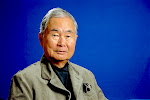
I spent last evening watching David Shoji's Rainbow Wahine Volleyball Team against Santa Clara.  He won his #1107th victory, passing the all-time leader, Andy Banachowski of UCLA:


As part of the celebration, his team dumped all sorts of stuff on him.  Here is what he looked like in the beginning, 39 years ago:


He is now the King of volleyball coaches...and it took a lifetime.  Former UCLA coach who now only has 1076 victories, Andy Banachowski, congratulated the new leader:


However, watching this all was Mike Sealy, present coach of UCLA, who served under Shoji at the University of Hawaii.


Hawaii plays UCLA tonight.

-

Friday, September 6, 2013

MY LATEST ULTIMATE DINNER

It was less than three months ago that I already had an ultimate dinner.  Well, I had another one tonight.

It is my birthday today.  As I think back, I can't remember a particularly memorable birthday.  However, this one will at least be posted.

One goes to a movie for various reasons.  I saw The Ultimate Life because today symbolizes, perhaps, the peak of my ultimate life.  

Rotten Tomatoes reviewers gave the film a 13% rating, and viewers 63%.  Not good at all.  In fact, I won't even bother to summarize the film because it is about petroleum.  However, there is something to the message, which is to live a balanced life.  However, if you become a billionaire, it is possible to redeem your worth to society by selecting the individual who can ideally carry out what you would have done if you had lived.  I'm looking for billionaires for the Blue Revolution, so maybe I learned something.


I then went to Apple to get myself a birthday present, a new Mac Air.  My present one has been around for several years and the memory is getting scarce.  I find the i-Pad to be less than capable of fashioning my daily blog.  

The rest of the day was spent gathering ingredients for my ultimate birthday party.  I started with a $35/pound chu toro (medium fatty blue fin tuna):


The full meal, including Malossol Caviar, American wagyu beef equivalent, foie gras, Yoichi 20 year old whiskey (the #1 scotch in the world), Kirin beer, sake and the view:


A close-up:


I left out the egg because the pieces keep falling out.  I replaced the sour cream with Castello Blue Cheese (cow cheese from Denmark), my favorite.  I added some color with salmon eggs.  Plus, an ume musubi.  Here is one caviar concoction:


Then, I thought, why not, combine everything:


Two kinds of caviar, steak and foie gras, with the trimmings.  Next year I'll add the chu toro.

I did have a sunset:


The evening was spent watching David Shoji win his 1107th volleyball victory for the University of Hawaii.  What a fine birthday gift for me.  (Read the details tomorrow.)

Finally, I did have a spot of Louis XIII cognac to top off a memorable birthday:


-

SCIENTIFIC BONBONS


Aren't these blue flowers beautiful?  Well, they really are an image from a barium carbonate solution taken by Wim Noordium with an electron microscope.

Yes, I entertain, but I also attempt to educate.  For some reason, readership drops off on Friday and Saturday, so this is a good day for many of you to skip this posting.  The August issue of Scientific American included the above, but also the following:

  • Global Warming?  If you added the number of people in the U.S. who died from tornadoes, hurricanes, floods and lighting, combined, between 1999 and 2009, do you think this total would exceed the deaths from exteme heat or not?  The answer is NOT...that is, more people die from heat than from those threats of Mother Nature.  More specifically, 658 are killed from heat in the U.S. each year.  Keep in mind that there are 2,500,000 deaths in the country each year, so these nature caused deaths are infinitesimal.
  • Is fracking good or bad?  The hottest future source of energy might well be fracking-enhanced geothermal systems.  Today, geothermal produces less than one percent of global energy (see table to the right).  The U.S. Geological Survey says that at least 500 gigawatts of fracking-EGS, 1.5 times more than the entire coal-fired power plant output, can be supplied in the country.  Furthermore, the Massachusetts Institute of Technology reports that tapping only 0.001% of the available Earth-heat would satisfy our entire energy use.  I once spent some time on hot-dry rock research, and have tracked developments in this area.  Originally, a "small" atomic bomb was the basis of the Plowshare Program.  When that option became anathema, fracking was the second option.  The problem is that no one wants to spend $10 million on a well that might not produce anything.  However, while hydraulic fracturing is banned in France, a $106 million effort at fracking-EGS is proceeding in Alsace.
  • As my readers know, I make wine from sour grapes regarding my disdain of extrasolar planetary detection science.  One point for me, as the wobble technique for earth-sized planets is coming under fire for false detections.  Both the Alpha Centauri B and Gliese 581 discoveries are now being marginalized.  Scientific American entitled the graphic to the right as "Alpha Centuri B's putative planetary system.
  • This issue has a special report on education.  I might later post just on this article, but let me quote Salman Khan, founder of the Khan Academy:
  Whenever people imagine virtual anything, they immediately pit it against its physical counterpart--Amazon versus physical bookstores, Wikipedia versus physical encyclopedias.  They assume that the virtual will replace the physical with something cheaper, faster and more efficient.  In education, however, the virtual will create a very different type of disruption.  We should not aim to replace the physical classroom.  Instead we have an opportunity to blend the virtual with the physical and reimagine education entirely.

Khan makes a key point that we can enhance the touchy-feely element of education with machines to produce a better student.  My four added R's of education from SIMPLE SOLUTIONS for Humanity will blend well into the future of education.

Let me end with another electron microscope shot:


-

Thursday, September 5, 2013

50% OF ALL NEW U.S. ENERGY IN 2012 CAME FROM THE RENEWABLES

A quick glance at the top table to the right shows that wind, biofuels, solar and geothermal, combined, are only 2% of the global energy being consumed.  The U.S. is not much different from the world.  So you might surmise that renewables are almost insignificant.


How wrong you would be!  In an article by Chris Meehan (above) of SolarReviews:


The percentage was 49, with all solar, wind, geo and waste heat/water sources being included. Added to the U.S. grid were 13,100 megawatts of wind power and 3,300 MW of solar PV.  A sum of $44.2 billion was invested in 2012.  True, 2011 saw $65.4 billion in renewable projects, but 2012 ranks #2 throughout history.  


Solar grew 34%,  as prices dropped 20% from Q4 2011 to Q4 2012.  Regarding the future, 10,500 MW of power purchase agreements are in place.  Further, the ten largest solar PV projects in construction, worldwide, are in the U.S, the biggest being the Topaz Solar Farm (above in San Luis Obispo) of First Solar, a Cadmium Telluride system at 550 MW.  Solar thermal is also an option, and the Ivanpah project (below), to come on-line in 2015 in the Mojave Desert, is rated at 392 MW.


The second largest wind farm in the world is located at Tehachapi Pass, the Alta Wind Energy Center's 1,320 MW facility.  One of the final two segments will be added this year and, the final chunk in 2019.


However, the Gansu (below, red on map) Wind Farm of China is the largest wind park, 5000 MW, with a goal of 20,000 MW in 2020.


-

Wednesday, September 4, 2013

SYRIA, FUKUSHIMA AND HAWAII: The Cost and Reality

You wouldn't think there could possibly be a link among the three issues of Syria, Fukushima and air-conditioning of public schools in Hawaii.  Well, the prime headline article in the Honolulu Star-Advertiser today had to do with the latter.  I'll return to this matter later.

The U.S. Congress should approve President Barack Obama's request to strike Syria's chemical weapons system, perhaps as early as next week.  Facing the U.S. House Foreign Relations Committee, Joint Chiefs of Staff Chairman Martin Dempsey, Secretary of State John Kerry and Secretary of Defense Chuck Hagel indicated that the cost of this attack on Syria would cost tens of millions of dollars.

The latest news from Fukushima is:


What they propose to do will be to freeze--yes, freeze--the ground around the crippled nuclear facility.  Can you imagine what just the electricity cost will be, as this condition will need to be maintained for decades.  The problem is that an additional 400 tons of radioactive water need to be stored each day.  They are already up to around a 1000 hastily built storage tanks, only one of which is currently leaking, yet.  If this is the result of the best Japanese minds, the country is in real trouble.  So we are talking here, hundreds of millions of dollars.

Here is the shocker.  Most of Hawaii's public schools are too hot.  (No, the surprise to come is the relative cost compared to the Syria action and Fukushima clean up.)  Only 12 of 255 campuses have air-conditioning.  Many other states, of course, are faced with this issue.  That photo to the left was actually taken more than five years ago, and the latest evidence shows that the temperature did recently get up to 95 F in a classroom, so maybe they have a point.  A big push is being mounted to air-condition all of them.  Cost?  One billion dollars.  So while the nation of the USA will spend tens of millions to mount an air offensive against Syria, and the nation of Japan has committed hundreds of millions just to freeze Fukushima, this tiny State of Hawaii is being asked to find a thousand million dollars, or one billion, to keep our students comfortably cool.

To the right is a possible future map of the Middle East. (Click to see the details.)  More than two years ago, the Huffington Post reported that the 


This sum is equivalent to $3,700 billion, or $3,700,000 million. Thus, let's say our military spends $37 million on Syria, that is one millionth the current cost of our Middle East War.  While a mere pittance, want to bet the Syrian War will be a whole lot more expensive?  But, for "humanitarian" and "political" reasons, this attack will happen.  That is the reality.

Just the economic loss to Japan for Fukushima could be up to $500 billion.  One high estimate has the clean up cost at $250 billion over the next decade.  Are they kidding?  At least one other report has clean up costs at $10 trillion.  A still unofficial French government study has a worst-case scenario of a nuclear disaster in France at $7.5 trillion, so chances are Japan is deluding itself with less than a trillion dollar cost of the Fukushima cataclysm.  There is little reality to economics versus Fukushima in Japan today.  Further, most of the nuclear reactors in Japan are at the coastline, and 30 months after that fatal earthquake, only two of 50 functional facilities are now operational.  But several more are on the verge of being powered up.

Undoubtedly, the highest state of dream is Hawaii spending a billion dollars to air-condition all our public schools.  Fans (ventilation and large room varieties) will for sure be installed.  Classes might need to, every so often, be moved outdoors under some shade.  But we won't be able to afford a billion dollars to keep our schoolchildren comfortable.  There are just too many higher order priorities.  

I'm maybe a poor example, but I haven't turned on my three air conditioners for a whole year now. Remember, electricity costs 35 cents/kWh where I live. Cross ventilation is not good and my bedroom gets up to 96 F in the afternoon.  Granted, I don't need to use this room then, for I take a nap in another room where the temperature is a bit lower.  I have personal fans at the four sites I sit and sleep.  They work just fine.  And I live on the top floor with all glass walls where the sun beats down on and shines into my apartment. 

-

Tuesday, September 3, 2013

WHY SLEEP IS REALLY GOOD FOR YOU


I said it in my SIMPLE SOLUTIONS for Humanity, and repeat it here again:  SLEEP IS REALLY GOOD FOR YOU.  That discussion was mostly qualitative.  Today, I report from the August 2013 issue of Scientific American, the National Sleep Foundation and WebMD.

Here are some interesting, and perhaps even 
surprising, findings (this article was written by Giulio Tonani and Chiara Cirelli)
  • Your brain remains just as active in sleep (same activity of firing neurons and energy consumption) as not.
  • However, while this sounds contradictory, sleep conserves energy and reduces stress on your nerve cells.
  • Interestingly enough, in our evolution, our brain increased in volume 2.5 times from Homo habilis (2 million years ago) to Homo sapiens neanderthalensis (they went extinct 30,000 years ago), but shrunk by 10% since then to what we are today.
  • This 3 pound organ (about 2% of your body weight) uses 20% of the energy consumed.
  • What sleep does is return your memory to a baseline, termed synaptic homeostasis, so you can better learn and adapt when you are awake.
  • All animals (and plants, too) sleep.
How much sleep do we actually get?
  • Age 20-30: 433.5 minutes (7.23 hours) 
  • Age 40-55: 409.9 minutes (6.83 hours)
  • Age 66-83: 390.4 minutes (6.51 hours)
So how much sleep do you need?


Some people have difficulty getting to sleep.  How do you compare with the average?
  • Age 20-30: 8.7 minutes 
  • Age 40-55: 11.7 minutes
  • Age 66-83: 14.2 minutes
The bigger problem for older folks, especially men, is that they need to wake up once or twice to take a pee.  Getting back to sleep can get difficult.  The older you are, the more you are apt to take sleeping pills.  They can kill.  Those who take this medication had a 3.5 times higher risk of death and 35% greater chance of cancer.  So what do you do?  Your call.

Also from the National Sleep Foundation, perhaps the following could help:
  • Establish consistent sleep and wake schedules, even on weekends
  • Create a regular, relaxing bedtime routine such as soaking in a hot bath or listening to soothing music – begin an hour or more before the time you expect to fall asleep
  • Create a sleep-conducive environment that is dark, quiet, comfortable and cool
  • Sleep on a comfortable mattress and pillows
  • Use your bedroom only for sleep and sex (keep "sleep stealers" out of the bedroom – avoid watching TV, using a computer or reading in bed)
  • Finish eating at least 2-3 hours before your regular bedtime
  • Exercise regularly.
  • Avoid caffeine and alcohol products close to bedtime and give up smoking
You might want to count sheep or read Lena's Sleep Sheep (only 24 pages long).


Mind you, there are other opinions.  Here is one from the BBC.

  • become more accident prone
  • get dumbed down
  • gain a higher risk of heart disease, high blood pressure, stroke, diabetes, etc.
  • lose your sex drive
  • become depressed
  • suffer enhanced skin aging
  • become more forgetful
  • gain weight (yes, the more you sleep, the less you will weigh)
  • suffer from judgement impairment
  • increase your chances for earlier death
Wow...ignore those detractors, I really do need to sleep a lot more!!!


-

Monday, September 2, 2013

HAVE YOU TOO WONDERED WHY...


1....insurance commercials are so dumb.  Mind you, GEICO's camel does capture your attention, and their green gecko seems to have some staying power, having been around since 1999, which is the same year the Aflac duck made an appearance.  Cute apparently works, but aren't insurance companies supposed to exude credibility and security?  What is the logic of attracting customers with stupidity, as adorable as some of those animals might be?  Scary, but maybe these ads reflect the basic nature of our society.


2....there are no high-ranking American men tennis players?  Yesterday, Tim Smyczek of the USA, who has never been ranked in the Top 100, lost, leaving ZERO U.S. players in the U.S. Open.  This is the very first time no American even reached the fourth round of our very own championship. Smyczek's (bet you never heard of him before) failure meant that we had no representative in the quarterfinals at any of the four Grand Slam tournaments this past year, something that never has happened before.   Earlier this year no USA pro went beyond the second round, the second round, mind you, of the Wimbledon, the first time in 101 years.  For a while last month, there was no U.S. person in the Top 20,  another first ever since computerized rankings began in 1973.  John Isner (below left), did come in at #17 for this Open, but also lost in the third round.


Other Americans in the rankings?  #32 Sam Querrey, #73 Alex Bogomolov Jr., #86 Jack Sock, #92 Michael Russell, #97 Ryan Harrison and #100 James Blake.  Any recognizable names here?  Isner (above, Isner, all of 6 feet 9 inches tall, is to the left, Mahut on the right) is famous because three years ago he beat Nicolas Mahut of France in the fifth set of their Wimbledon marathon by an incredible score of 70-68, a match that lasted 11 hours and 5 minutes over two days.  Our best hope Jack Sock (left) is only 20 years old.  

American women are doing fine, with Serena Williams #1 (left), who just beat #16 Sloane Stephens (right, who also is only 20) in the Open.  There are eight other American women in the Top 100.

3...the USA men's soccer team is ranked #19 in the world, while the women are #1?  Further, the American women are mostly really good looking (Hope Solo to the left).  The answer to these tennis and soccer discrepancies is simple:  the best men's athletes go into football, baseball and basketball.  There is no equivalent professional opportunity for women.  England is generally credited to have invented the modern versions of tennis and soccer, but their women soccer team is only #11, while the men are at #14.  While #3 Andy Murray did win the Wimbledon this year, he is the ONLY United Kingdom representative in the tennis Top 100.

-

Sunday, September 1, 2013

MY SUNDAY ADVENTURE AT MICHEL'S

Michel's is one of those upscale restaurants in Hawaii with a fabulous view for brunch on Sunday.  But before providing the gruesome details about this adventure today, let me start with some background:
  • Shizuko and Professor Shigetoh Miyachi are visiting the University of Hawaii, staying at Lincoln Hall on the Manoa Campus, and returning to Japan on Labor Day Monday.
  • We had arranged to have dinner at Vintage Cave on Sunday.
  • Unfortunately, this restaurant does not serve that day, and were completely booked for Saturday.
  • Thus, I made a reservation for Sunday brunch at Michel's.
  • I called them to relay this information:
    • brunch, 10:30AM, Michel's in the Colony Surf Hotel at the foot of Diamond Head outside of Waikiki
    • provide this information to the taxi driver
How much simpler can it get, right?  Well:
  • I caught The Bus, which dropped me off very close to the restaurant at 10:25AM.
  • There is a free mimosa-like drink which I had.
  • At 11:15AM or so I got concerned, so I called their room at Lincoln Hall.
  • To my shock, Shigetoh answered.
  • I asked why they were not at Michel's.
  • Shigetoh said they thought this was to be dinner at 10:30PM.
  • So, I explained what was the reality and for them to please come now--Michel's at Colony Surf.
  • At close to Noon I got a call from the receptionist at Vintage Cave (above rightwhere they have 18 Picasso's among other works of art)   who wondered why Professor Miyachi and his wife were there for lunch. He gave her my cell #.
  • I asked her to please get them into a taxi for Michel's.
  • While I was on my fourth drink, they finally arrived just before 12:30PM.
  • I was not able to gain an intelligent reason why they went to Vintage Cave.
This experience shows the difficulties of old age:  hard of hearing, lack of good judgement, senility, and so forth.  Plus, add cultural differences and language barriers.  I blame myself for most of this. Anyway, we had a great brunch.  

Here are  Shizuko and Shigetoh:


Their view:


I had maguro/hamachi sashimi, eggs benedict florentine and a tapioca dessert.  The benedict was excellent:


We caught a limousine back to their Lincoln Hall accommodations:


This was a very enjoyable day, actually, for during the two hour wait I had quite a view and an assortment of drinks, while being entertained by a slack key guitarist.

-