Total Pageviews

Showing posts sorted by relevance for query nayib bukele. Sort by date Show all posts

Monday, October 25, 2021

THE FUTURE OF MONEY

I had an unusual Sunday.  Nothing interested me on television, not even the NFL.  Nothing happening in Honolulu worthy of my time.  Nothing being offered at 15 Craigside, but this day usually is reverential, and I'm not much of a churchgoing resident.


I thus went through my subscription magazines, and, in particular, the latest issue of Time, where I ran across the Future of Money, which I will summarize after an initial segue into a film.


After dinner, I watched Hiroshima Mon Amour, (click on that and watch the entire hour and a half production, directed by Alain Resnais) a movie that I vaguely remembered from my college days, but yet, perhaps never had seen.  Released in 1959, it is about the life of two two-day lovers in Hiroshima a few years after the drop of the Atomic Bomb when the city had to some degree recovered.  A French actress (Emmanuel Riva) in town for a film, starts a relationship with a Japanese architect (Eiji Okada).  Both are married, and it became obvious that a long-term relationship was not to be.  


Back then when the film was first available, I was one of the very few Japanese on a white campus, so there was that personal reverse link that gave additional meaning to my interest in the subject.  Of course, Palo Alto was the polar opposite of Hiroshima, for Silicon Valley was ready for formation, while nuclear devastation was still everywhere in the movie.


The movie received 97/89 scores from Rotten Tomatoes.  Here is part of a review from someone named Ivan D:

Sep 12, 2012
Bleak, moody and scarred, "Hiroshima Mon Amour" is a film of uncommon power that treads both the emotional trauma of love and the ravages of war. Amid post-war Hiroshima, the film has maintained a deeply soulful dialogue between two lost people desperately trying to feel, to fall in love overnight, and to understand. But this isn't "Before Sunrise" here. "Hiroshima Mon Amour" is just one of those legendary films whose allure can never be easily diminished.


Now, on to the Future of Money from the November 1, 2021 issue of TIME, by Jacob Goldstein, who wrote Money:  The True Story of a Made-Up Thing.

  • The evolution of money began with Greek metal coins, circa 650 BC.
  • China invented paper, and, thus paper money, around AD 1000.
  • Around the time of the Civil War, the U.S. introduced banknotes which could be redeemed for gold or silver.
  • Spurred by the Great Depression, President FDR took the U.S. off the gold standard. 
  • The country and world recovered, and the nature of money not being linked to anything real became the norm.
  • So in 1950 Diners Club launched the first credit card.
  • The U.S. has fallen behind the times, for in some countries like South Korea, coins and bills are not used anymore.  In 2023 Sweden will become the first cashless society.
  • But returning to the evolution of money, in the 1970's came money-market mutual funds, sort of like a safe bank account providing higher interest returns.
  • The danger is that nothing is guaranteed, and in 2008 these funds bankrupted Lehman Brothers, and the world economy collapsed.
  • I survived for I had never had much invested in stocks, but had secured a safe haven that I threw into the market soon after the crash.  I plan to do this again at the next fiscal crisis.
  • So 12 years ago came the Bitcoin.  Is cryptocurrency the future of money?  The value of one bitcoin from 2009 to 2019:

Now, a panel of 50 bitcoin and cryptocurrency experts has predicted the bitcoin price will continue to climb through 2021, hitting highs of around $80,000, before surging to $250,000 by 2025 and a staggering $5 million per bitcoin by 2030.
So is the cryptocurrency the future of money?  Here is an article from The Council of Foreign Affairs that sort of makes sense.  In addition to Bitcoins, consider:
  • Stablecoins.
  • DeFi, or decentralized finance (think Ethereum blockchain).
  • Unregulated finance.
  • The matter of illicit activities.
  • Terrorism evasion.
  • Environmental harms:  yes, the cryptocurrency network is an energy-intensive process.
  • Banks are returning into the fray and have proposed central bank digital currency.
  • Then there are countries like Sweden, and, particularly El Salvador.
Which leads to a follow-up article in the same TIME issue:  What El Salvador Gets from Betting on Crypto:
  • In Wikipedia, the country leads the world in fire-arm deaths/100,000 at 66.6.  USA?  Only 4.5.  Japan?  0.02.
  • The prime mover of cryptocurrency is 41-year old President Nayib Bukele Ortez.
    • Paternal grandparents were Palestinian Christians from Jerusalem and Bethlehem.
    • Maternal granparents were Catholic and Greek Orthodox.
    • Father converted to Islam and became an imam.
    • Began law school, but quit to found a company at the age of 18.
    • Elected Mayor at the age of 31.
    • Gangs are dominant, and in a more humane way than Rodrigo Duterte in the Philippines, Bukele might have struck a deal with gang leaders to reduce homicides, which has dropped from 67 to 20/100,000.
    • Is showing signs of becoming a dictator, but his approval rating is 85%.  His Twitter bio says "coolest dictator in the world."
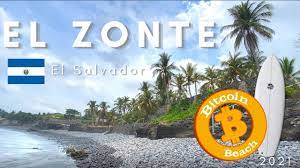
  • A small village, El Zonte, known as Bitcoin beach, is creating a Salvadoran Dream by leading the way with this cryptocurrency.
  • Read that article for the details.
Finally, that TIME issue delves into nonfungible tokens (NFT).  Earlier this year I covered this topic, so read it to get a sense of how the art world might be creating a pathway for the future of money.


I will conclude this posting with the lead story of this article about how Monica Rizzoli in Sao Paulo became a millionaire, watching how in 48 minutes, her 1,024-piece art collection earned $5.4 million in a NFT virtual auction.  To the left is one of her creations.


I'll end with a message from Planet Earth:

-

Tuesday, April 12, 2022

THE CRYPTO REVOLUTION

Is this the beginning of the next pandemic surge?  From the New York Times this morning.

  • You've read about Philadelphia's return to indoor masks.  
  • But what about the other regions?  
  • Remember when the Alpha variant hit Michigan and Minnesota about a year ago...then fizzled?  
  • So sure predictions are difficult. 
  • Of course, most new cases are being caused by the Omicron BA.2 subvariant, the most contagious virus yet, but the combination of vaccinations, high number of previous asymptomatic cases, home tests (which are generally not reported) and mildness of the resultant symptoms is not affecting the hospitalization rate, with a continuing decline of death rates.  
  • We are now in the mode of uncertainty tinged with optimism.

The crypto world is erupting.  It's possible that this could become a revolution.  However, anything relatively new remains perilous, and this financing option could just as easily blow up into obscurity, for the system is vulnerable to too many risks, especially suspicious regulators and hesitant countries.  

On 16 November 2013 my posting was WHAT DO YOU KNOW ABOUT BITCOINS?  Here is a current history of the price.


Since then I have had several articles on this mysterious financing subject, including on 22 September 2017 WHAT IS THE LATEST ON BITCOIN?  
  • I indicated that the bitcoin began to be traded in 2009 at $0.0008, but jumped to $0.08 by the end of the first month.   
  • In 2013 the price leaped to $450.  So in four years, one bitcoin jumped in value by a factor of 562,500!!!
  • There have nevertheless been some scary days as in 2017 the price was at $3634.98, but that was a drop from being above $5000 when China decided to ban this currency.  
  • The peak reached $68,649 on 10 November 2021.
  • A recent low of $35,070 occurred in January, with price moving up to $47,000, but is today a shade under $40,000.
  • Mind you, you almost can't appreciate the daily vacillation, unless you enjoy roller coaster rides, as for example, on April 10 it was at 43,357, only to drop to 39,713 on the 11th, almost 10%.
Of course, bitcoin is only one of a myriad crypto characters.  The New York Times had a recent summary of the field, and what once was a risky curiosity has become mainstream:
  • The American Airlines Arena of the Miami Heat NBA team is now the FTX Arena.
  • Major League Baseball signed a long-term partnership with FTX.
  • At least three mayors, Eric Adams of New York City, Francis Suarez of Miami and Scott Conger of Jackson (Tennessee) are gaining fame as crypto-politicians.
  • World leaders from Narendra Modi to Vladimir Putin to Olaf Scholz are debating this subject.
  • Earlier I reported that El Salvador's President Nayib Bukele is launching bitcoin backed bonds.
  • Seen Pepsi's Mic Drop genesis NFTs (non fungible tokens)?

You need need to know a few new terms to get a crypto-feel of the coming reality.  Kevin Roose of the New York Times has become the crypto-savant.  Some of the following came from him.
  • What is crypto?  The entire universe of technologies that involve blockchains.
  • What is a blockchain?  They are shared databases that store and verify information in a secure way.
    • The chain is decentralized.  This is one reason why so much computer capability is required.
    • There is no referee in decision-making, there is a consensus mechanism.
    • Thus it is impossible to take down a blockchain.  That is, the culprit would need to break into a bunch of computers at the same time.  There are 70,000 computers in the network.
    • Anyone can inspect a public blockchain's code or see any transaction.
    • Data cannot be deleted or changed.
    • Can also store and execute Non-Fungible Tokens, or NFTs.
  • What are Non-Fungible Tokens?  Assets that carry a unique digital identity, and can be traded between users on a blockchain.  Examples of NFTs include artwork, trading cards, comic books, sports collectible, games, etc.
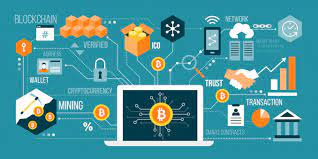
  • How are blockchains related to cryptocurrencies?  I'll simplify this:  bitcoin uses a blockchain to keep track of transactions, allowing people to send and receive money over the internet without a central authority, such as a bank or PayPal.
  • How many cryptocurrencies are in existence?  Roughly 10,000.  Bitcoin is the best known cryptocurrency.
  • As cryptocurrencies have been around for 13 years, why can't I use it in daily transactions?  You can, and some companies are Microsoft, Home Depot, Starbucks, Tesla, Whole Foods, KFC Canada, some Subways (and the first such transfer occurred in Moscow, Russia in 2013), Burger Kings in certain countries, Dallas Mavericks, Miami Dolphins, Expedia and Amazon through Bitrefill.  Wikipedia accepts Bitcoin donations.
  • There are now crypto social clubs, crypto video games, crypto restaurants and crypto-to-powered networks.
  • Isn't crypto similar to a Ponzi pyramid scheme?
    • Well, there are some, like OneCoin, which stole $4 billion from investors from 2014 to 2019, and VirgilSigmaFund, essentially a 24-year old who ran a crypto hedge fund, got $90 million, and was arrested.
    • An equivalence is whether the stock market is a Ponzi scheme.
  • Is crypto regulated?  Hardly.  The IRS hasn't yet figured out how to tax crypto profits.
  • Will crypto replace the dollar?  No.
  • Who invests in crypto?  There are publicity seekers, but the truth is that no one knows who really is doing any crypto-investing.
  • Is crypto for Whites?  In the U.S., much of what you see seems to be Caucasian actors and billionaires.  Turns out that Asian, Black and Latino adults are more likely to go into crypto.  Further, the fastest growing countries are Vietnam, India and Pakistan.
  • Aren't criminals taking advantage of crypto?  Yes.  Big in illegal buy-sell and tax schemes. 
  • Is crypto bad for the environment and global warming?  Yes.  A lot of computer time and electricity are used.  Around the annual energy consumption of Thailand and carbon footprint of the Czech Republic.  Some companies are beginning to shift to renewable resources, while a counter-argument is that other forms of financing produce more carbon dioxide.
  • What is a crypto wallet?  It keeps your private keys, the passwords giving you access to your cryptocurrencies.  Examples are Ledger, which looks like a USB stick and a mobile app like Coinbase Wallet, which is like an online credit card.  You can also write you passwords on a piece of paper and store it in a safe place.  
    • However, there is the case of Stefan Thomas of San Francisco.  He has only two guesses left to access $320 million.  In 2021 Forbes estimated his worth at $500 million.  IronKey contains the private keys to a digital wallet that holds 7,002 Bitcoin.  He wrote the password on piece paper and lost it.  He had ten guesses before IronKey forever encrypts these contents forever.  At this time his best solution he thinks might be:
There is a way to take a scanning electron microscope and take apart the physical chip and literally go into the the silicon chip and take away layer by layer, like a few atoms thick, and then read out the actual memory cells. And then with that technique, you should be able to bypass that limit of 10 tries, and then you can have a supercomputer try, you know, billions of passwords per second.
    • Of the existing 18.5 million Bitcoin, apparently 20%, or $140 billion, appear to be lost or otherwise stranded.
    • A company, Wallet Recovery Services gets 70 request/day from people wanting to recover their investment.
Did Satoshi Nakamoto create Bitcoin?  Read my posting of a few months ago.  Most authorities say he is 47 years old and from Japan.  Chances are that he is a they, who own around a million shares, which would have been worth nearly $7 billion at peak, and today is closer to $4 billion.  Until this mystery is solved, consider him to be symbolically represented by this statue in Budapest.

Now that you are a new convert to the crypto revolution, here are two more buzzwords worthy of your appreciation.
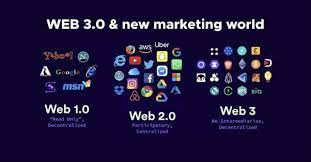
  • Web3
     
    • Can monitize data.
    • A new kind of internet service built using decentralized blockchains.
    • Will be used to play video games, sell/buy digital culture and a lot more.
    • To begin, there was Web1, the internet of the 1990s into early 2000s.
    • Then came Web2 from 2005 characterized by social media.
    • Web3 will replace these centralized and corporate platforms with a decentralized and community-run networks.
      • A typical option would allow you to buy stakes in up-and-coming artists, and gain streaming royalties.
      • Will become an essential part of the metaverse.
      • Which leads to, what is the metaverse?  
        • In short an umbrella term encompassing augmented, virtual, and mixed reality technologies.  
        • Or, from a 1992 sci-fi novel Snow Crash by Neal Stephenson:  an all-encompassing digital world that exists parallel to the real world.  Pegged to become a nearly trillion dollar market by 2024.
        • Or, a 3D version of the Internet and computing at large.
        • A current equivalent would be the Apple App Store.
        • How to access the metaverse today?
          • Perhaps a $10 Google Cardboard.
          • Your smartphone.
          • Or $300 Oculus 2 headset.
          • Or $999 Valve Index VR.
        • Someday, the metaverse will allow you to buy a virtual country.
  • DAO
    , which stands for Decentralized Autonomous Organization, and has also something to do with blockchain technology.
    • Is a crypto-coop.  Think financial flash mob.
    • A group forms this partnership around something like a start-up or NFT subject usually using crypto tokens.
    • For example, ConstitutionDAO, consisting of thousands of crypto fans, raised more than $45 million to bid on a rare copy of the U.S. Constitution that was being auctioned by Sotheby's.  They lost and have not yet succeeded in returning the loot.  $1.2 million was earned by Ethereum for hosting this DAO.
    • Another is PleasrDAO, a team of dozens or crypto artists and investors which spent $4 million on the Wu-Tang Clan album Once Upon a Time in Shaolin.  Why?  Search me.
    • In any case, DAOs are supposedly more democratic, transparent and nimble.
    • There have of course been DAOs like DeFi which took $60 million and disappeared.
    • There are also social DAOs like Friends with Benefits.  This one costs $4000 to join, providing chat rooms on job leads, investment opportunities and the like.  Now, who would want to do this?  It has a membership of thousands.  The initial cost was quite low and zoomed up to $4000.
    • Who bothers with DAOs?  Those interested in speculative gambling, trend-chasing and utopian true belief, like fixing the original internet.  There is a new world out there being orchestrated by the crypto revolution.
I'll close with the following sent by Curtis Lee:

-


Saturday, October 11, 2025

UPDATE ON THE BITCOIN

I get a bit into bitcoin today to reflect how volatile it can be.

    • In particular, cryptocurrencies Bitcoin (almost a 10% decline), Ether (14.2%) and Solana (20%) led the sinking, bringing total liquidations to $14.28 billion, the largest in crypto history.  One of Trump's executive order to allow digital assets to be included in 401(k) plans led to Bitcoin soaring to a record high of $124,000 last week.  
      • When to capitalize (b)itcoin?  When referring to the protocol, technology or network.  But lowercase bitcoin is used as a unit of currency.  I'm hopelessly confused.
      • The first recorded Bitcoin exchange was in late 2009 for $0.00099/bitcoin.
      • By late 2009, the first recorded exchange of Bitcoin for dollars was $5.02.
      • Something to do with pizza, but on 22May2010, 10,000 Bitcoins were worth $40.
      • June 2011:  $26/bitcoin.
      • February 2013:  $22/bitcoin.
      • September 2013:  the Chinese government banned the Bitcoin, featuring a risk of money laundering.  Still banned today.
      • 4December2013:  Alan Greenspan referred to the Bitcoin as a bubble.
      • January 2014, Las Vegas casino D Las Vegas and Golden Gate began accepting the Bitcoin.
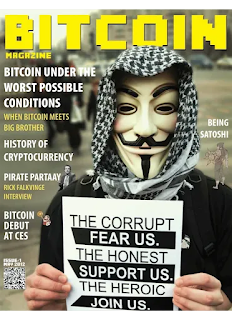
      • 2014:  Johnny Barrett released Ode to Satoshi.  Read my 2021 posting on Where is Satoshi.  It's about Satoshi Nakamoto, who authored the first paper on the subject.  Turns out that, maybe, there is no one by that name.  Might be a group of people.
      • December 2014:  Microsoft began to accept bitcoin to buy Xbox games and Windows software.
      • February 2015:  The number of merchants accepting bitcoin exceeded 100,000.
      • January 2016:  The network rate exceeded 1 exahash/sec.  Click on that to find out more.
      • March 2016:  Japan accepts the bitcoin as real money.
      • December 2016:  Ledger first issue of a peer-reviewed academic journal dedicated to cryptocurrency and blockchain technology.
      • 25January2018:  George Soros referred to bitcoin as a bubble.
      • Early 2019:  Bitcoin just below $4000/bitcoin.
      • July 2019:  $12,000/bitcoin.
      • 19January2021:   Elon Musk got involved, causing the price to briefly jump in an hour from $5,000/b to $37,299/b.    By February, up to $44/141/b.  Then in May, Tesla suspended Bitcoin payments due to environmental concerns, dropping the price from $58,000 to $46,000 in one day.  A low of $42,185 was reached on May 17
      • 1June2021:  El Salvador President Nayib Bukele announced plans to adopt bitcoin as legal tender, the first country to do so.
      • 12April2022:  Read my posting on The Crypto Revolution.
      • 2023:  Non-fungible tokens (NFT) went live on Bitcoin.
      • October 2024:  Bitcoin at 60,607.
      • 11November2024:  Bitcoin accounted for 55.2% of the the cryptocurrency market.
      • 4December2024:  Bitcoin at $103,332. 
      • 13August2025:  Bitcoin reached an all-time high of $125,725.
      • Today?  110,942. 

    • You got to wonder if insiders are taking advantage of these White House strategies.