Total Pageviews

Showing posts sorted by date for query seti, ames research center. Sort by relevance Show all posts

Thursday, June 4, 2026

MY LIFE: Part 2a

 But first, some news of the day.

  • Cristopher Sánchez (Phillies):
    Leads the majors with a microscopic ERA among qualified starters. He made national headlines by racking up an incredible scoreless-innings streak, showcasing devastating command with his changeup.
    [1, 2]
  • Jacob Misiorowski (Brewers): The "The Miz" has been utterly electric, leading all of baseball in total strikeouts and routinely lighting up the radar gun with the hardest-throwing velocity in MLB history. [1, 2]
  • Cam Schlittler (Yankees):
    Emerged as the undisputed ace of the Yankees' rotation, placing near the top in ERA, FIP, and Pitching Run Value while pounding the zone with elite fastball shapes.
    [1, 2, 3]
  • Shohei Ohtani (Dodgers): Continues his two-way dominance, combining a historically low ERA and WHIP while limiting opponents to one of the lowest batting averages against in the sport. [1, 2]
      • Top hitters:  Yordan Alvarez of Houston and Ben Rice of the Yankees.  Fewer home runs this year, with Kyle Schwarber  of Philadelphia in the lead with 23.
      • Top teams:

  • Atlanta Braves (42-20):
    Currently holding the best record in baseball and leading the NL East.
  • Los Angeles Dodgers (40-22) A perennial powerhouse, consistently hovering at the top of the NL West.
  • Milwaukee Brewers (37-22): Surging into the top three with an elite pitching staff, they comfortably lead the NL Central. [1, 2, 3, 4, 5]
      • My two head-to-head fantasy baseball teams are undefeated and leading their league of 10.  My two Roto teams are at #3 and #4, so not doing well.

    If you keep track of these things, I changed my posting of two days ago from MY LIFE: Part 2, to Part 1b.  This is because Part 2, today, reports on my second 27-year period, and Part 3 will complete this series.  So on to my second 27-year period, which began when I started my career at the University of Hawaii, Manoa Campus in 1972.
    • I arrived as an assistant professor, and was assigned to teach Fortran IV programming.
      • Never took the course, but I had come from LSU, where Paul Murrill and Cecil Smith were members of the chemical engineering faculty, and were already famous for their 1968 textbook on this subject.
      • As I walked to the auditorium to meet with my 100 or so (class range from freshmen to graduate students) for my first attempt at teaching, I was still trying to decide whether to tell them I did not know the subject, or wing it as an "expert."
        • Chose to play professor, and when a question came up for which I did not know the answer, indicated in response that I did not want to confuse the class with that detail and to wait until I get to the subject.
        • At the end of the course, streams of students came to my office to tell me what a great course this was.
        • This never happened again, for all the other courses I taught were on topics where I was an expert.  
        • There is something important about this experience to make better teachers, but I never  was able to fine tune my lectures because the First Energy Crisis came in my second year of teaching, and I turned my focus into the research of renewable energy, was sent to work in the U.S. Senate for three years, and became an administrator.
    • In the mid-70s, I served as one of the reservoir engineers for the Hawaii Geothermal Project, and we succeeded in finding a site in Puna, where we drilled a hole:
      • Went down to a depth of 6450 feet (more than a mile) and found a production site with a temperature of 676 F, the hottest geothermal well in the world.
      • Built a 3 megawatt demonstration plant, and fed electricity into the Big Island grid from 1981 to 1989.
      • I created a program to utilize the deep ocean fluids for various applications, sort of similar to what we were doing on the other side of island with deep ocean water at the Natural Energy Laboratory of Hawaii.
      • This success led to the development of Puna Geothermal Venture, now producing 38 MW of firm power, about 20% of the electric capacity of the Big Island.
      • One important point about this option is that the electricity is baseload, available all the time, for both wind energy and solar power depend on the availability of winds and the sun. 
    • Soon after that First Energy Crisis of 1973, oil prices quadrupled from $3/barrel to $12/barrel.  There was a further leap to $34/barrel after the second Energy Crisis in 1979.
      • This jump triggered inflation, shortages and rationing of gasoline.
      • Created was the Hawaii Natural Energy Institute, which became the premiere research organization for renewable energy in the Pacific.
    • In parallel with the above, I could still spend my summers doing whatever I wanted.
      • In 1974, James Dator and I joined a group of faculty members from California to run a summer public education program sponsored by NASA entitled Earth 2020--Visions for Our Children's Children, the first part was my idea, while the theme was contributed by the wife of Hans Mark, then director of the NASA Ames Research Center, the sponsoring organization.
      • That experience led to my being invited in 1976 by that NASA Center to be part of a 20-professor team from across the nation on one of the first Search for Extraterrestrial Intelligence (SETI) initiatives, Project Orion, to detect an extrasolar planet (or exoplanet), that is, a planet revolving around another star, spearheaded by Barney Oliver and Jack Billingham. The first question asked of Cornell Professor Frank Drake was: “Extraterrestrial intelligence?  How do you know there are even other planets outside our solar system?” So the faculty group was tasked to design a system to accomplish this feat. Why me? Well, I had an idea on how to do this, plus I long harbored visions that the cure for cancer and the solution to world peace might be beaming unto Planet Earth from advanced civilizations.
        • Nobel Laureate Charles Townes had just come to the University of California at Berkeley, and had published a paper hinting that the potential for life on exoplanets could be determined by laser spiked starlight providing up to ten magnitudes of greater brilliance than the light that could be seen from telescopes.  
        • My contribution was to use a tunable laser as a key part of the system.
        • Our report to NASA was called, To See the Impossible Dream:  the Planetary Abstracting Trinterferometer (with an acronym of PAT), with a Man from La Mancha symbol on the cover, with a quote from Miguel de Cervantes:
                                  To Man, the Don Quixote of the Universe,
                                  May he succeed in his impossible dream.
        • Turned out that it was two decades years later, when extrasolar planet 51 Pegasi b was found by Michel Mayor and Didier Queloz, and they won the 2009 Nobel Prize in Physics.
        • Now, 6,298 exoplanets have been discovered across 4,700 different solar systems in the Universe.
    Something tells me that Part 2 will have several postings, for I went on to the Lawrence Livermore National Laboratory to work on laser fusion, the U.S. Senate, where I wrote the original legislation for hydrogen, my return to the University of Hawaii to help create the Pacific International Center for High Technology Research, my 15-year period as director of the Hawaii Natural Energy Institute, and formative period for the Blue Revolution.


    -

    Sunday, May 17, 2026

    MY LIFE REFLECTIONS

    This blog site has been posting daily now for 18 years.

    • Has been visited by 221 countries, and the reason why this is more than the 193 countries in the United Nations is that there are entities like Antarctica, and smaller territories that have their own domain.
    • Not sure when I first reached 1 million total visitors, but I do know that for the first 15 years or so the average viewers/day was around 500, so I would guess that this site took around 7 years to hit one million.  Now up past 6 million total.
    • However, during the past two days, the number of visitors reached 147,720 and 123,579, so for reasons I can't explain this site went viral.  
    For long-time readers, I have tended to focus on certain topics on a given week day.

    • Sunday:  spiritual, religion, reflection on life, etc.
    • Monday: global topics, with some thoughts about what is to come during this week.
    • Tuesday:  nostalgic, linking with the past, etc.
    • Wednesday:  sci-tech and the future.
    • Thursday:  health, nutrition, and the like.
    • Friday:  thoughts on the coming weekend.
    • Saturday:  entertainment, sports, etc.
    After being away on a trip for 50 days, I feel reflective and returned with a higher appreciation for my life.
    • I am 85, still travel a lot, golf on occasion, try to walk as much possible, and have found my final cocoon, which is 15 Craigside (the greenish one to the left), a seniors' community located in Honolulu, where I was born.  Having moved here 12 years ago from 2101 Craigside (the tall brown one) a condo, where I lived in a fabulous penthouse for 32 years, this means I've been on this same corner of Nuuanu Avenue now for 44 years.
    • I've now been retired from the University of Hawaii for 27 years.
      • I joined the engineering faculty 54 years ago in 1972, which means I worked as a professor and administrator for 27 years.  
      • I still maintain an office on the Manoa Campus, so have not totally escaped from academia.
      • Just before leaving on my trip, I had a chance to sit next to Dean of the School of Ocean and Earth Science Technology, Skip Fletcher, and caught up with news of our school.
      • As Director Emeritus, I also have free parking on campus.
    Was born and grew up in Kakaako, Honolulu, Hawaii.  
    • Never left the state until I went away to Stanford University.  At graduation in 1962, my closest classmates mostly joined the first year of JFKs Peace Corps, something I was not all that enthused about, but compromised by returning home to help the sugar industry survive.
    • Spent seven years in the toughest job I've ever had in sugar plantations on the Big Island and Kauai.  While at the Kilauea Sugar Company, an old man mentioned that he knew my grandfather, who was buried up on a hill above the town.  After I retired, I made a thorough roots search and learned that he was from Utashinai, Japan, was sent to the USA for some advanced schooling, stopped by Kauai to build the first hydroelectric facility on the island, but just before it was commissioned in 1906, fell at the site and died at the age of 33.  Somehow, had gotten married, and my father was born.  I visited the hydro plant a hundred years after it was built, and was still pumping out around 3 MW of electricity.
    • The oldest company in Hawaii, C. Brewer, decided to send me to graduate school in 1979, but only to Louisiana State University, which had the sole sugar program in the world.  I worked out an arrangement to stay for a PhD in biochemical engineering, and the next section reports on my academic life.
    Reflecting on my period of campus activity:
    • Joined as an assistant professor of Engineering in 1972, and around the time of the first energy crisis in 1973, my primary research topic was in geothermal engineering.
    • I then became part of the Hawaii Natural Energy Institute when it was created in 1974.
    • Google AI reports that I worked with a Nobel Laureate one summer.
    Patrick Takahashi spent a summer at the NASA Ames Research Center working on SETI (Search for Extraterrestrial Intelligence) in 1976. During this assignment, he helped advance a concept to directly detect extrasolar planets based on suggestions by physicist Charles Townes. [1]
    • As my PhD dissertation research involved designing a tunable laser before one could be built, I spent two summers on laser fusion.  Again from Google AI.
    Patrick Takahashi spent two summer assignments working on laser fusion at the Lawrence Livermore National Laboratory shortly after completing an assignment at the NASA Ames Research Center in 1976.[1]
    • At the end of my second stint at Livermore, I was asked to join the staff of U.S. Senator Spark Matsunaga in DC.
      • Was the Senate staffer linking with the House to pass the wind energy budget.  House lead Tom Gray went on to become president of the American Wind Energy Association
      • Drafted the first Ocean Thermal Energy Conversion R&D legislation,
      • Drafted the first Senate Hydrogen R&D legislation, which on to become the Matsunaga Hydrogen Act.
      • Was also the Senate staff lead for the Deep Seabed Hard Minerals Act.
    I then returned to the University of Hawaii in 1982.
    • Became director of the Hawaii Natural Energy Institute (HNEI) in 1983.
    • That same year, Dean of Engineering Paul Yuen and I created the Pacific International Center for High Technology Research (PICHTR).  Budgeting difficulties at the University of Hawaii convinced us to make PICHTR a not-for-profit organization in 1985, with an off-campus office.  Still active, 43 years after formation.
    • HNEI became the leading renewable resources organization in the Pacific, and served as the Department of Energy's Hydrogen Research and Training Center with the Florida Solar Energy Center, Department Interior's Mineral Research Center with the University of Mississippi and National Science Foundation's Marine Bioproducts Research Center.
    • During my final decade of activity at the University of Hawaii, State Senator Richard Matsuura and I created a Blue Revolution program.  He had previously worked for Norman Borlaug, father of the Green Revolution.

    I retired at the end of 1999 and, as great as my life was during my 27 years with the University of Hawaii, the past 27 years of retirement have been better.

    • Wrote three books.
    • Went around the world almost ten times.
    • Started this blog site in 2008.

    In case you were interested, Dara of Bulgaria won the Eurovision Song Contest singing Bangaranga.


    To close, I took a walk this morning to the roof of 15 Craigside, plus some other photos of future activities here.  A beautiful day in Honolulu.

    Violet playing the piano.

    Paper carps are flown in Japan and Hawaii for Boys day.

    -
    Monday, July 7, 2025

    TRUMP vs MUSK AND MORE

     I reached a milestone today, hitting 4 million viewers:

    Since my first blog on 29April2008, there have been 6792 postings.  Thus, an average of close to 600 readers/day.  221 countries have visited this site.


    Actually, in October of 2020 I reached the limit of how many labels I could use, so in parallel I initiated a different location, which began accumulating another set of viewers, and this blog is up to 172,000 viewers.  So you have an option to read this second site, which has the same content, but looks different.  One of the photos I used in that initial 10October2020 posting was of Phil Spector.  Why?  My #80 favorite song was featured, To Know Him is to Love Him, and he started performing by writing that song and is one of the three Teddy Bears.  Then he later developed his wall of sound background music for which he is famous, married Ronnie Spector of the Ronettes and became mad, as in crazy.  Incidentally, if you are already only accessing this new blog, the original can be found at this site.


    After re-reading my posting of yesterday, I observed that I missed a few other somewhat adventurous periods in my life that added to my mostly prosaic professional career.

    In the 1970's one telling question was why bother with SETI when science had not yet confirmed even one planet outside our solar system.  So in 1976 NASA created Project Orion and brought together 19 faculty members from throughout the Nation to devise methods for detecting extrasolar planets.  Most the group worked together to design an interferometric system to indirectly find extrasolar planets.  I was given an opportunity to develop a direct method, called the Planetary Abstracting Trinterferometer (or PAT).  Click here for the full details.  I have thus followed this effort now for nearly 40 years.

    • That above blog was posted a dozen years ago, so I have now been involved with SETI for nearly half a century.
    • As indicated above, I was able to investigate my personal project, for which I enlisted the assistance of Charles Townes, who had just won the Nobel Prize and moved to the University of California at Berkeley.  I thus drove a lot to that campus.  The concept we developed was his idea that planets with an atmosphere lased, meaning that all we had to do was design an instrument to track monochromatic lights to first determine this was an extrasolar planet, but as a by-product, obtain the atmospheric content of that planet.
    • This was only a summer escape, so I had loads of opportunities to enjoy the area.
      • Lived in Escondido Village, a premium studio for married students on the Stanford Campus, close to my freshman dormitory, Wilbur Hall.
      • Took a wine tasting course in the evening.
      • Rented a large 36 inch TV set to watch the Montreal Summer Olympics.
      • Golfed 9-holes almost daily at the Palo Alto Municipal Golf Course.  This summer job only met for a couple of hours in the morning, after which we did research, or anything you wanted to do.
    The second adventure opportunity occurred twice.  I spent two 6-month sabbatical periods on the campus of the Tokyo University of A&T (a national university called Nokodai).
    • My wife and I were housed in married students housing on campus for a very low price.
    • My office was at the top of a new building with a picturesque view of Mount Fuji.
    • I joined the lab of Professor Tadashi Matsunaga, who went on to become Dean of Engineering, President of this university, then on to work for the Prime Minister of Japan.
    • I had previously hosted Dr Matsunaga at the University of Hawaii as the First International Professor for the Blue Revolution.
    • I had thoughts of truly learning Japanese, which did not happen.
    • When on sabbatical, I was free to do anything, and at the end of the period was asked to give a lecture on whatever I wanted for the engineering faculty, which both times featured the Blue Revolution.  If you know nothing about the Blue Revolution, watch my TEDx talk given three years ago.
    The latest on the Trump vs Musk feud.
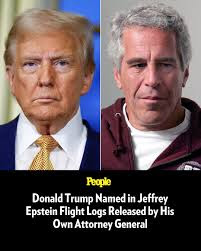
    • Attorney General Pam Bondi continues to waffle on the Epstein documents.
    • Don't expect any full release, for there is reason to believe that Donald Trump himself was involved in the Epstein follies.  One wonders if DOGE actually succeeded in slipping the truth to Musk.
    “Time to drop the really big bomb,” Mr. Musk wrote on social media. Mr. Trump, he said, “is in the Epstein files. That is why they have not been made public.” Mr. Musk did not offer any evidence, but soon added, “The truth will come out.”
    • Musk did delete that above post, but on Friday indicated he will be forming the American Party.
      • While Musk's new party candidates will not win any election, they could influence the results of the general election by pulling enough Republican votes to give more Democratic victories.
      • Although Tesla stock value has dropped, apparently Musk is still the richest man in the world.  His money could well make a difference in swinging control of Congress to Democrats.
    My sense is that Elon Musk tells the truth, but Donald Trump must hold the world record for most recorded lies.  Appropriately enough, today is TELL THE TRUTH Day.
    I should mention that Typhoon Danas struck Taiwan yesterday:
    • Jan 5     50 MPH
    • Jan 6   105 MPH
    • Jan 7     45 MPH


    In the Atlantic, Tropical Storm Chantal reached 60 MPH yesterday, made landfall, and is bringing floods to North Carolina and points north.  The really big storm, though, is the 4th of July flash flooding over central Texas, with more rain still coming.  So far 95 bodies have been found.  This was at least partially a leftover from Tropical Storm Barry.  Upwards of 20 inches of rain fell, and the Guadalupe River rose 26 feet in 45 minutes.  The lesson here is that you need to be watchful for any storm, not only hurricanes.  Fox News reported that the Trump administration's staffing cuts for NOAA and FEMA might have been responsible for exacerbating this tragedy.

    -