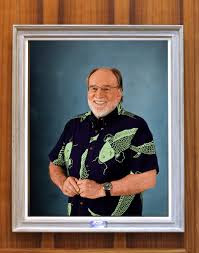
The cruise continues with two days at-sea, getting into St. John's, Newfoundland on Thursday, August 20. I'll be including activities on board, but this period allows me to provide further episodes for a couple of series I earlier began. Today, Part 3g of My Life.

The story of My Life began as a post on 31May2026, after I realized that, from the age of 5, my life could be represented by three periods of 27 years: education, work and retirement. To summarize:
- The average person spends the first 20 to 25 years growing up and going to school, the next 40 years working, and the final phase in retirement, generally only around 10 years.
- My life:
- I was born in 1940, and my life expectancy was supposed to only be 45.
- This comes from Google AI citing Our World Data.
- I was born in Hawaii, not then yet part of the USA, but if I asked Google AI, what would my life expectancy be if I were born in the U.S. in 1940, the answer was 61.4.
- Were I to ask, since my ethnicity is Japanese, what was the life expectancy of a baby born in Japan in 1940, the answer would be 50.
- This question for someone born today would be: Japan 85 and USA 79.
- In other words, in 1940, a baby born in the USA would be expected to live 11.4 years longer than a baby in Japan.
- However, today, this expectation is reversed. A baby born in Japan is expected to live 6 years longer than a baby in the USA.
- What has happened?
- Incidentally, today, anyone born in Africa has a life expectancy of 61.5. Just about what it was in the USA in 1940.

- In any case, I will 86 in a couple of weeks.
- So if you subtract 5 years from that number, you will get 81. Divide that by 3 to get 27,
- Turns out that my life has had three 27-year periods of education, work and retirement
- Thus, I have so far in this blog site posted the following.
- K-12 = 13 years, college up to a PhD = 7 years, and first job with the sugar industry, which I consider too be a learning experience = 7 years. The total education is thus 27 years.
- I started teaching at the University of Hawaii in 1972, and retired in 1999 = 27 years.
- I thus have been retired for 27 years. 1999 to 2026.
- So in my series on My Life, I went through school as Parts 1a and b, work as Parts 2a and b, and am into Part, 3g the seventh episode of my retirement years. You can read all of them if you wish:

 Today, I continue my effort to place my wife's ashes (in gel caps) in places she desired to visit, but did not because of my reluctance. This particular ceremony at the sun dial of Machu Picchu turned out to be almost something out of Indiana Jones (who, as you might know, is most based on the life of Hiram Bingham III, a person from Hawaii).
My 31May2017 posting provides the full story:
- I go on to say:
Hiram Bingham II also became a missionary to the then Kingdom of Hawaii. His son, Hiram Bingham III, was born in 1875, graduated from Punahou and went on to Yale, Cal-Berkeley and Harvard, where he earned a PhD in 1905. He went on to work under Woodrow Wilson at Princeton, then joined the faculty of Yale in 1907 as a lecturer in South American history.
While, yes, other Westerners might have previously visited Machu Picchu, Bingham is credited with bringing the site to the attention of the world in 1911, a century before I arrived in 2011 to drop Pearl's Ashes. The road that carries tourists buses to the site is called the Hiram Bingham Highway.
- Here is where I made three ash drops, #25, #26 and #27:

- I would have been fine if I did not at the last moment make my 27th ash drop into this crack of the Sun Dial, a sacred monument watched over by a muscular guard.

- Notice that large crack? An unarmed large warrior was guarding it. When I thought he wasn't watching, I dropped one of Pearl's Ashes gelcap into a crack. A minute later, now holding a large long bo staff he began peering down the crack. He was about to question me, but at the same time, my tour group showed up, so I was able to avoid him, and as unobtrusively as possible, swiftly made a beeline for the entrance (it was about a 15 minute fast-walk away). In my mind was a headline indicating, American professor arrested for defacing the Machu Picchu Sundial. I was able to leave the premises, and found our bus, which was close by. A couple of others were sitting, so I slouched in a seat so I couldn't be seen from the outside. I escaped from Machu Picchu, my only possible incident during the 50 or so ash tossings.


- Called Intihuatana, the hitching post of the sun.
Moreover, Intihuatana likely held spiritual significance for the Inca people. It was believed to be a sacred site where the sun was ritually “tied” to the earth, ensuring its continued journey across the sky. Rituals and ceremonies may have been performed at Intihuatana to honor the sun god Inti and to seek his blessings for a bountiful harvest and prosperity.
- The knob at the top casts a shadow that aligns with various carved marks on the stone platform. These marks are believed to have been used by the ancient Incas for determining astronomical and agricultural events.
- While Machu Picchu is open daily from 6AM to 5PM, the Intihuatana can only be visited from 7AM to 10AM.
- Apparently, the crack was caused by a camera which accidentally fell at that point. Anyway, that's what I read. It is is a huge crack.
To close, I can report that a tropical depression 17 just formed in the West Pacific. Now only sat 30 MPH, it will become a typhoon in two days, and could well strengthen into a Category 3 or stronger in only a couple days. The eye is headed for Okinawa.