Total Pageviews

Showing posts sorted by relevance for query crawfish, jambalaya. Sort by date Show all posts

Friday, April 10, 2026

LOUISIANA

I was born and lived in Hawaii for most of my life, but additionally spent four years or more in California, Louisiana and the Washington, DC area, plus two six month sabbaticals in Tokyo.  I graduated from Louisiana State University in Baton Rouge in 1972, so more than half a century has passed since I last lived in this state.  What has changed in Louisiana during this period?


                                        1972                    2026

  • Population:     3.76 million          4.62 million
  • Black %                 31%                     29.5%
  • Asian %                0.1%                       2.0%
  • Cajun %                2.0%                       1.0%
    • However, this drop is not real, for the Census Bureau adjusted coded ethnicities and details like primary ancestry.
    • It is not certain what the Cajun count is today, but going by the census, the 800,000 or so Cajuns of a half century ago now number 54,000, or something closer to 0.1%.
    • With all this drastic decline, Google AI says:
Cajun influence in Louisiana has shifted from an isolated, rural way of life half a century ago to a celebrated, modernized, and commercialized cultural brand today
. While language fluency has declined, Cajun food, music, and "joie de vivre" (joy of living) are now central to Louisiana’s mainstream tourism and regional identity.

I asked Google AI, what has changed most about Louisiana over the past half a century.

  • Overall, Louisiana is battling to balance its traditional, resource-based economy with the rapid decline of its natural environment, resulting in a state that is increasingly vulnerable to climate change, yet continuously rebuilding.
  • Louisiana has experienced profound, often detrimental changes, with 
    coastal land loss and environmental vulnerability
     being the most significant transformation. The state has transformed from a landscape with a largely intact, protective coastline to one that loses roughly a football field of land to the ocean every hour, totaling over 2,000 square miles since the 1930s.  
    • The total land area of the island of Oahu, which is where Honolulu is located, is only 597 square miles.
    • The land area of the islands of Oahu, Maui and Kauai, combined, is 1885 square miles.
    • In other words, the state of Louisiana has lost more land than the combined area of Oahu, Maui and Kauai since the '30s,
  • Intensified Hurricane Vulnerability:
     Due to the loss of natural barrier wetlands and climate-related factors, hurricanes have become stronger and wetter, resulting in intensified storm surges, as seen with Hurricanes Katrina and Ida.  
  • Following Hurricane Katrina in 2005, the New Orleans area underwent massive change, including the construction of a $14.5 billion levee system, which successfully held back the surge during Hurricane Ida in 2021.
  • Industrialization & "Cancer Alley":
     The stretch of land along the Mississippi River became heavily industrialised with petrochemical plants in the late 20th century, leading to high concentrations of air and water pollution.
  • Watch this video.

Before I leave this state, some history of Louisiana,

  • Lands here formed from sediment washed down the Mississippi River.
  • When I lived here, numerous people I befriended had never seen a mountain.  However Driskill Mountain is 535 feet high.
  • State has 18 Native American tribes.
  • First European explorers came in 1528 from Spain.
  • France claimed the territory in 1682.
  • Named after King Louis XIV, King of France from 1643 to 1715.
  • Slavery began in 1708.
  • Louisiana from 1762 to 1801 was under Spanish rule.
  • France then took over, and Napoleon sold Louisiana to the U.S. in 1803.  The Louisiana Purchase:
    • Authorized by President Thomas Jefferson.
    • Land size of 828,000 square miles.
    • Cost $15 million, or roughly 3 cents/acre.  
    • This land today is worth $1.2 trillion, doubling the size of the U.S.
    • Roughly 6.3% became Louisiana.
    • The rest mostly became all or part of 14 other states.
    • A small portion was ceded to Canada, become part of Alberta and Saskatchewan.
  • Admitted to the Union in 1812 as the 18th state.
  • A slave state, it was one of the original seven members of the Confederate States, and in 1840, New Orleans had the biggest slave market in the U.S.  
    • Harbored escaped Filipino slaves from the Manila Galleons, establishing the first settlement of Asians.
    • In 1860, 47% of Louisiana were slaves, 331,726 of the total population of 708,002.
    • In 1900, the state population was still 47% Black.
    • 1960, 32% Black.
  • Louisiana has maintained its French heritage, for counties are known as parishes, and the legal system is different.
  • Has never had an official language.
  • Hurricane Katrina devastated New Orleans in 2005.  80% of the city was flooded.
  • Four largest cities are New Orleans (383,997), Baton Rouge (227,470), Shreveport (187,593) and Lafayette (121,374).
  • Based on national averages, Louisiana frequently ranks low among U.S. states in terms of health,[15] education,[16][17][18][19] and development, with high rates of poverty[20][21][22] and homicide. In 2018, Louisiana was ranked as the least healthy state in the country, with high levels of drug-related deaths. It also has had the highest homicide rate in the United States since at least the 1990s.[23][24][25]

A lot of negatives above, but Louisiana has contributed a lot to life in the USA.

  • Louisiana hosted the first Mardi Gras.
    • French-Canadian explorer Pierre Le Moyne d'Iberville celebrated Mardi Gras on 2March1699 near on the Mississippi River near present-day Buras, Louisiana, 60 miles south of New Orleans.
    • The second was 1703 in Mobile, which was then part of French Louisiana.
    • New Orleans first celebrated in 1718.  Parades came in 1837.
    • The first Carnival festival in Rio de Janeiro occurred in 1723, brought by Portuguese settlers.
  • Creole/Cajun cuisine (jambalaya and gumbo) and the birth of jazz and zydeco music.

  • Take restaurants.
    • Ruth's Chris Steakhouse.
      • 133 in the country.  Fourth largest steakhouse chain,
      • In 21 countries.

    • The top five chicken chains are Chick-fil-A, Popeyes Louisiana Kitchen (Arabi, a suburb of New Orleans in 1972, which failed, so Kenner was #2 and Baton Rouge #3), Raising Cane's Chicken Fingers (Baton Rouge in 1996), Jolibee (Philippines), and Kentucky Fried Chicken.
    • While there are only five Acme Oyster Houses, all in the Gulf, I had my first raw oysters here in 1969.  
      • First opened in the French Quarter in 1910. 
      • Incidentally, Oysters Rockefellers were created by Jules Alciatore (son of founder) at Antoine's Restaurant in New Orleans.  Named after John D. Rockefeller.  Antoine's first opened in 1840, and is recognized as the oldest family-run restaurant in the USA.
    • Crawfish:
      • Louisiana Native Americans are reportedly, the first to eat crawfish.
      • Crawfish is also called crayfish in some locations.
      • I am allergic to crustaceans, but not mollusks.  I also seem not to be bothered by freshwater-reared crustaceans.
        • Crawfish from Louisiana did not harm me.
        • Later, I found out that Malaysian Prawns grown in freshwater in North Oahu also did not bother me.
        • Apparently, the culprit is tropomyosin, a muscle protein, is the cause.  While all crustaceans have this protein, there is a subtle differene in protein structure from freshwater species.  The difference is so sensitive, that many with this allergy from saltwater crustaceans, also suffer from the freshwater variety. 

One of my best friends in the chemical enginering department at Louisiana State University is Harry Toups.  We got our PhDs there around the same time a little more than 50 years ago.  While I returned to Hawaii, after a long career at Exxon, he went back and now teaches at LSU  His wife Margaret, Harry and we had lunch today.  Of course, at Acme Oyster House in New Orleans.  I ate raw and broiled oysters, crawfish and some Cajun dishes.  Some photos.

Broiled oysters.

Shrimp gumbo.
Red beans and rice.
Raw oysters.
Boiled crawfish.

Best lunch I've had on this trip.

-

Sunday, February 2, 2025

EVERYTHING I NEED TO KNOW ABOUT SUPER BOWL 2025

Sunday is usually a spiritual day today, so I'll continue with something called the Super Bowl.  Of course, this event is not today, for Super Bowl 59 will play next Sunday.  The game itself, for me, is incidental to what I drink and eat before and during the TV spectacular.  I do this for special TV sports events like the Kentucky Derby.

  • A long time ago, growing up in Honolulu, I listened (only radio available) to the San Francisco 49ers.  So they were my team.
  • Then, I went to Stanford University in 1958, and I was pleasantly surprised to see that the 49er's games were televised in our dormitory TV.  In black and white.

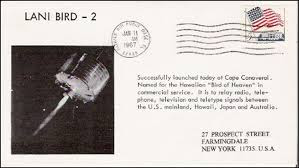
      • Just in time, satellite Lani Bird was launched into space.
      • Both teams came in undefeated, and left still undefeated, for the score ended up 10-10.
      • Interestingly enough, this game was not shown on national TV because of certain limitations.
      • The game was in black and white, but during halftime, color images of Waikiki were broadcast to the mainland.
      • Hawaii had a special interest in this game because Michigan State had two Hawaii players, Bob Apisa and Ed Kenney.

    • Super Bowl One (the AFL-NFL World Championship Game) was held on 15January1967.  The NFL Green Bay Packers defeated the AFL Kansas City Chiefs, 35-10.
So much for history, but here I am 58 years after that game, and have refined my cuisine to mimic what those attending the games will have available.  Actually, one more blast from the past, for SB59 will be held in the Superdome, New Orleans, Louisiana.
  • Note for correctness that it is Super Bowl, but Superdome.
  • This stadium was previously called the Mercedes-Benz Superdome, but is now known as Caesars Superdome.
  • Still looks kind of new, but this structure opened for play half a century ago, 1975, and was called the Louisiana Superdome.  
    • It still is the largest fixed domed structure in the world.  
    • A pro-football franchise was awarded to New Orleans mainly in anticipation of this marvel, and in fact, Super Bowl 9 was scheduled to be played in the Superdome.
    • But because of the 1973 oil crisis and other delays, it was not ready in time.
    • The Saints opened the 1975 NFL season at the Superdome, and lost to the Bengals, 21-0.
    • Super Bowl 12 was played here.
    • The stadium cost $165 million to build, which is the equivalent of a billion dollars today.
  • Has now hosted seven Super Bowls, with the 8th to be SB59.
  • You might remember that in 2005, the Superdome housed thousands of people seeking shelter from Hurricane Katrina.
  • The Sugar Bowl is played in here.
    • It was 2008, Hawaii lost to Georgia 41-10 in the Sugar Bowl.
    • As I went to school at LSU, I was very familiar with New Orleans, the Mardi Gras and Pat's Hurricanes in the French Quarter.
    • I took a tour of the environs of New Orleans.  The city had not yet recovered from the 2005 hurricane damage.  The Super Dome cost a billion dollars.  Hurricane Katrina was responsible for nearly $200 billion in damages.
About SB59 and food, looks like the focus will be on Louisiana specialties.

  • Sodexo Live! national executive chef Carmen Callo and his team are getting ready to feed the 75,000 fans on game day with 5,000 alligator sausages, 6,500 pounds of shrimp, 12,000 oysters, and over 50,000 baguettes from the local Leidenheimer Baking Co.   
  • Among some of the specialty 
    sandwiches
     that will be served up at concessions include three different types of po’ boy sandwiches, alligator sausage, lobster karaage (right), Cajun beef brisket, and "a vegetarian twist" on Vietnamese bánh mì. 
  • There will also be New Orleans-themed menu items like jambalaya.  

  • Callo is hyping up a surf n’ turf po' boy as being a standout dish. The sandwich features five colossal gulf shrimp and nine-hour smoked short rib—as a clever nod to the 59th Super Bowl—finished off with mornay and remoulade sauces, lettuce, and tomato on Leidenheimer 
    bread
    .
  • Sodexo has brought in 150 employees from around the country—plus two from the United Kingdom—to supplement 2,850 local employees.
  • For those looking to knock back a few, in addition to the usual game day beers there will be signature cocktails such as a loaded spicy Bloody Mary that comes garnished with everything but the kitchen sink, including olives, pepperoncini, spicy green beans, celery, 
    cheese, bacon, and spicy okra. 
  • Another 
    vodka-based cocktail, the Black Magic (the yellow one), features lime juice, jalapeño syrup, and mango purée with a dehydrated lime wheel and black magic cajun seasoning.

Quite a challenge for me.  I can't imagine finding alligator sausage in Honolulu, I'm allergic to shrimp and really don't like oysters.  Jambalaya is possible, for I've been to a couple of Louisiana Jambalaya Festivals, and Jambalaya by Hank Williams is one of my favorite karaoke songs.  However:


  • The Cajun/Creole “holy trinity”: Celery, onion and green bell pepper (although for some extra color, I’ve also used red and yellow bell peppers).
  • Jalapeño and cayenne: For heat. Feel free to add more or less of either, depending on your heat preferences.
  • Garlic, Creole or Cajun seasoning, bay leaf, thyme: Some of my favorite seasonings.
  • Chicken, shrimp and Andouille sausage: Or whatever proteins you prefer. Feel free to choose one or two, or you can use all three like I do.
  • Chicken stock: If the rice needs more liquid as it cooks, feel free to add in more.
  • Crushed tomatoes: For flavor.
  • White rice: Long grain is traditional, but short grain white rice also works.
  • Okra: Fresh or frozen; we will use this to help thicken the jambalaya.
  • Salt and Black Pepper: Very important! Don’t forget to taste and season with salt and pepper to taste at the end.
  • Maybe I'll simplify by making my special Bloody Mary, and get a baguette Subway sandwich.


    • Only $20 for the Super Bowl experience from Monday through Friday night, 5-10PM.  You can check out the Superdome.  There will be live entertainment and food you can purchase, and, who knows, maybe some players will be there.
    • Free at Woldenberg Park on the Riverfront from 12-5PM on Friday and Saturday for live music and a crawfish boil competition.
    • High end Bourbon Experience tasting at the New Orleans Marriott Warehouse House District, $100.
    • Shaq's Fun House, on Friday from 7-9PM, featuring DJ Diesel, Ludacris and more at Mardi Gras World.  $400 ticket with a 6-hour open bar, which means it must start earlier than indicated.
    • Got $750?  Taste of the NFL on Saturday from 4-7PM at the World War II Museum.  Features food from 25 New Orleans chefs.  Benefits GENOUth's End Student Hunger Fund.
    • Of course, these are mere examples.  For the full list.

    A few other details:

    • Should you really want get a ticket to the game.
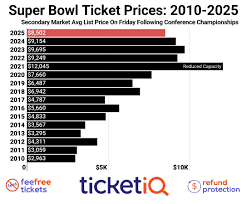
    The cheapest tickets are currently listed at over $4,000 on Ticketmaster, over $3,600 on StubHub and over $3,400 on Vivid Seats, all of which could include additional fees, over $5,100 on SeatGeek, including fees, and over $4,500 on TickPick, including fees.

    • However, Time magazine says the average resale ticket now stands at $10,417.  It was $12,128 last year.  Also, the most expensive ticket with Seat Geek is now $20,674, but only $17,842 from Ticketmaster.
    • Prices should actually fall by game day.
    The Super Bowl is the only thing on television I stay to watch the commercials, and go to the restroom during the game.  However, more and more media get those ads and reveal them early.  So if you want to be surprised, avoid this article touting the best Super Bowl ads of 2025.
    • These ads are expensive, but this is partly because there  is a huge viewing audience, 123.4 million last year.  The most expensive ones cost $8 million for 30 seconds.
    • Most Appetizing:  Hellmann's.  To watch this, and others, click on the article.  Remember the 1989 film, When Harry Met Sally, with Meg Ryan and Billy Crystal?  Well, they're back, and in ecstasy, Meg appears to be having an orgasm. Click on that link and watch a nearly one hour program with Ryan discussing the original production now more than a  quarter century old.
    • Click on that article to see the rest.  Me?  I'll stop here and wait for Super Bowl day.

    I'll add another Super Bowl posting later in the week to bring you up to date on things like propositions and the injury status of Pat Mahomes.  To end, watch the cold opening of Saturday Night Live last night, with the unreal Donald Trump, hawking his cheesy products.  Well, turned out there was no SNL last night, and there won't be one either next week.  They are gearing up for their 50th year anniversary special on February 16 at 8PM.  And, incidentally, as part of their celebration, they will follow at 10PM with the debut episode of 11October1975.

    -