Total Pageviews

Friday, November 29, 2024

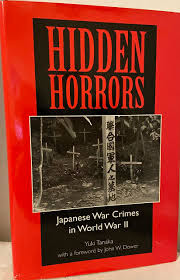
WORLD WAR II WAR CRIMINALS

Much has been written about World War II.  Up to 60 million died, Germany and Japan lost, and their leading military and civilian leaders were brought to trial for war crimes.

  • The United States, Great Britain, Soviet Union and France, in London during the summer of 1945, agreed to what was called the Nuremberg Charter.
  • There was a similar Tokyo Charter, a decree by Allied Supreme Commander Douglas MacArthur, on instructions from the U.S. Joint Chiefs of Staff.  Eleven nations were involved.
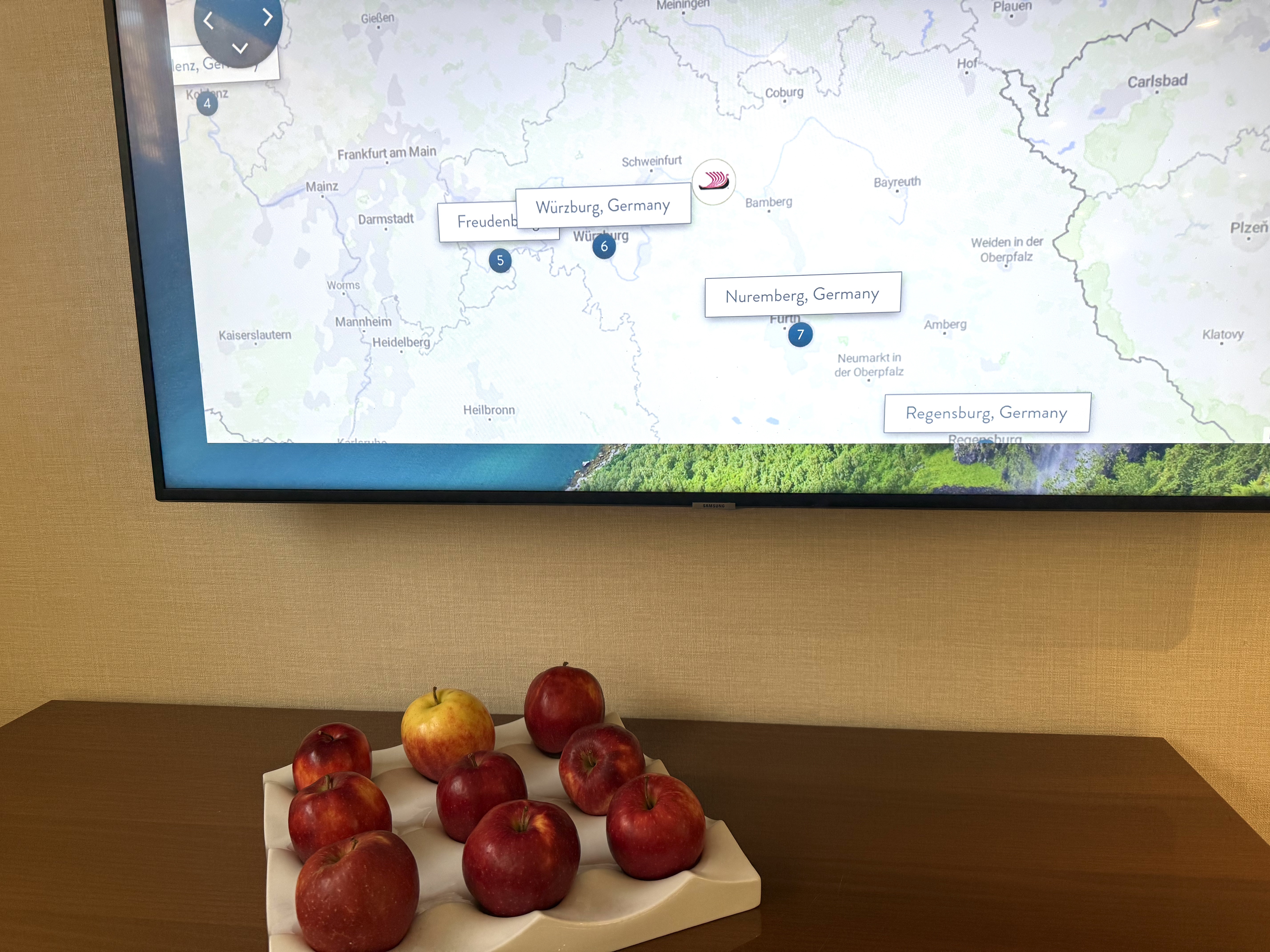
The Viking Tir is today in Nuremberg.  Why was Nuremberg chosen for the trials?


International Military Tribunal at Nuremberg.
  • Nuremberg was the symbolic location as the site of Nazi rallies. In 1933, 1927, 1929 and annually from 1933-1938, propaganda speeches were made in these rallies usually held in late August or September, lasting several dasy to a week, drawing hundreds of thousands of Party members, spectators and foreign journalists.
  • See Leni Riefenstahl's Triumph of the Will (of the 1934 rally).  This the whole film, with English subtitles.
  • In 1935 Hitler announced the racist Nürnberg (either this or Nuremberg can be used) Laws against the Jews.
The Nuremberg trials began in November of 1945, ending on 1October1946.
  • Twenty two leading Nazis were tried.
  • Some of the more prominent Nazis like Adolf Hitler, Heinrich Himmler and Joseph Goebbels, had already committed suicide.
  • The prosecuting group had a thousand personnel, two-thirds from the U.S.  These also included psychologists, translators, etc.
  • Twelve were sentenced to death by hanging, seven to terms of imprisonment and three were acquited.
  • Herman Goring committed suicide the night before his scheduled execution.
The Tokyo trial went from 3May11946 to 4November1948.
  • Japanese war crimes throughout the Pacific were rampant and almost equivalent to what occurred in Europe.
  • Trials were held in Ichigaya, Tokyo.
  • The Royal family was excluded, and Hirohito remained emperor.
  • There were 28 defendants.
  • Seven were sentenced to death by hanging and 18 to various terms of imprisonment.  Two died during the trial and one was declared unfit to be sentenced.
  • Perhaps the most iconic was the execution of Hideki Tojo, head of Japan's second world war government.
  • Argentina was already home to several hundred thousand German immigrants who maintained close ties to Germany during the war.
  • In 1945, Argentine President Juan Peron, himself drawn to fascist ideologies, established "rat lines,' or escape routes via Spain and Italy, permitting thousands of Nazis to disappear.  In some ways, the Vatican also, many times inadvertently, helped.
  • The seven were:
    • Lieutenant Colonel Adolf Eichmann, architect of Hitler's Final Solution to exterminate Jews.
      • He first hid out in Austria after the war, and aided by a Franciscan monk in Itqly, got an Argentine visa and falsified a Red Cross passport.
      • Boarded a steamship to Buenos Aires under the alias Ricardo Klement, with his family.
      • Worked in a Mercedes-Benze automotive plant.
      • Took until 1960 for Israeli Mossad agents to capture him in a daring operation, then snuck him out of the country.
      • Found guilty after a four month trial, and hanged on 31May1962.
      • I somehow remember this, as I was soon to graduate from college
    • Angel of Death Josef Mangele was the doctor who conducted macabre experiments on Auschwitz prisoners, particularly twins, pregnant women and the disabled.
      • After the war, spent three years hiding in Germany.
      • In 1949, with the help of a Catholic clergy, fled Italy to Argentine,
      • Remarried under his own name in Uruguay.  
      • But after Eichmann's capture, went underground, first in Paraguay, then Brazil.
      • West Germany attempted extradition, but was unsuccessful.
      • Mengele ultimately drowned of the Brazilian coast in 1979, felled by a stroke.
    • The other five were Walter Rauff (never was tried), Franz Stangl (was caught and tried, but died of heart failure in 1971),  Joseph Schwammberger (was captured in Argentina, sentenced to life in prison and died in 2004 at the age of 92), Erich Priebke (caught in Argentina, extradited to Italy, sentenced to life in prison and died at the age of 100 in 2013) and Gerhard Bohne (caught several times, and was declared unfit to stand trial, passing away in 1981).  Interesting that most of the above were aided by religious leaders in their escape.
Then there was God of Strategy Masanobu Tsuji, who oversaw various massacres and atrocities in the Pacific region.
  • He evaded prosecution for Japanese war crimes.  Two of his underlings were executed.
  • Hid out in Thailand, China and Vietnam.
  • Returned to Japan in 1949 after General Tojo was executed, wrote successful books of his war experience and was elected to the Diet as an advocate of renewed militarism.
  • Worked for U.S. CIA in the 50s.
  • Became an advisor to the North Vietnamese government and disappeared on a trip to Laos in 1961.  
  • Probably was kidnapped by the Chinese Communist Part and was alive in 1962.
  • Never heard of him again.

Next stop, Passau.
-

Thursday, November 28, 2024

BAMBERG, GERMANY

 Life continues on the Viking Tir.  Going through locks at lunch

Just as we got up, my Blue Bar Pigeon said hi.
We docked in Wurtberg, and this was the view from our veranda.
Haven't found the name of these buildings, but the one below through the day.


We are in Bamberg.

Had a steak dinner.
This was DJ disco night, but I was so exhausted, went to bed early.  Lunch in Bamberg.
I was planning to take nap after lunch, so had two wines and beer.  Appetizers.
Can you believe lunch was tuna tatake?  However, the takuan-looking pieces below were mango.
Took the mangoes out, and added hot green tea to make it a tolerable chazuke.  Dessert.
Pre-dinner gin and snacks.
Caesar Salad and French Onion Soup, followed by Roast Pork with crispy skin.
1512 steps for two days, November 26 and 27.
As I indicated to you yesterday, I was on a Tauck river tour nine years ago, starting in Budapest and ending in Amsterdam.  

The following is from my posting as we were approaching Bamberg.

For a variety of reasons, one being a central location away from Berlin (too complicated with too many nations involved) and Munich (too south), and another because of the fact that the major courthouse survived the bombing, the first Judgement at Nuremberg of German officials involved with the Holocaust, occurred here.  Rotten Tomatoes gave this 1961 film 90%/93% ratings.  Here are before and after shots of Courthouse 600:

I say all this, for I don't plan to take the Nuremberg tour again.
Also from that same posting in 2015:  If you lived in Germany, another comparison with the USA:
  • 89% less likely to be in prison
  • 82% less likely to be murdered
  • 84% less likely to have AIDS
  • consume 50% less oil
  • spend 47% less on health care
  • use 41% less electricity
Germany is 85% the size of California, and here is a comparison with Japan, which has a population of 127 million (USA 319 million, Germany 81 million):

I thus wondered if these statistics had changed much.  
  • So looking at that likely to be in prison number, the U.S. today has 531 in jail/100,000 population, while Germany had 67.  Still quite a difference.  Today a person in Germany is 87% less likely to be in jail.
  • We are #6 in the world....or from the other end, #219, with El Salvador the worst at #233.
  • On the other, and good, end (prisoners/100,000 population---lower the better):
    • #1      San Marino  3
    • #2      Yemen  14
    • #7      Japan  33
    • #26    Finland  52
    • #46    Germany 68
    • #85    France  115
    • #91    China  119
    • #118  Singapore  156
    • #172  Taiwan  250
    • #191  Russia  300
    • #219  USA  541
    • #223  El Salvador  1659
Well, that was quite a segue.  Regarding Bamberg:
  • Has been a town since the 9th century,
  • Is on the Regnitz River, about 2 miles before it flows into the Main River.
  • Witch trials in the 17th century claimed about a thousand victims in Bamberg.
    • Germany is known as the Mother of the Witches.
    • About half of anyone ever executed for witchcraft, were Germans.
    • Germany alone had almost 25,000 victims.
    • Makes you wonder if there is something about the culture here that can tolerate witch trials and a Hitler.
  • Hit by air raids nine ties by Allied warplanes in 1944/45, but not as badly as Nuremberg, the next cruise stop.
  • Had a population of 79,000 in 2022.
  • Cited as one of Germany's most beautiful towns, and is on the UN World Heritage list.
  • After World War II, became an important Bavarian base for the USA, but closed in 2014.
  • Like many important European cities, the Bamberg Cathedral, founded in 1004, is at the top.
  • Known for smoked beer.

We next go to Nuremberg.
-

Wednesday, November 27, 2024

WURZBURG

Our European Christmas Cruise is one week old today.  But first, tomorrow will be Thanksgiving, a tradition that began in the U.S. in 1619 with the English settlers on the ship Margaret in Virginia.

  • Of course, this continued with the Pilgrims at Plymouth in 1621.
  • Our first President, George Washington, proclaimed 26November1789 as a day of thanks.
  • President Abraham Lincoln made Thanksgiving a national holiday in 1863 as the final Thursday in November.
  • But in 1939, President Franklin Roosevelt changed this holiday to the next to last Thursday in November to boost the economy, adding an extra week for Christmas shopping.
  • This was not popular, so in 1942, Congress changed the official national Thanksgiving Day to the fourth Thursday in November, a compromise, for this day sometimes is not the final Thursday of the month.
  • In 1963, President John F. Kennedy acknowledged that both Virginia and Massachusetts were the first.
  • We are in Germany, and they do celebrate Thanksgiving, but it's called Erntedankfest, with inexact dates, most on the first Sunday in October.
  • President Joe Biden pardoned two turkeys from Minnesota, Peach and Blossom.

Würzburg is a real city, with almost 130,000 inhabitants.  However, the population has been declining over the past few years.  Way back in 1965 there were 122,000 people.

  • Three of the 15 largest German wineries are located here.
  • By train, four hours to Berlin.
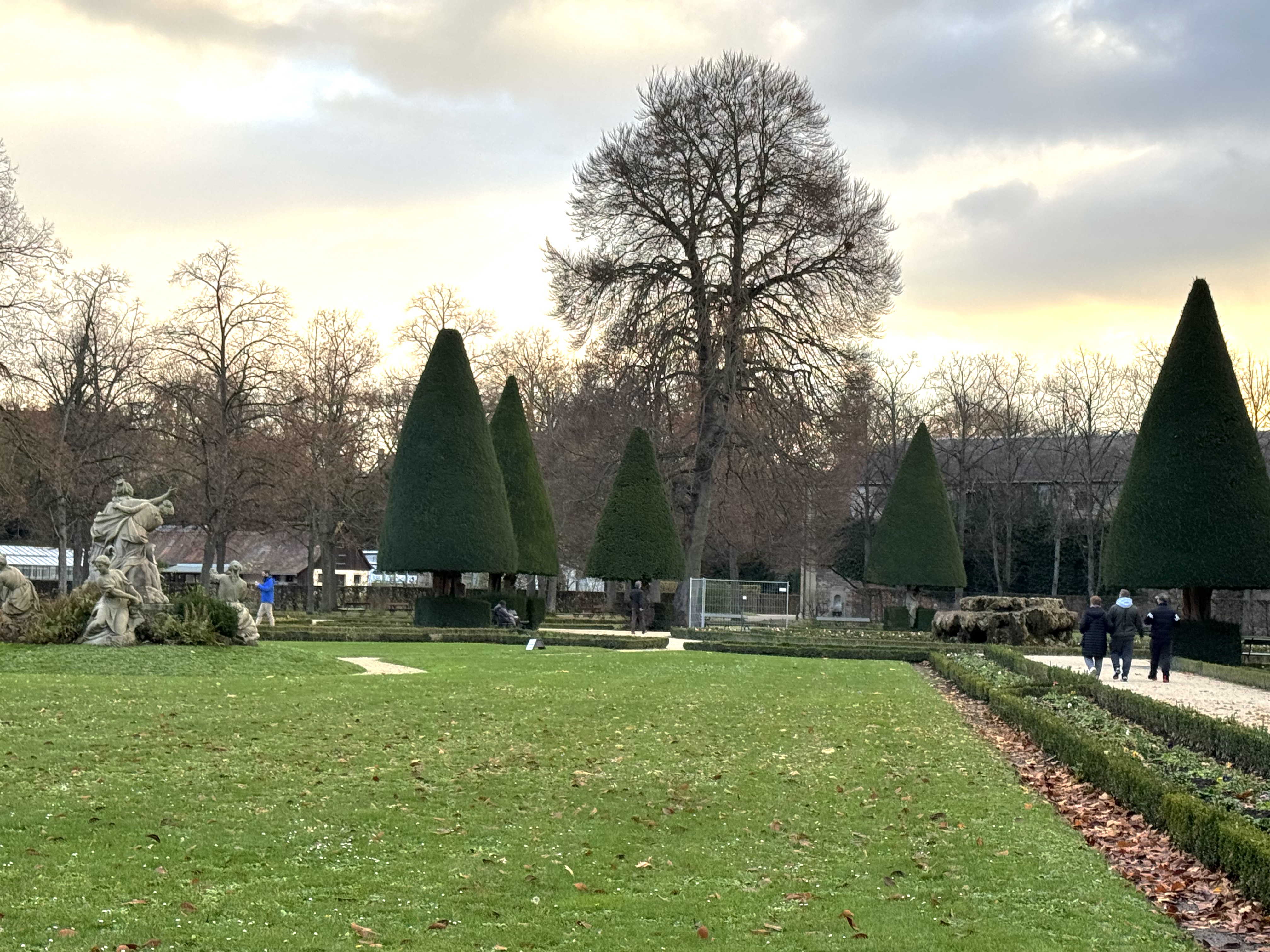
A lot of Wurzburg photos, especially of the Wurzburg Bishop's Residence.  Some history.
  • Is the former seat of the prince-bishops in the Bavarian city of Würzburg.
  • Built between 1720 and 1780.
  • It is itself in the UNESCO World Heritage List.
  • Was damaged on bombing raids in WWII.
  • John David Skilton, the American momunent man, with his team (see the film, The Monuments Men--then again, maybe not, because Rotten Tomatoes gave it 30/44 scores), provided a temporary covering over surviving vaults, saving some frescoes and other works of art.
  • Restoration took until 2006.
  • Today, a museum with 40 rooms and gardens.
  • There is an annual Mozart Festival here.
The tour of the city, beginning with the Wurzburg Bishop Residence.  Many of these artworks on on the room ceilings.  Each tells part of a larger story.
The rest of Wurzburg. 
Queen Mary.
Beginnings of a Christmas Market.


I promise you, the Christmas Markets will get better.  Tomorrow Bamberg.  I was there on another European river cruise.  Read about what I did then.  I noticed in my Tauck river cruise of 2015 that I stopped by Wurzburg, and did not mention anything about this city.  But there were some Christmas stuff on November 3, greeted by my Blue-Bar Pigeon.


-