Total Pageviews

Thursday, June 27, 2024

THE DONALD TRUMP VS JOE BIDEN FIRST PRESIDENTIAL DEBATE IS TONIGHT

Tonight 9PM emanating from CNN in Atlanta is the first Trump-Biden debate of 2024.   I provided details on Monday.  How important is this face-off compared to debates in all of history?
  • There were various debates around 1776, and one Great Debate had to do with the Constitution.
  • Lot of Great Debates regarding the history of the USA.
Unit 1: How Should Society Balance the Need for Tolerance with the Need to Protect Itself?
Unit 2: How Powerful Should the National Government Be? 
Unit 3: Who Should Be Allowed to Vote?  
Unit 4: Should Women Have Equal Treatment Under the Law?  
Unit 5: How Should Americans Treat the Land?  
Unit 6: Has Industrialization Produced More Benefits or More Problems for the Nation?  
Unit 7: Should the United States Pursue a Foreign Policy of Isolationism or Interventionism?  
Unit 8: What Should the Nation's Immigration Policy Be?  
Unit 9: To What Extent Is the Federal Government Responsible for the Welfare and Security of the Individual?  
Unit 10: Is Civil Disobedience Ever Justified as a Method of Political Change?  
Unit 11: What Are the Limits of a Free Press?  
Unit 12: How Much Should the Nation Invest in Defense?

  • A case was made for the Lincoln-Douglas seven debates in 1858, which Abe lost.
  • According to Wikipedia, the first was realist-idealist in the 1920s and 1930s about how to deal with Nazi Germany.
  • There are many lists, but nothing much to do with what is happening tonight.

Nielsen first collected presidential debate TV viewership data from 1976.  The most-watched debates in millions:


    #1    1980    Carter - Reagan                                  80.6

    #2    1992    Bush the Older - Clinton - Perot         69.9

    #3    1976    Ford - Carter                                       69.7

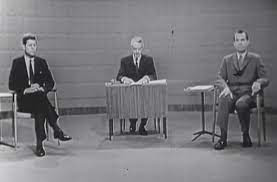
  • However, there were other means of measurement, and the 1960 Richard Nixon - John Kennedy debate on 13October1960 drew 61% of all U.S. television households.  
  • The first televised debate was Nixon - Kennedy on 26September1960, drawing 59.5% of U.S. TVs.
  • #3 were the same two on 7October1960 with 59.1%.
  • #4 was that Carter -Reagan debate on 28October1980 with 58.9%.
What is the expectation for tonight?  Well, most important of all, 16% of those who plan to watch will be open to change their choice for president, according a Quinnipiac University poll released yesterday.

I have two big decisions.  First, do I watch the 7PM to 9PM previews on CNN or MSNBC?  It would have been more attractive if MSNBC actually hosted the debate because Rachel Maddow and Laurence O'Donnell would have made for a more incisive moderation compared to Jake Tapper and Dana Bash.  Other questions in my mind are:  What role will Chris Wallace of CNN play?  He was with Fox when he moderated the 29September2020 debate between Trump and Biden.  But how will Steve Kornacki be used on MSNBC?

Second, when I watch major events, like the Super Bowl or the Triple Crown, I have a drink.  The Super Bowl depends on which team I support.  Here is one list for presidential debates:

  • In honor of our first, George Washington, a Hot Toddy:  bourbon, honey, apple cider and cinnamon stick.
  • For #3 Thomas Jefferson, a French 75:  gin, syrup, lemon juice and champagne.
  • In remembrance of Theodore Roosevelt, No. 26:  bourbon, creme de cacao, water, expresso, syrup, orange bitters and whole coffee beans (he supposedly drank a gallon of coffee/day).
  • In memory of JFK, the Cuban Missile Crisis:  gin, lemon juice, chamomile syrup, egg white and bitters.
  • However, Biden and Trump are teetotalers, so maybe I too should avoid alcohol.
Ah, I'm more important than them, so I looked at my stash.  First a bourbon corner of my collection.
Then a prominent line of Johnny Walkers.  The colored bottles are almost all empty, so I picked Blue Label.  First, because there is so much left, but also because this debate is significant.
However, in Scotland, they practically kick you out of the pub if you ask for scotch over ice.  The preferred option is a small amount of water over the whisky.  All at room temperature.  About the bourbon, of course it has to be Old Grand-Dad because Biden-Trump are both so old, and grandfathers, to boot.  So bourbon on the rocks for sure.  I'll do both, and wear blue.

-

Wednesday, June 26, 2024

DO YOU TODAY NEED TO BE MORE CAREFUL ABOUT FOOD POISONING FROM RICE?

Last week I indicated that all signs showed that the Japanese Yen to U.S. Dollar exchange rate would probably continue to favor the USA.  That is, for travelers to Japan to get more value for the $.  Well, it's beginning to happen, as the Yen dropped to its lowest level since 1986 against our dollar today, and traded at 160.39.

About the topic of the day, I am a Japanese American, and rice has been my staple now for more than 80 years.  My family has cooked a large batch of rice so that the leftover can be stored, something that is not recommended today.  In those days, there were no rice cookers.  I always ate leftover rice left in the refrigerator, and still do.  I don't recall one incident of food poisoning, both myself and anyone I know.  Incidentally, keeping the rice for long periods in a cooker in the warm setting is not recommended.

So while the Cleveland Clinic reports that there are 63,4000 annual cases of food poisoning, and another scientific article says 84,000, why have I suddenly read and seen in various media more and more warnings of getting food poisoning from rice?  Turns out that there is no new study about eating rice.  Much of the recent hoopla comes from TikTok:

In one clip, a woman in a patterned hospital gown is hunched over in bed like an apostrophe. While horizontal in a dark room, another user whispers into the camera, “Rice poisoning is the worst type of food poisoning I have ever gotten in my entire life.” Yet another, who supposedly just ate a bowl of rice that had been out of the fridge all night, writes: “I DONT WANNA GET DIHARREA,” followed by two sobbing emojis. (Look at some of them yourself.)


Most of these TikTok victims seem to use rice.  Media pick up things like the above, and disseminate them.  So there is no sudden epidemic of rice poisoning.  In fact, most of the scare stories are those that keep circulating online, as for example from 2003:

...five siblings from Belgium became ill after eating pasta salad that had been made for a picnic and served again for dinner three days later. The youngest, a seven-year-old girl, died in the hospital after her liver failed. Five years later, a 20-year-old student from Belgium also died after eating five-day-old spaghetti, which he’d made and left out in the kitchen at room temperature.


A good second point is that the whole range of carbohydrates and other foods should be included in this rice scare.  That's because the poisoning is almost always caused by a bacterium, Bacillus cereus, which is found almost everywhere.  There are various strains, and some can cause truly serious ailments.  But today I will only write about the most prevalent and simple food poisoning, which usually affects you for only one day, unless you have those underlying symptoms, etc., that became famous during the COVID-19 pandemic. Symptoms are abdominal pain, stomach cramping and watery diarrhea, with some nausea and vomiting.

How to prevent rice poisoning.

  • Store cooked rice in a Ziploc bag, wait until it cools to near room temperature, then place it in a refrigerator below 41 F.  Most of them are maintained at 40 F or a little lower.
  • Keep in refrigerator only for a few days.  Not longer than a week, although most articles say 5 days would be safer.
  • Of course, you can freeze the rice for 6 months.  Does it lose taste and texture?  Probably, but the way I re-use rice, like with fried fish and tsukemono, or covered with sukiyaki, makes this unimportant.
  • Reheat to at least 165 F.  Note that boiling water is at 212F.  It is reported that microwave warming can be safer if done right, like adding some water to the rice to enhance steaming.

The problem with B. cereus (yes, pronounced be serious) is that the spores enter the food product, like rice.  Rice is boiled, cooked, whatever, and the heat does not kill the spore.  When the rice is consumed, the digestive process converts the spores into vegetative cells, whose toxins cause all the problem.  Improper storage can also enable this bacterium to multiply.  By the way, if you actually try to sterilize B. cereus spores, alcohol also does not kill this organism.

For completeness, I should mention that other microorganisms can also cause food poisoning.  From the Mayo Clinic.  In some formats the right side gets cut off. If so just click on this to read everything.

Disease causeTiming of symptomsCommon sources
Bacillus cereus (bacterium)30 minutes to 15 hours.Foods such as rice, leftovers, sauces, soups, meats and others that have sat out at room temperature too long.
Campylobacter (bacterium)2 to 5 days.Raw or undercooked poultry, shellfish, unpasteurized milk, and contaminated water.
Clostridium botulinum (bacterium)18 to 36 hours. Infants: 3 to 30 days.For infants, honey or pacifiers dipped in honey. Home-preserved foods including canned foods, fermented fish, fermented beans and alcohol. Commercial canned foods and oils infused with herbs.
Clostridium perfringens (bacterium)6 to 24 hours.Meats, poultry, stews and gravies. Commonly, food that is not kept hot enough when served to a large group. Food left out at room temperature too long.
Escherichia coli, commonly called E. coli (bacterium)Usually, 3 to 4 days. Possibly, 1 to 10 days.Raw or undercooked meat, unpasteurized milk or juice, soft cheeses from unpasteurized milk, and fresh fruits and vegetables. Contaminated water. Feces of people with E. coli.
Giardia lamblia (parasite)1 to 2 weeks.Food and water contaminated with feces that carry the parasite. Food handlers who are carriers of the parasite.
Hepatitis A (virus)15 to 50 days.Raw and undercooked shellfish, fresh fruits and vegetables, and other uncooked food. Food and water contaminated with human feces. Food handlers who have hepatitis A.
Listeria (bacterium)9 to 48 hours for digestive disease. 1 to 4 weeks for body-wide disease.Hot dogs, luncheon meats, unpasteurized milk, soft cheeses from unpasteurized milk, refrigerated smoked fish, refrigerated pates or meat spreads, and fresh fruits and vegetables.
Norovirus (virus)12 to 48 hours.Shellfish and fresh fruits and vegetables. Ready-to-eat foods, such as salads and sandwiches, touched by food handlers with the virus. Food or water contaminated with vomit or feces of a person with the virus. 
Rotavirus (virus)18 to 36 hours.Food, water or objects, such as faucet handles or utensils, contaminated with the virus.
Salmonella (bacterium)6 hours to 6 days.Most often poultry, eggs and dairy products. Other foods such as fresh fruits and vegetables, meat, poultry, nuts, nut products, and spices.
Shellfish poisoning (toxin)Usually 30 to 60 minutes, up to 24 hours.Shellfish, including cooked shellfish, from coastal seawater contaminated with toxins.
Shigella (bacterium)Usually, 1 to 2 days. Up to 7 days.Contact with a person who is sick. Food or water contaminated with human feces. Often ready-to-eat food handled by a food worker with shigella.
Staphylococcus aureus (bacterium)30 minutes to 8 hours.Meat, egg salad, potato salad or cream-filled pastries that have been left out too long or not refrigerated. Foods handled by a person with the bacteria, which is often found on skin.
Vibrio (bacterium)2 to 48 hours.Raw or undercooked fish or shellfish, especially oysters. Water contaminated with sewage. Rice, millet, fresh fruits and vegetables.

Finally, some other food worries:

  • If you happen to eat a slice of bread, and immediately find the loaf to be moldy, should you panic?
    • Chances are that the fuzzy green stuff will not harm your body.
    • Being totally grossed out might well be the only problem.
    • But there are exceptions.
      • You could be allergic to some molds.
      • Some molds have mycotoxins that can be toxic to humans.
    • Many just keep bread on the counter. It will turn green in five to seven days.
    • Some refrigerate, and others freeze.
  • Mayonnaise?
    • When used as a spread on bread for sandwiches, mayonnaise tends to prevent bacterial growth.  If anyone gets poisoned from the sandwich, the cause is the chicken, tuna, egg, etc.
    • ....things like potato salad are often blamed for causing food-borne illness due to the mayonnaise, and the fact it contains eggs. The truth is, mayonnaise (manufactured) does not cause illness, bacteria does, and bacteria just happen to love to grow in many of the foods we combine with mayonnaise- potatoes, pasta, eggs and chicken. 

    • Unopened store-bought mayonnaise left at room temperature can last about 3 or 4 months.  Otherwise, when opened, can be stored in a refrigerator until that limit is reached.
    • Restaurants seem not to refrigerate mayonnaise.  Is this safe?  Almost surely, for this mayonnaise does not use eggs, and the bottle is out there only for a day or two.
  • Then there is botulism.
    • Illness caused by a toxin produced by the bacterium Clostridium botulinum.
    • Mortality is 3%:  109 deaths for 3,618 cases, from 1975-2009 in the U.S.  Or only a little more than 2 deaths/year. From Wikipedia:  145 cases/year, 65% infant and 15% foodborne. So for older folks, only 22 cases/year, and the odds are that you won't die.
    • Somewhat like Bc, but the Cb spores are activated by low oxygen levels and certain temperatures.
    • For example, in 1994 in El Paso, Texas, 30 people were sickened from foil-wrapped baked potatoes.  Potatoes kept at a certain temperature range covered with foil provide ideal conditions for production of Cb toxins.
    • The toxin can be destroyed by heating to 185F.  However, the spores are resistant, and needs moist heat at 250 F for more than 15 minutes in an autoclave to destroy.
    • In very young infants, can develop in the intestines.
    • Honey can contain this bacterium and therefore should not be fed to children under 12 months old.
    • No vaccine for botulism.
    • In short, be aware, but with only 2 deaths/year for the entire country, something that should not unduly worry you.

In the U.S., food waste could be up to 40% of the food supply.  Part of reason is to avoid food poisoning.  This moral dilemma can be a challenge for some.  Worse, there is a general sense that everything you assume about date labels is probably wrong.  Read that link from Harvard's Center for Health Law and Policy Innovation to appreciate this problem.  In a nutshell, I tend to throw too much food away, for the fear of food poisoning is overwhelming.  


But returning to rice, I probably threw more rice away than justified because it is a relatively cheap commodity, and save for that conscience-inducing sense worrying about the needs of the deprived, did it anyway.  Ironically, I live today in a senior's community which provides three meals/day. But as a champion of independence, I tend to cook for myself a lot and find myself maybe eating more dated rice (which I take out from the dining room) because of self-created circumstances. I still have a rice-cooker, but no rice.  Maybe I should purchase a bag of high quality rice.  Freshly cooked rice tastes better anyway.

-

Tuesday, June 25, 2024

1904 WAS A SPECTACULAR YEAR FOR ST. LOUIS

First, my view from where I am sitting, cranking out this posting.  And, before I get into the "Rome of the West," St. Louis, let me first share some rather unsettling news for Democrats from the morning New York Times.  In short, with all the problems faced by Donald Trump, he is still leading Joe Biden to become our next president, two days away from their first debate.

Why such a low level of support?  They are certainly not the MAGA-type.  They can tolerate Biden, but fear Trump.    Yet, zero for 100?  Amazing.  Kind of reminds me as to how all 12 jurors in Trump's hush money trial voted him guilty, 34 times.

And a final aside.  What is the dumbest statement ever made by Donald Trump.  It was not this statement to the left.

So back to the topic of the day, 1900 was a golden year for Paris. 

  • It hosted both the Summer Olympics and the World's Fair.  
  • But this was nothing new, for Paris also was home for the 1855, 1867, 1878 and 1889 World Expos (the terms are interchangeable), the 1937 World's Fair and 1847 Special Expo.
I wasn't around then, but my check of the available information was that St. Louis might have been an important U.S. city in the late 1800's, but was rather isolated and difficult to reach.  There was absolutely no international reputation.  How then did St. Louis in 1904....:
  • ....host  both the Summer Olympics and World's Fair?
  • The city never again was home to any of them.
  • St. Louis, appropriately enough relative to Paris, with its world-wide eminence and site of the upcoming 2024 Summer Olympics, honors Louis IX, patron saint of France.
How the heck did St. Louis pull this off 120 years ago?
  • The first World's Fair or Universal Exhibition or Exposition or Expo occurred in Prague in 1791 for the coronation of Leopold II as King of Bohemia.
  • European cities then held similar expositions.
  • However, the "official Expos" start with:
    • London in 1851 with 25 countries and 6 million visitors.
    • Paris hosted #2 in 1855 with 28 nations.
    • London held the 1862 version with 39 countries.
    • Paris was #4 in 1867 with 42 nations and 15 million visitors.
    • #6 was the first American city, Philadelphia in 1876 (centennial of our founding), with 35 countries and 10 million visitors.
    • #7 was Paris again in 1878 with 35 nations and 16 million visitors.
    • #10 Paris in 1889 with 35 countries and 32.3 million visitors.
    • #13 Paris in 1900 with 40 nations and 51 million visitors.
    • #14 St. Louis with 50 countries and 19.7 million visitors.  Note the significant drop in people.
So to commemorate the centennial of the 1803 Louisiana Purchase, St. Louis decided to hold an exposition, and sold the selection committee to join them.
  • Clearly a lot of politics, for they secured $15 million (worth more than half a billion today) of federal financing.  
  • A key individual was former St. Louis mayor, Governor of Missouri, Secretary of Interior until 1897 and president of the Louisiana Purchase Exposition, David R. Francis.  That's him pushing the button to open the Fair.
  • Enticed 50 countries, 43 of then-45 American states and many companies to come.  There was a delay to 1904 to accommodate these participants.
  • Meanwhile, Chicago was selected as host for the 1904 Summer Olympics.
  • But a lot more politicizing and interference intruded to bring those games to St. Louis.
  • So these 1904 Summer Olympic games became part of the St. Louis Expo, and extended for 5 months to spread through the 8-month long Fair.
  • In 1910 Francis was arrested for non-payment of taxes, but was released on bail.
  • He became the last U.S. Ambassador to the Russian Empire between 1916 and 1917, escaping an assassination attempt, and serving this post during the February and October Revolution of 1917, that eventually brought Vladimir Lenin to power.
  • Reads like a good movie script when you bring in the Expo and Olympics.
David R. Francis was a brash, opinionated, stubborn, smart, sometimes foolish, straight-talking, quick-acting, independent-minded, proud, self-made man who represented the United States in Russia for two and a half years, during the most tumultuous era in that country's history. Much of his activity has been shrouded in myth – some of that heroic, more of that comic and tragic.[12]


The 1904 World's Fair 
  • Generally went well, with nearly 20 million visitors.
  • There were 1500 buildings connected by 75 miles of roads and walkways.
  • No way to see all in less than a week.
  • Admission ranged from 25 cents, up.
  • Some highlights.
    • Electricity was new, and Edison came.  Electric street railcars were featured.
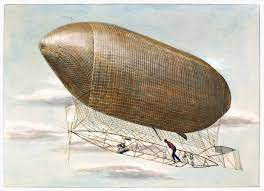
    • The Wright Brothers had just flown in 1903, and the Fair hosted an Airship Contest with a prize of $100,000 (worth $3.4 million today).  There were some requirements, and no one won.
    • 140 models of the personal automobile were shown.  Ford later in 1908 developed the Model T.
    • There was wireless telephony, which became radio and telephone.
    • The telautograph was shown, the precurser to a fax machine.
    • Ultraviolet light was used to treat a form of lupus.
    • Showed the just invented X-ray machine.
    • Various foods were made popular, but not really invented at the Fair.
      • Ice cream cone.
      • Hamburger.
      • Hot dog.
      • Peanut butter.
      • Iced tea.
      • Peanut butter.
      • Cotton candy.
      • Dr. Pepper and Puffed Wheat cereal were, however, introduced here.
    • Scott Joplin wrote Cascades in honor of the Festival Hall waterfalls.
    • The only surviving pavilion today was from Sweden, but is in Lindsborg, Kansas.
    • Helen Keller, who was 24, and came from Radcliffe to give a lecture.
    • Geronimo was "on display."
    • Henri Poincaré gave a keynote addres on mathematical physics.
    • Poet T.S. Eliot, from St. Louis, visited the Igorot Village in the Philippine Exposition.
    • Jack Daniel entered his Tennessee whiskey, and won the Gold Medal for the finest in the world.
    • The Sundance Kid visited without Butch.  They were killed in 1908.
  • A low light, but major attraction, was Anthropology Days.
    • Paris had something called human zoos, showing "savages" from developing countries.
    • St. Louis made this attraction prominent.
    • 3000 indigenous people from throughout the world were brought to St. Louis, showing them in their natural habitat, and also in various modern scenes.
    • This attitude was normal in those days, but not today.
The 1904 St. Louis Summer Olympics were, however, a disappointment.
  • First, they literally stole them from Chicago.
  • Only 12 countries bothered to show up.
  • Americans accounted for 523 of the 630 athletes, and won more than half the events.
  • We won 231 medals, the largest haul ever in a single Olympics.  Germany was #2 with 15.
  • One American, gymnast George Eyser, won six medals, even though his left leg was made of wood.
  • Another American, Frank Kugler won four medals, in wrestling, weightlifting and tug of war, the only one till today who has done anything like that.
  • Dragged on for five months.
  • Sprinkled throughout the run of the World's Fair, so there was confusion as to what was what.
  • Boxing made a debut.
  • The marathon, for example:
    • Was held in 90-degree weather on a dust-covered road, so that 18 of the 32 competitors withdrew from exhaustion.  
    • Len Tau was chased off the course by a pack of wild dogs.
    • One almost died. 
    • Winner Thomas Hicks was in utter agony, and was fed doses of toxic strychnine and some brandy, plus had to carried over the finish line with a time of 3 hours, 28 minutes and 53 seconds.
  • However, the current three-medal format of gold, silver and bronze was first introduced here.
  • Out of nearly 100 sports, women were only allowed to compete in archery.
  • Women also stepped into the ring on the boxing card as a display event.
  • Did not go well, for the next time women were allowed into the Olympics ring was 108 years later in the 2012 London Games.
The story of St. Louis itself is today sad, with hope for the future.

  • In 1904 St. Louis had a population of around 600,000, and was the 4th largest city in the USA.  
    • Today it is ranked 69th, with less than 300,000 people.
    • Local heroes include Lewis and Clark, Mark Twain, Stan Musial and Budweiser.
    • But the city has definitely decayed, and now enjoys the shortest commute time in the nation
    • It was once best known as Mound City....certainly not Rome of the West....as early explorers saw numerous Indian mounds.
    • Today, I can appreciate their latest nickname, Gateway to the West, for the  city is symbolized by the Gateway Arch.
    • In 2023 WalletHub named St. Louis as the least safe city in the country.
    • Here is an interesting graphic as to how dangerous a city must be.  All these #1 cities spend 7 times more/capita than the California city of Chula Vista.

    • St. Louis suffered the cruel fate of losing their NFL Rams to Los Angeles in 2016, and got mentioned as a potential competitor to Amazon establishing a second headquarters following Seattle.  Lost out to Arlington County, Virginia and Long Island City in Queens, New York.  Yes, selected two for HQ2.
    • But has a 630-foot tall Arch.
    • If crime can be controlled, here is what can be the future of St. Louis:

St. Louis is a value city overall. Think of it as a three-for-one. Here you get everything you’d expect in a much larger city, but with the low-stress cordialities of living in a smaller one. Light traffic, affordable housing, and a general manageability of scale. But packaged together in a place of intrinsic historic value of cultural import whose existence has been pivotal to the trajectory of our nation.

Is St. Louis in fact America’s greatest city? Perhaps not anymore. But walk through its Arch and discover a great forgotten place. It packs both history and promise, and, as Lewis and Clark established well over two centuries ago, it’s an affordable gateway for chasing the American adventure.


Forty years later after the Expo, Meet Me in St. Louis, was released, starring Judy Garland, Margaret O'Brien and many others, with the song of that title.  The film was all about the 1904 World's Fair.

Finally, actual videos from the 1904 St. Louis World's Fair.  You might want quickly fast-forward through the first 13.5 minutes.  Some incredible photos from The Atlantic.  There are many more than the following.
-