Total Pageviews

Wednesday, October 27, 2021

EVERYTHING YOU NEED TO KNOW ABOUT HEAT PUMPS

    From Worldometer (new  COVID-19 deaths yesterday):

        DAY   USA  WORLD       Brazil    India    South Africa

June     9    1093     4732         1185        246       82
July    22     1205     7128         1293      1120     572
Aug    12     1504     6556        1242        835     130
Sept     9     1208      6222       1136       1168       82
Oct     21     1225      6849         571        703       85
Nov    25      2304    12025        620        518      118
Dec    30      3880    14748       1224       299      465
Jan     14      4142    15512        1151       189     712              
Feb      3       4005    14265       1209       107      398
Mar     2        1989      9490        1726       110      194
April   6          906     11787         4211       631       37
May    4         853     13667         3025     3786       59 
June    1         287    10637        2346      3205       95
 July   7          251      8440        1595        817      411
Aug    4          656    10120        1118        532      423 
Sept   1        1480    10470          703        505      235
          8        1700      9836          250        339      253
        14        1934      9001          709        281      300
        22        2228      9326          839        279      124
        29        2190      8859          643        309      108 
Oct    6        2102       8255         543        315        59
        12        1819       7544         201        249        37
        19        2005       7528         401        160        80 
        26        1451       7535         409        584        53


Summary:  Looks better for the USA, but let's see what it looks like tomorrow.


If you live in Hawaii, chances are you don't know anything about heat pumps.  If you live elsewhere, the odds are you similarly don't have a clue.  Read about the 1948 invention of this device.  If you saw something like this outside a home today, those are heat pumps.

In the past heat pumps were always the next generation of a device that could efficiently provide heat for the winter cold without the direct use of fossil fuels.  Well, things have changed, for heat pumps are now touted for heat and air conditioning.

An air conditioner, as you know, provides cool air.  But have you ever felt the outside of this device?  It is warm, if not hot.  


Thus, a heat pump in warm weather absorbs heat from the outside and converts it into cool air inside.  In cooler weather, the heat pump provides heat from the outside, which does not seem to make sense when it is cold there in the winter.  But temperature is a funny thing.  Read this article to understand the facts.  Another advantage is that a heat pump uses electricity and delivers three times more heat energy to a home than the electrical energy it consumes.  No fossil fuels and now no exotic ozone layer destroying / global climate change inducing gases.  

If you're still mystified, the following graphic and this explanation might work to educate you.

To summarize:

  • If you live in Honolulu, you almost surely are kept comfortable with an air conditioning system.  Heating is unnecessary.  Someday, in Honolulu, we will get this cool from the ocean, as shown to the right.
  • If you are from the northern part of the northern hemisphere, or southern part of the southern hemisphere, if you can afford it, you have separate air conditioning and heating systems, paying for both, and probably utilizing electricity for the former and natural gas for the latter.
  • A heat pump run on electricity would be one system that does both cooling and heating.  To quote:
According to energy.gov, a heat pump can deliver as much as 3 times more heat energy to a space than the electrical energy it uses. That translates to greatly reduced energy bills for you. An average home might save as much as $1,000 per year.


If you’re using a heat pump as your sole source of heating and cooling, there’s only one system to maintain, and one system to diagnose and repair if anything goes wrong. That also lowers your total cost to operate.

Heat pumps do use electricity, but they don’t consume fossil fuels to produce heat. When you don’t have to rely on an oil or gas burning furnace, you’re doing your part to reduce the use of fossil fuels.


The bottom line is that you really can't use just a heat pump for really cold climates.  However, Congress extended the Consolidated Appropriations Act of 2021 to include heat pumps for federal tax credits, so for this year at least, you will want to look into this option, depending on your situation. Surely worthwhile for zones 1-3.  Check with your installer for zones 4 and higher. 


If you are in a geothermal area, a different kind of heat pump should be considered.  But even if you don't and live on a large lot, especially with a pond or well, even in a state like Minnesota, maybe.  Read this.


There is that matter, though, of your local electricity being generated using fossil fuels.  Heat pumps will gain in reducing climate warming when the renewable alternatives begin to dominate over fossil fuels in electrical power plants.


The obvious question is, should you use a heat pump with a PV panel on your roof?  The short answer is yes.  But this is more complicated than that.  Ask your dealer, for battery storage and that geo-option are factors worthy of possible integration into the mix.  Tax incentives would certainly help.


To close, something totally different from a heat pump.  A skin illusionist from Serbia:

I should mention one more thing.  The Dow Jones reached an all-time peak of 35,893 yesterday, and ended at 35,781, the highest ever.  The market is down today.


One weather item is that Typhoon Malou will strengthen to 105 MPH tomorrow, but is far to the east of Japan and not expected to cause any problems.

-

Tuesday, October 26, 2021

JOE MANCHIN AND THE BUTTERFLY

I keep referring to Ray Bradbury's 1953 Sound of Thunder, for merely stepping on a butterfly in his short story significantly altered the future of humanity.  Of course, this also means that every breath you take, every move you make, would likewise do so.  But purposeful action can particularly make that crucial difference.


There was a film of that name starring Edward Burns, Ben Kingsley and David Oyelowo.  Rotten Tomatoes gave it 6/18 ratings, so don't bother to watch it.

From this tale came the term butterfly effect, a concept of chaos theory not made popular until a decade later.  While any accidental act can drastically alter the future, a more specific decision can most surely affect the future regarding that topic.  

Incidentally, the movie, The Butterfly Effect, a 2005 film starring Ashton Kutcher, garnered 33/81 ratings from Rotten Tomatoes, which attracted my interest because I usually side with the viewers.

While Senator Joe Manchin will sign off on the Democratic wish-list bill, which has dropped in value from $3.5 trillion to less than half that value, gaining a last gasp life support to the incubative-state of the West Virginia coal industry, he could just as well have stepped on that symbolic butterfly.  Half a century from today, pundits could well look back on this Manchin stance as the one most important act to severely retard progress on climate control. 

The 2021 United Nations Climate Change Conference, known as COP26, will convene in Glasgow, Scotland on October 31.  Conferees were expected to commit to COP21, otherwise known as the Paris Agreement.  This summit was supposed to occur a year ago, but was postponed because of the pandemic.

You of course remember that 2015 gathering, where the world signed on to combat global warming?  Then came Donald Trump in 2016 to scuttle American involvement.  Now, thank heavens, President Joe Biden is set to join other world leaders to usher in a more progressive strategy.  Except for one inconvenient thing.  Senator Joe Manchin has enfeebled Biden's presence, bolstering the position of China and Russia, for both Xi Jinping and Vladimir Putin have chosen not to show up.  If the USA is not serious about leading the world in this most crucial of international issues, why should the #1 polluter, China, or Russia, which can benefit from warming?

It could have been worse.  If Donald Trump had been re-elected, he just might well have stopped by Glasgow.  Why?  That would have been convenient either before or after spending a few days at the Trump International Golf Links in Balmedie, Scotland.  What would he have said?  Don't ask, although you can imagine something repulsive. 

President Joe Biden will first head for Rome to meet with his G20 partners on October 30 and 31.  Then, he will go on to Glasgow for COP26. 
What will President Joe say? His speechwriter will sufficiently obfuscate the reality.  What else can he do after Senator Joe's encounter with that butterfly?

Bad enough that it could have been worse with Trump, but even with a conscientious Biden, the world is incessantly getting warmer:


For those who will actually watch nothing happen on television, you need a jargon-meter:

  • COP26: COP stands for Conference of the Parties. Established by the UN, COP1 took place in 1995 - this will be the 26th
  • Paris accord: The Paris Agreement united all the world's nations - for the first time - in a single agreement on tackling global warming and cutting greenhouse-gas emissions
  • IPCC: The Intergovernmental Panel on Climate Change examines the latest research into climate change
  • 1.5C: Keeping the rise in global average temperature below 1.5C - compared with pre-industrial times - will avoid the worst impacts of climate change, scientists say

These were the intended goals:

As host nation, the UK will likely want all countries to back a strong statement that recommits to net zero emissions by 2050 - as well as big reductions by 2030.

It will also want specific pledges on ending coal, petrol cars and protecting nature. 

Developing countries will want a significant financial package over the next five years, to help them adapt to rising temperatures.

Enough is enough, but one more time for overkill, read summaries from Deutsche Welle, the German public state-owned international broadcaster (click on each title to read the details):

Here is an optimistic potential of COP26.  My dream?  The advanced showing of my TEDx talk on the Blue Revolution to the conferees elicits the interest of someone who sends it to a billionaire who funds the Pacific International Ocean Station, for our initiative is the only geoengineering solution to global warming supporting a cornucopia of profit pathways for mariculture, sustainable energy and ocean cities.  When the program being pulled together by Blue Revolution Hawaii in cooperation with COP26 and the TED organization for December 11 is finalized, this blog site will provide details on how to watch the event.

-
Monday, October 25, 2021

THE FUTURE OF MONEY

I had an unusual Sunday.  Nothing interested me on television, not even the NFL.  Nothing happening in Honolulu worthy of my time.  Nothing being offered at 15 Craigside, but this day usually is reverential, and I'm not much of a churchgoing resident.


I thus went through my subscription magazines, and, in particular, the latest issue of Time, where I ran across the Future of Money, which I will summarize after an initial segue into a film.


After dinner, I watched Hiroshima Mon Amour, (click on that and watch the entire hour and a half production, directed by Alain Resnais) a movie that I vaguely remembered from my college days, but yet, perhaps never had seen.  Released in 1959, it is about the life of two two-day lovers in Hiroshima a few years after the drop of the Atomic Bomb when the city had to some degree recovered.  A French actress (Emmanuel Riva) in town for a film, starts a relationship with a Japanese architect (Eiji Okada).  Both are married, and it became obvious that a long-term relationship was not to be.  


Back then when the film was first available, I was one of the very few Japanese on a white campus, so there was that personal reverse link that gave additional meaning to my interest in the subject.  Of course, Palo Alto was the polar opposite of Hiroshima, for Silicon Valley was ready for formation, while nuclear devastation was still everywhere in the movie.


The movie received 97/89 scores from Rotten Tomatoes.  Here is part of a review from someone named Ivan D:

Sep 12, 2012
Bleak, moody and scarred, "Hiroshima Mon Amour" is a film of uncommon power that treads both the emotional trauma of love and the ravages of war. Amid post-war Hiroshima, the film has maintained a deeply soulful dialogue between two lost people desperately trying to feel, to fall in love overnight, and to understand. But this isn't "Before Sunrise" here. "Hiroshima Mon Amour" is just one of those legendary films whose allure can never be easily diminished.


Now, on to the Future of Money from the November 1, 2021 issue of TIME, by Jacob Goldstein, who wrote Money:  The True Story of a Made-Up Thing.

  • The evolution of money began with Greek metal coins, circa 650 BC.
  • China invented paper, and, thus paper money, around AD 1000.
  • Around the time of the Civil War, the U.S. introduced banknotes which could be redeemed for gold or silver.
  • Spurred by the Great Depression, President FDR took the U.S. off the gold standard. 
  • The country and world recovered, and the nature of money not being linked to anything real became the norm.
  • So in 1950 Diners Club launched the first credit card.
  • The U.S. has fallen behind the times, for in some countries like South Korea, coins and bills are not used anymore.  In 2023 Sweden will become the first cashless society.
  • But returning to the evolution of money, in the 1970's came money-market mutual funds, sort of like a safe bank account providing higher interest returns.
  • The danger is that nothing is guaranteed, and in 2008 these funds bankrupted Lehman Brothers, and the world economy collapsed.
  • I survived for I had never had much invested in stocks, but had secured a safe haven that I threw into the market soon after the crash.  I plan to do this again at the next fiscal crisis.
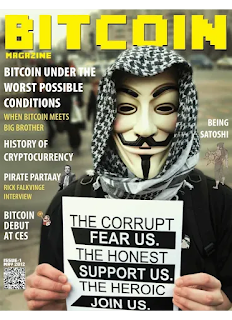
  • So 12 years ago came the Bitcoin.  Is cryptocurrency the future of money?  The value of one bitcoin from 2009 to 2019:

Now, a panel of 50 bitcoin and cryptocurrency experts has predicted the bitcoin price will continue to climb through 2021, hitting highs of around $80,000, before surging to $250,000 by 2025 and a staggering $5 million per bitcoin by 2030.
So is the cryptocurrency the future of money?  Here is an article from The Council of Foreign Affairs that sort of makes sense.  In addition to Bitcoins, consider:
  • Stablecoins.
  • DeFi, or decentralized finance (think Ethereum blockchain).
  • Unregulated finance.
  • The matter of illicit activities.
  • Terrorism evasion.
  • Environmental harms:  yes, the cryptocurrency network is an energy-intensive process.
  • Banks are returning into the fray and have proposed central bank digital currency.
  • Then there are countries like Sweden, and, particularly El Salvador.
Which leads to a follow-up article in the same TIME issue:  What El Salvador Gets from Betting on Crypto:
  • In Wikipedia, the country leads the world in fire-arm deaths/100,000 at 66.6.  USA?  Only 4.5.  Japan?  0.02.
  • The prime mover of cryptocurrency is 41-year old President Nayib Bukele Ortez.
    • Paternal grandparents were Palestinian Christians from Jerusalem and Bethlehem.
    • Maternal granparents were Catholic and Greek Orthodox.
    • Father converted to Islam and became an imam.
    • Began law school, but quit to found a company at the age of 18.
    • Elected Mayor at the age of 31.
    • Gangs are dominant, and in a more humane way than Rodrigo Duterte in the Philippines, Bukele might have struck a deal with gang leaders to reduce homicides, which has dropped from 67 to 20/100,000.
    • Is showing signs of becoming a dictator, but his approval rating is 85%.  His Twitter bio says "coolest dictator in the world."
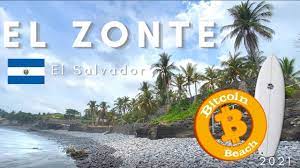
  • A small village, El Zonte, known as Bitcoin beach, is creating a Salvadoran Dream by leading the way with this cryptocurrency.
  • Read that article for the details.
Finally, that TIME issue delves into nonfungible tokens (NFT).  Earlier this year I covered this topic, so read it to get a sense of how the art world might be creating a pathway for the future of money.


I will conclude this posting with the lead story of this article about how Monica Rizzoli in Sao Paulo became a millionaire, watching how in 48 minutes, her 1,024-piece art collection earned $5.4 million in a NFT virtual auction.  To the left is one of her creations.


I'll end with a message from Planet Earth:

-

Sunday, October 24, 2021

TODAY IS 24 OCTOBER 2021

Can't complain much about today.  Humanity and Planet Earth seem safe from any kind of world war or imminent disaster.  Only 68 days left in 2021.  Back in history, October 24 in 1929 was a Black Thursday, when the American stock market crashed.  By 1932 the market had dropped by 73%.  The equivalent would be the Dow Jones, currently at 35,677, falling to 9,833.

My fantasy baseball season is over, for I primarily had players from the Los Angeles Dodgers playing the Boston Red Sox in the World Series.  Instead, the Atlanta Braves will go to the Houston Astros for Game 1 on Tuesday.  My fantasy regular teams did okay in 8-team leagues:  first, two seconds and a third.  Fantasy NFL not doing well.  Not playing fantasy NBA.  NCAA basketball begins on November 9.  Remember, Saturday night of November 6 is when daylight savings time ends.

When I lived in DC, the Sunday Washington Post was an event.  Now and then, I added the Sunday New York Times.  Here is what the NYT said this morning:

  • The U.S. has suffered through five coronavirus pandemic waves.  Experts are not predicting much of a next wave this winter.  Here is the article you can read.  Great graphics!
  • President Joe Biden's $3.5 trillion 10-year spending bill with all the wishes of liberal Democrats for social welfare and the environment will be pared down to $1.9 trillion.  Forget about free community college, free dental, free vision/hearing coverage and high penalties for environmental polluters.  This is the one supposedly being snuck through using reconciliation, where only a Democratic majority is needed.  While Arizona Senator Krysten Sinema has been a hindrance, it is Senator Joe Manchin who has been effective in whittling down this package.
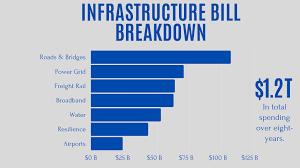
  • There is still that other $1.2 trillion Bipartisan Infrastructure Framework that has passed the Senate.  The House is holding back to insure that the larger wish list bill passes first.  Both will get through sometime this month or next, but not at the original $4.7 trillion total level.
  • Around 80,000 Afghan refugees were evacuated.  23,000 or so are being housed at seven military bases in the U.S.  The rest are being processed at 14 staging bases throughout the Middle East and Europe, with Kosovo handling the most.
Here are a few more items I can now delete from my desktop.  I'll start with why there is a bite on the Apple logo.  Has to do with byte and Adam&Eve.

Next, the future of Amazon.  You think, maybe, workers will be eliminated?  There are no unions in their U.S. facilities.

Did you know?

Some entertainment from Britain's Got Talent:

Click on this to learn who won the competition this year.  They apparently allow more cleavage in the UK.  Whoops, that was five years ago, for Simon looked a lot younger, and it was one hour and 42 minutes long.  The winner in 2020 was a comedic pianist, John Courtenay, and here is his journey.  Only 16 minutes.  The pandemic cancelled this series in 2021.  Will return next year.

-
Saturday, October 23, 2021

WHAT IS FIBER AND WHY IS IT GOOD FOR YOUR DIET?

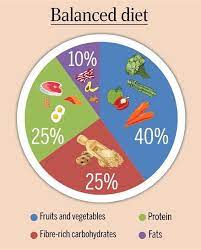
If you keep up with nutrition, a high fiber diet is generally recommended for a healthy life.  However, there are some who are advised to stick to a LOW-fiber diet.  These individuals usually have medical problems related to their bowels or following certain types of cancer treatment.

What particularly confuses me is that list to the left.  I thought asparagus, corn grits, lettuce and tomatoes had a lot fiber.


But most of us are reasonably normal and are advised to maximize (but see my comment on this term towards the end) fiber input, for that diet will help you:


  • Normalize bowel movements.
  • Lower cholesterol levels.
  • Control blood sugar levels.
  • Aid in achieving a healthy weight.
  • Increase longevity.
There are two kinds of fibers--soluble and insoluble--and they both are good for you.  Simply, fiber is the indigestible part of plants and carbohydrates. 


Men (38 grams/day), because they are heavier, need more fiber than women (25 ounces/day), and the amount decreases with older age.  The best high fiber foods include:
  • Beans, where steamed soy beans, or edamame, make for an especially good snack.  There is a double bonus in the protein they supply.  Some bakers have begun to replace wheat flour with bean flour.
  • Broccoli in particular keeps your gut bacteria healthy.
  • Berries are great for anti-oxidants, and also are relatively low in calories with high fiber content.  Blueberries are generally high on the recommendation list.
  • Avocados have become the trendy darling of this group, for:
    • They lower LDL.
    • Are high in vitamins.
    • Good for vision and your immune system.
    • Contain lots of monounsaturated fat.
      • One avocado has 10 grams of fiber, almost half of your daily requirement.
    • But, ah, watch out:
      • One avocado contains 240 calories, which can be 20% the amount needed by certain individuals.  
      • Half an avocado/day is the medical recommendation.
      • Of course, it will all depend on the size of the avocado.  That larger 230 gram Hass avocado is half a pound.
      • So it can get confusing about what half means.
      • Avocados have skyrocketed in price.  
        • One Hass avocado averages more than $2/each nationally.
        • I yesterday would have paid $5 for two Hass avocados in Times Supermarket.
        • I noticed that Wallmart advertises a Hass for $1.08/fruit, with no indication of weight.
      • Going back in time, avocado remnants have been found in Incan burial sites of 750 BC, and were called testicles.
        • Spanish conquistadors promoted the farming of this fruit in Central and South America.
        • After avocados almost disappeared for a while, they returned into markets in the early 1900's as a delicacy for the wealthy, and called the aristocrat of salad fruit.
        • Avocados take a lot of resources, as for example, a pound of fruit takes about 100 gallons of water to grow.  Thus, there has been a recent backlash about eating avocados from organizations worried about water supply and rights.
        • Supply dropped in the 1980's when people became obsessed with losing weight.
        • What spurred the growth of avocados in the U.S. was that in 2005 the USDA lifted a 90-year ban of Mexican avocados.  This led to mob cartels extorting avocado farmers, but the resultant reliability and lower price increased consumption.
        • Now the biggest day for avocados in the USA is Super Bowl Sunday, when over 100 million pounds are mostly used to make guacamole.  Considering that much of everything else consumed that day is bad for your health, avocados do help to somewhat balance your diet that day.  But, again, watch out for the calories.
        • Avocados these days are many times sent to ripening centers, where additional ethylene gas is utilized.  Natural ethylene is produced by this fruit, so if kept in a paper bag, this tends to hasten ripening.  But the mass market provides pressure to cut this period even shorter, and also time the ripening to meet marketing needs.
    • Another thing about avocados has to do with mold.
      • The mold on the skin of an avocado is white or gray.
      • The brown and black colors in the flesh is normally just bruising or oxidation.
      • However, if the exterior has obvious mold, you need good judgement:
        • Cut open, and if blemished, throw away the entire fruit.
        • Cut open, and if perfectly greenish-yellow, should be fine.
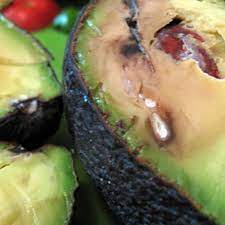
        • The problem is that there will be numerous occasions when you don't see any mold on the outside skin, but cutting into the fruit will many times show a brown or black discoloration.  You kind of hate to toss away something that cost you $2, so you compromise by slicing off the blemish and eat the good part.  But is this smart?  
        • While this sounds gross, most of the time, consumption of some mold will not make you sick.  You eat various kinds of molds like in blue cheese.  Molds generally don't have any toxin.  This report indicates that this doctor in 30 years of practice has never seen anyone die or require intense treatment due to mold poisoning.  
        • However, two bacteria, salmonella and listeria,  have been known to cause illness from avocado.  Unfortunately, there are no obvious signs of bacteria-contaminated avocado.  The best solution is to carefully wash the outside of any avocado, for the way microorganisms can be transferred to the flesh is when the fruit is cut open.  
        • Annually, listeria from avocados kills an average of 260 Americans, and salmonella 450.
    • Personally, I prefer the Sharwil (a little more oblong or pear shape) over Hass (more spherical, right), which is the most abundant nationally, with 97% of avocado sales.  For one, the weather in Hawaii favors the Sharwil (below), and 60% of the avocados grown here are of this type.  They ripen from March into November, when the flesh is 20-24% oil.  I grew up tasting Sharwils, and the Hass does not have the distinctive Sharwil flavor.
  • Popcorn.  You would think with all that volume, this should be avoided.  But that is the reason you can eat this snack.  The problem is, who can consume popcorn without butter and salt?  I rarely so indulge, but the other day I picked up a package made available for free at 15 Craigside, topped with some arare (tiny Japanese crackers), and had the whole bag with an Irish whiskey on rocks.  Also, I noticed that a ot of butter and salt was used in the machine.  I live to eat.
  • Whole grains...but what really is whole grain by FDA interpretation?  Just bought a box of multi grain Cheerios, which looks different from the traditional, which is called whole grain.
  • Apples.  Four grams of fiber in an apple.  Remember that around 30 grams/day is about right for the average person.  I walked at the Ala Wai Golf Course on Wednesday and my lunch for the day was an apple at the 10th hole.
  • Dried fruits like prunes and dates.
  • Amazingly enough...potatoes.  One small potato has 3 grams of fiber.  But avoid frying in oil and adding salt.  I still worry about the calories.  At least potato chips are not as bad as I once thought. Not good, mind you, but, as I said, I live to eat.  Potatoes also protect the intestinal wall from potentially harmful chemicals.
  • Nuts, raw over those cooked in oil.  Even peanut butter has good fiber.  That oil at the top of the jar is natural oil from the peanut.  Don't throw that away.

There are, of course, companies willing to help you with your fiber needs.  Metamucil and Citrucel are two examples.  There is evidence that too much fiber can cause bloating, gas, and even constipation.  These supplements can also compromise the effectiveness of other pills you might take.  The key point is that there is such a thing as too much fiber.

It's a little more complicated for me, as gas affects my sleeping and induces apparent psychological problems, like claustrophobia, which disappears after I burp a few times.  Watch out for nutrition bars, for they are usually the reason why you would exceed 70 grams/day.


While a breakfast of oatmeal, lunch of broccoli with soy beans and piece of chicken, and dinner with fish and lentils might be recommended for better health, I have tended to toss in wagyu beef and other proteins with regularity, plus no-fiber alcohol into my meal mix.  While diet people say it's not as simple as calories in equaling calories out to maintain weight, I think that's a good start, and mine seems to be in control these days using that philosophy, while generally avoiding snacks and desserts, and adding enhancements like wagyu to bring joy to my life.

My meal of the week came last night:  Miyazaki wagyu beef with shiitake mushrooms, plus sashimi:

Ahi and hamachi sashimi over cabbage and sea asparagus:


The drinks were especially exceptional.  For a while I thought it would be the wine.  Have story here, for forty years ago when I was working in the U.S. Senate, I stopped by Central Liquor late one Friday afternoon, and asked if there was any special wine available.  The person working there said they just got a shipment of an extraordinary Pinot Noir from Mirassou, which would be a once in a lifetime experience.  Cost, $20.  I bought a bottle, but the clerk insisted I should get a case.  One of my bigger mistakes for not doing so, for that red was the best I had ever tasted.  Went back on Monday, and they were sold out.  Well, anyway, yesterday I went to Walgreens, and on the way out noticed this bottle of Mirassou Pinot Noir, for less than $10.  Bought it and it tasted great, but on afterthought, I think that 1980 experience was a Mirassou Zinfandel.  Mirassou was bought out by Gallo in 2003, and I don't think you can find a Zinfandel by Mirassou today.

I felt like celebrating so also had a Johnny Walker Blue Label over ice:


What a meal.

-