While our economy spirals downwards with Trump's tariffs, and this Saturday experiences
a thousand "Hands Off" anti-Trump protests across the nation, the U.S. Senate last night sneaked through Trump's tax breaks and spending cuts, his "big, beautiful bill." The House will find a way to get this legislation to President Trump for his signature.
Those protests won't convince the U.S. Congress to combat Trump's authoritarian overreach and billionaire-backed agenda. It's almost like he is orchestrating the movement to crescendo into fire and turmoil, so that some time in the early fall of 2026, he can establish military rule and cancel the mid-term elections. Might be unnecessary if he in the meantime purposefully defies any Supreme Court action to establish dictatorship anyway. The judiciary and defense departments are run by his cronies, and our courts have no enforcement powers.
What can Democrats do to prevent all that from happening? Nothing, except hope that he "dies," and perhaps that might just well be their only solution.
So much for the economy and politics today. My subject of the day began when I was walking through the Stuttgart Zoo perhaps a half century ago, and came up to the exhibit for bonobos. As I stood there and watched, one of them picked up a chair, sat down, and stared at me. Its movements and gaze looked too human. Erie and fascinating. A few steps away were chimpanzee infants playing around. They looked like normal apes. That day I was convinced that of all the living species, chimpanzees included, the bonobo was closest to us
Homo sapiens. I couldn't find a photo of a bonobo in a chair, so will show something made up by Etsy to the left, plus a shot below by
Annie Carpenter of Lana, a female bonobo.
Are bonobos our closest relative? I searched the world wide web, and the consensus seems to be
the following.
Among the great apes, the chimpanzees and the bonobos are the most genetically related to us as we share about 98.7% of our DNA with them. We share a common ancestor with them as well as anatomical features, complex social hierarchies and problem-solving skills.
Nah, I still think bonobos are the closest. Chimpanzees take the spotlight because they have dominated all the accomplished research. Jane Goodall, for example, lived with them in the 1960's, and wrote that they made tools and had an array of human characteristics. No one has really looked similarly closely at bonobos.
Comparing both:
- They share 99.6% of their DNA.
- Bonobos are smaller.
- Female 74 vs 93 pounds.
- Male 100 vs 132.
- Bonobos are more slender.
- Bonobos are more likely to walk on their two legs, while chimpanzees use all four limbs.
- Sound of bonobos is a higher pitch.
- Bonobo females run the group, but babies are the most highly respected. They eat first.
- Chimpanzee males are at the top, except in a way, this is more human, in that the wife of the alpha male has significant influence.
- Female bonobos leave their society to join another. Thus it is counterintuitive for women to dominate.
- Chimpanzees are xenophobic, meaning they are wary of strangers. They don't share food with unknown individuals.
- When a bonobo society runs into another, there is a lot of excitement, leading to an orgy. They make love, not war. Sex is completely open: heterosexual, homosexual and little ones with each other. A female gets pregnant only every five years.
- When a chimpanzee society runs into another, there is a lot fighting, to the death.
- They generally don't mingle together, but can interbreed.
- Bonobos are civilized.

- They live in a peaceful community where the chief is female.
- There is little direct competition for resources. They share.
- Their sexual ply and grooming is reminiscent of our own free love movements in hippie culture.
There is a bonobo sanctuary in the Democratic Republic of Congo.
- Given food in adjacent rooms. a bonobo shares food rather than eat alone.
- They have better social intelligence than chimpanzees.
- 3400 chimpanzees are currently managed in captivity worldwide. 120 bonobos live in European zoos, and about 85 in seven zoological institutions in the U.S., which also have over 2000 chimpanzees and 350 gorillas. Only seven zoos in North America provide a home for bonobos. This is why many of you have never observed a live bonobo.
Twycross Zoo in the UK is one of four worldwide where visitors and see all the great apes: gorilla, orangutan, chimpanzee and bonobo.
Finally, from NBC News:
Bonobos – the closest living genetic relative to humans – make all kinds of interesting noises like hoots, peeps and grunts. In new research, scientists say they've discovered that bonobos can combine different vocalizations together in ways that alter each sounds' individual meanings, allowing the great apes to form more complex phrases in ways that mirror elements of human language. The research challenges the prevailing thought that humans are the only species with this ability, and researchers think further study of bonobos could unlock keys to understanding the mystery of how humans evolved language.
More on bonobos? Watch this 27-minute video.
A book to read,
Bonobo, the Forgotten Ape.
This remarkable primate with the curious name is challenging established views on human evolution. The bonobo, least known of the great apes, is a female-centered, egalitarian species that has been dubbed the "make-love-not-war" primate by specialists. In bonobo society, females form alliances to intimidate males, sexual behavior (in virtually every partner combination) replaces aggression and serves many social functions, and unrelated groups mingle instead of fighting. The species's most striking achievement is not tool use or warfare but sensitivity to others.
In the first book to combine and compare data from captivity and the field, Frans de Waal, a world-renowned primatologist, and Frans Lanting, an internationally acclaimed wildlife photographer, present the most up-to-date perspective available on the bonobo. Focusing on social organization, de Waal compares the bonobo with its better-known relative, the chimpanzee. The bonobo's relatively nonviolent behavior and the tendency for females to dominate males confront the evolutionary models derived from observing the chimpanzee's male power politics, cooperative hunting, and intergroup warfare. Further, the bonobo's frequent, imaginative sexual contacts, along with its low reproduction rate, belie any notion that the sole natural purpose of sex is procreation. Humans share over 98 percent of their genetic material with the bonobo and the chimpanzee. Is it possible that the peaceable bonobo has retained traits of our common ancestor that we find hard to recognize in ourselves?
Eight superb full-color photo essays offer a rare view of the bonobo in its native habitat in the rain forests of Zaire as well as in zoos and research facilities. Additional photographs and highlighted interviews with leading bonobo experts complement the text. This book points the way to viable alternatives to male-based models of human evolution and will add considerably to debates on the origin of our species. Anyone interested in primates, gender issues, evolutionary psychology, and exceptional wildlife photography will find a fascinating companion in Bonobo: The Forgotten Ape.

:
In 2005, Vanessa Woods accepted a marriage proposal from a man she barely knew and agreed to join him on a research trip to the Democratic Republic of Congo, a country reeling from a brutal decade-long war that had claimed the lives of millions. Settling in at a bonobo sanctuary in Congo's capital, Vanessa and her fiance entered the world of a rare ape with whom we share 98.7 percent of our DNA. She soon discovered that many of the inhabitants of the sanctuary-ape and human alike-are refugees from unspeakable violence, yet bonobos live in a peaceful society in which females are in charge, war is nonexistent, and sex is as common and friendly as a handshake. A fascinating memoir of hope and adventure, Bonobo Handshake traces Woods's self-discovery as she finds herself falling deeply in love with her husband, the apes, and her new surroundings while probing life's greatest What ultimately makes us human? Courageous and extraordinary, this true story of revelation and transformation in a fragile corner of Africa is about looking past the differences between animals and ourselves, and finding in them the same extraordinary courage and will to survive. For Vanessa, it is about finding her own path as a writer and scientist, falling in love, and finding a home.
-


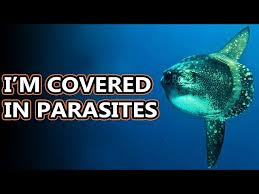
 Fish in the ocean emerged 500 million years ago. The mola mola perhaps 50 million years ago, but probably closer to 25 million. However, here is the Leedsichthys problematicus from perhaps 165 million years ago that grew to 54 feet and 100,000 pounds, double the size of a whale shark today.


.jpg)
.jpg)


 The heaviest ocean sunfish.




%20With%20Lepodisiran%20in%20Phase%20I%20Study%20HEADER.jpg)