Total Pageviews

Wednesday, December 4, 2024

BUDAPEST, HUNGARY

Budapest is the capital and most populous city of Hungary.

  • The metropolitan area holds 3.3 million, with 1.75 million in the city.  Hungary has 9.9 million people, while the European Union population is 508 million.
  • The usual beginning for this region:  Celtic settlement, transformed into a Roman town.
  • The three cities of Buda, Obuda and Pest were unified in 1893 and called Budapest.
  • The Buda side is hilly, while the Pest side has the city.
  • From left to right:  Saint Anne Parish, Matthias Church, Fisherman's Bastion and Stigmatisation of St Francis Church.
  • There are thermal springs, and Budapest is known for spas.
  • 11 casinos in Hungary and 5 in Budapest.
  • Has over 35 higher education institutions.
  • Sister cities include, New York City, Shanghai, Beijing Tehran, Berlin, Frankfurt, Vienna, Lisbon, Tel Aviv and Florence.
Hungary is a landlocked country in Central Europe.
  • 9.5 million people.
  • University tuition is free.
  • It is a unitary, parliamentary republic.
  • Like many countries of Europe, you don't know the president, who is Tamas Sulyok.
  • You do know Prime Minister Viktor Orban, pal of Donald Trump.  He has held that position since 2010.  The PM is leader of the largest party in parliament and heads the government.
  • Known for goulash, a Hungarian stew.

So how safe is Budapest?  By most accounts, very safe.  Just be smart and careful.

  • The Romani people, Hungarian Gypsies, form 3% of the population, the largest minority in the country.  However, certain surveys show that this percentage could be 9%.  They originated from northwestern India, beginning in the 14th century.
  • There is Romani crime problem in Budapest, but most say this is no different from other cities like Paris.  The USA could well be more dangerous for tourists than Hungary.  According to Nationmaster, Hungary is 53% safer than the U.S.

Well, this will be my final day of the 14-day cruise.  Lunch started with two appetizers, a beets concoction and a salad something or another, with red wine and beer.

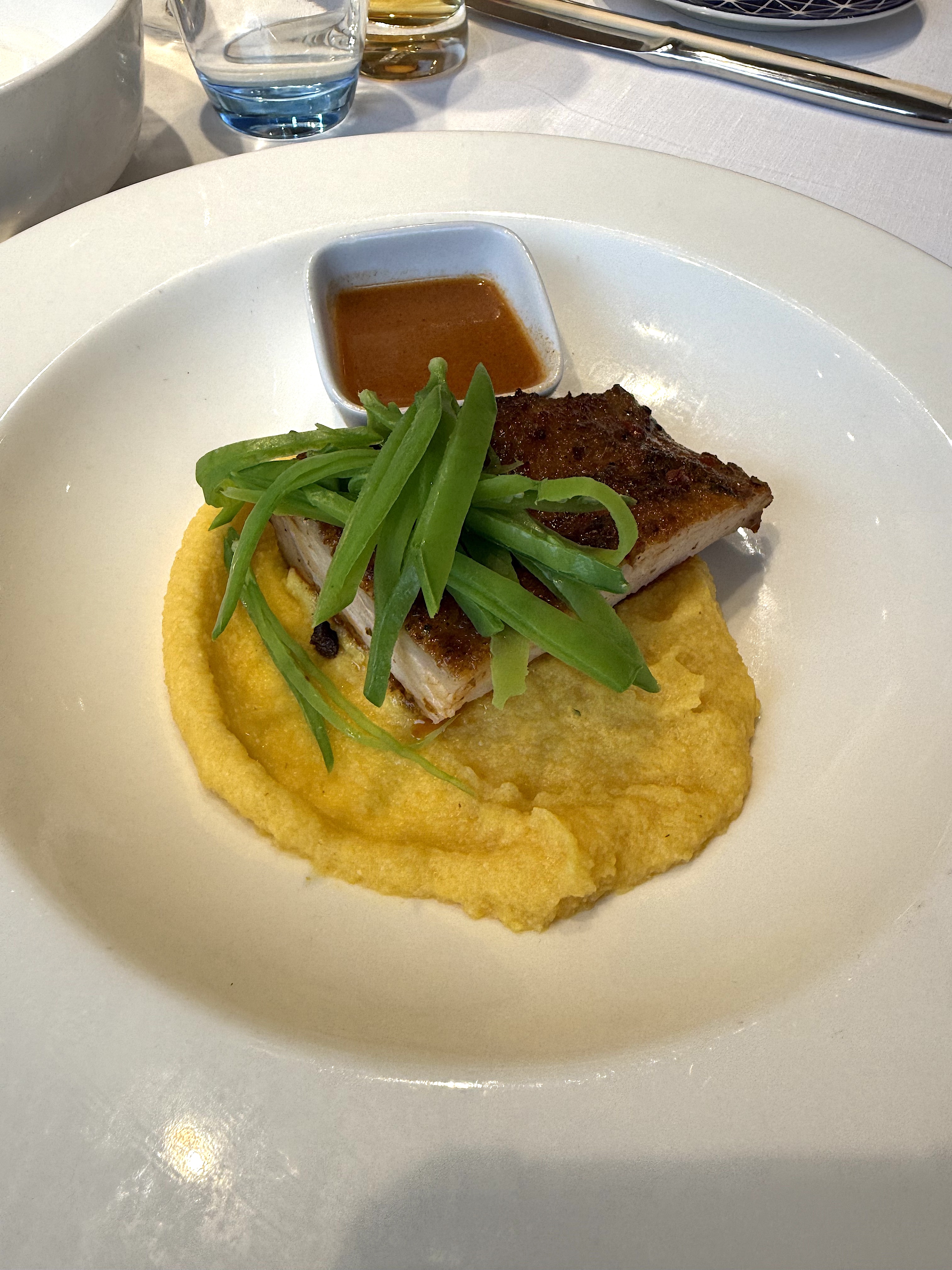
Lunch of pork and pasta.
Dinner began with a final briefing, presentation on departure from ship tomorrow and salute to the captain, who must be in trouble because of our sand bar incident.
Dinner menu
Started with asparagus soup and salad, followed by a Chateaubriand and noodles.
Dessert of sachertorte.
Christmas is getting close.
Walked 1819 on December 3.
This is our final full day on the Viking Tir.  In Budapest.  First lunch.
Artichoke soup and pasta, with white wine and beer.
I've been wanting to have the cheeseburger the past two weeks, so I ordered it on this final lunch.  The end of the cheeseburger.
Off on our walk through the Pest side of Budapest.
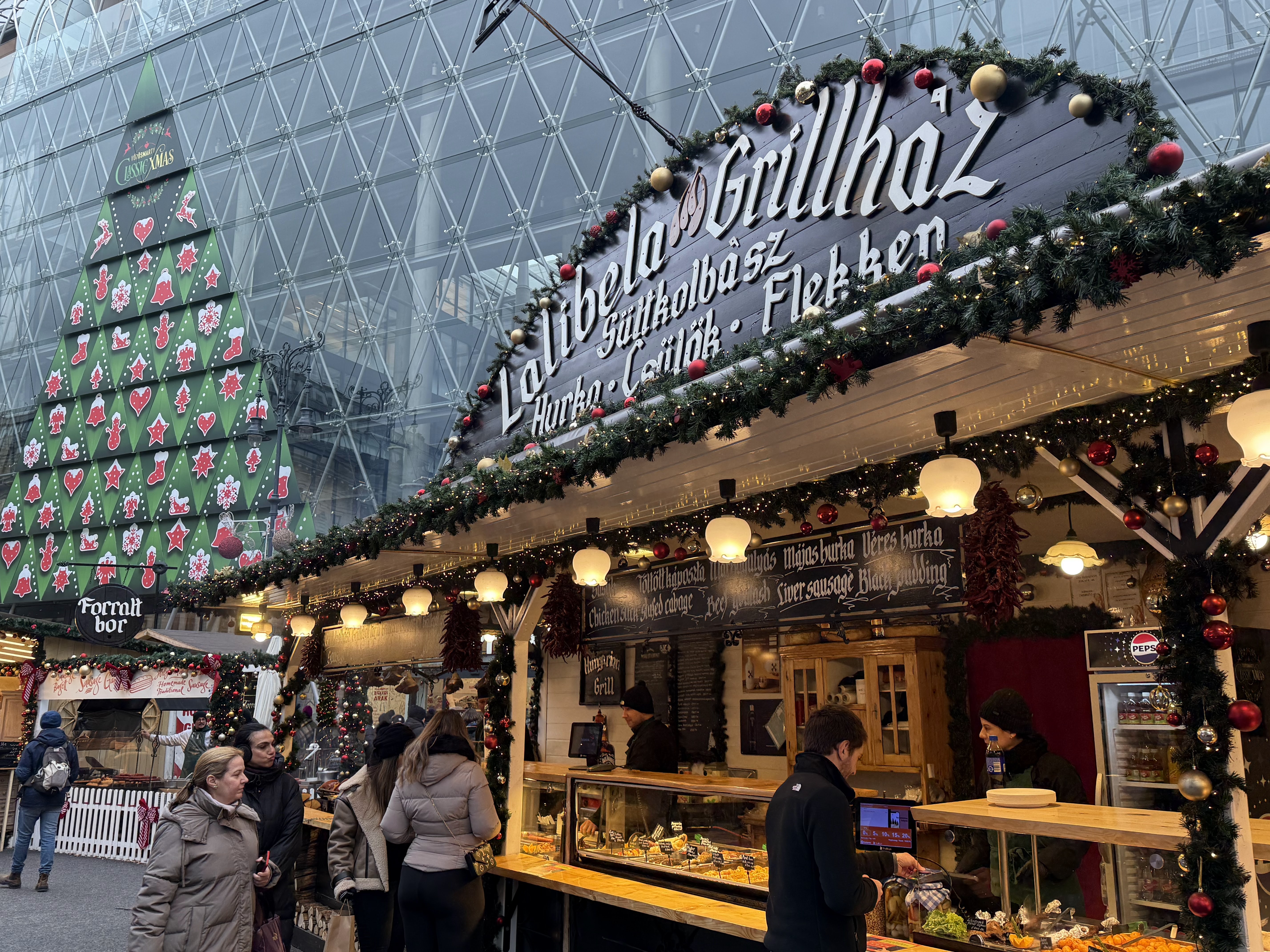
Our ship was parked close to the city center, so walked to the Budapest Christmas Market.
Met by my Blue-Bar Pigeon.
Food.
Trinkets.  
Walked back to the Viking Tir, parked alongside another Viking ship.
Tomorrow, we fly to Zurich.
-

Tuesday, December 3, 2024

WHAT TO EXPECT FROM DONALD TRUMP ABOUT ENERGY AND THE ENVIRONMENT

The Viking Tir leaves Vienna this afternoon for Budapest, which will be featured in my blog tomorrow.  Today.  I'll instead post a sci-tech article which usually appears on Wednesdays.

I regularly report on information provided by the American Energy Society.  While this society promotes energy, it tries to protect the environment, and attempts to curb global warming is an important goal.

  • This year, the AES writer of the year is Rosanna Xia.
    • Her works offers new ways for us to think about resiliency and our relationship with the environment.
    • Xia is an environmental reporter for the Los Angeles Times.
    • She wrote an award-winning 2023 book, California Against the Sea.
    • This year, she released Out of Plain Sight, a documentary film about the half a million barrels of toxic waste that were quietly dumped into the ocean decades ago, just off the coast of Los Angeles.
    • I haven't read her book, nor seen her documentary, but understand from where she comes.
      • During my professional career in renewable energy, I researched the development of green energy.  I also taught environmental engineering at the University of Hawaii.    From 1979 to 1982 I spent three years on the U.S. Senate staff, and helped write original legislation for wind energy, ocean energy and hydrogen. 
      • After I retired, I spent most of my time advocating for the Blue Revolution, a project that was designed to bring together various facets of my past experience to develop next generation marine bioproducts for the community, while remediating global warming and, perhaps, minimizing the effect of hurricanes.
      • There were two huge problems.
        • First, this effort would cost $150 million, and only an inspired super billionaire could afford the price.
        • Two, there were various organizations potentially opposed to the concept.
          • The air and water problems facing the world have affected the classroom.
          • There is, one might say, too much concern about the environment.
          • Teachers of science tend to become anti-development, and students follow their philosophy.
        • Rossana Xia is typical of these educators.
        • I thus worry that my Blue Revolution Project, and any pro-development project in nature to make a potential profit for companies, have largely become unpopular.
        • Mind you, the Pacific International Ocean Station initiative not only will produce renewable energy and resources, while remediating global warming and reducing hurricanes.  It is not at all related to mining for coal or many of the other major developments being touted by industry.  Yet, I foresee major difficulties as this project some day gains momentum.
        • Link to the following videos and publications for detailed information.
  • Transition turmoil.  The Norway example.
    • Fossil fuels still account for 83% of energy used in the U.S.  With Donald Trump, this percentage will in the future increase.
    • Norway has both a lot of hydropower and fossil fuel resources.  Yet, they seem unable to convert away from fossil fuels.
      • 98% of the power for electricity comes from renewable resources. and 76% overall.
      • EVs command 87% of new car sales.
      • But over the years, they can't break away from fossil fuels.
      • They have awarded 36% more drilling permits and okayed expanding exploration in Arctic waters.
      • Norway is conscientious about global warming, but perhaps because of the Ukraine War, has replaced Russia as Europe's primary source of natural gas.
    • The transition totally away from fossil fuels has been difficult, but this is understandable considering world conditions.
  • What to expect during the Trump II Presidency.
    • Drill baby, drill.  Except the reality is that oil majors have hit their maximum target output and will not increase production at the risk of lowering the price.  They want to keep oil at $80/barrel.
    • The pause in Liquified Natural gas export permits will be lifted.
    • Grey hydrogen (mostly from natural gas) will get tax credits.
    • Large nuclear power plants are opposed by natural gas producers.  However, the opposition is less for Small Modular Reactors, those up to 300 MW, so they will get administrative support.  The first will be in Virginia.
    • There will be more mining for minerals and metals in the USA though new federal leases and relaxed regulations.
    • Solar and wind tax credits could be threatened, except that many Republican politicians in the Midwest will stall any cuts.
    • It will become more difficult to get permits for offshore wind energy.
    • One reason is that Trump especially hates wind energy.  
      • The major reason is that a decade ago the Scottish regional government built an 11-turbine wind farm near one of his golf courses. 
      •  Trump complained that the windmills would ruin golfer's view and turn Scotland into a third world wasteland.  
      • Also said the noise causes cancer.  
      • Said support to end for wind power on Day One.
      • Trump will do whatever he can to stop a 25,000 MW offshore wind project for California.
    • On the contrary, Trump, who once hated EVs, is now a supporter.  Elon Musk was the reason.
    • Trump will curtail efforts to assess the impact of carbon on global warming.
    • The Office of Clean Energy will be abolished or cut, and EPA will be minimized.
    • California will have difficulty getting aid from FEMA if there is a natural disaster.  Add many other states who did not vote for him.

The Viking Tir arrives tomorrow in Budapest.

-