Total Pageviews

Sunday, July 9, 2023

GOD, EVOLUTION AND ARTIFICIAL INTELLIGENCE

First, from the New York Times this morning:

  • President Biden will meet with King Charles III and Prime Minister Rishi Sunak in London tomorrow.
  • Major League Baseball’s Home Run Derby is also tomorrow, followed by the All-Star game on Tuesday.
  • NATO leaders are scheduled to meet for a summit in Lithuania starting Tuesday.
  • Friday is Bastille Day in France.
  • The Wimbledon women’s singles final will be on Saturday, and the men’s final is on Sunday.  The surprise so far is 16-year old Mirra Andreeva of Russia, playing here for the first time, earning a spot in the fourth round.

The conventional Christian view of evolution can be found in the King James version of The Bible, where Genesis says (you can refer to the first link to view missing elements):

[1] In the beginning God created the heaven and the earth.

[3] And God said, Let there be light: and there was light.

[8] And God called the firmament Heaven. And the evening and the morning were the second day.

[13] And the evening and the morning were the third day.

[19] And the evening and the morning were the fourth day,

[21] And God created great whales, and every living creature that moveth, which the waters brought forth abundantly, after their kind, and every winged fowl after his kind: and God saw that it was good.
[22] And God blessed them, saying, Be fruitful, and multiply, and fill the waters in the seas, and let fowl multiply in the earth.
[23] And the evening and the morning were the fifth day.

[30] And to every beast of the earth, and to every fowl of the air, and to every thing that creepeth upon the earth, wherein there is life, I have given every green herb for meat: and it was so.
[31] And God saw every thing that he had made, and, behold, it was very good. And the evening and the morning were the sixth day.

From Genesis II:

[1] Thus the heavens and the earth were finished, and all the host of them.
[2] And on the seventh day God ended his work which he had made; and he rested on the seventh day from all his work which he had made.

[8] And the LORD God planted a garden eastward in Eden; and there he put the man whom he had formed.

[22] And the rib, which the LORD God had taken from man, made he a woman, and brought her unto the man.

[25] And they were both naked, the man and his wife, and were not ashamed.

Genesis III

[1] Now the serpent was more subtil than any beast of the field which the LORD God had made. And he said unto the woman, Yea, hath God said, Ye shall not eat of every tree of the garden?

[20] And Adam called his wife's name Eve; because she was the mother of all living.

This goes on and on into Genesis 50.

[26] So Joseph died, being an hundred and ten years old: and they embalmed him, and he was put in a coffin in Egypt.


Here are two scientific views of evolution:

The Bible says God accomplished all the above from light to Adam and Eve around 9,700 years ago.  Science goes further back, to 13.8 billion years ago, with the Big Bang.  But what happened before that explosion, and how did those components come to be?  God?

In any case, are we, Homo sapiens, the end, as shown in the first graphic above?  What about artificial intelligence (AI)?  Watch this 40 second version of evolution beyond us.  AI seems to be taking over.  Are we humans thus just another link to the ultimate form, devoid of organics?

Dang Star Wars and Star Trek, will outer space travel only involve AI?  

  • Let's face it, our biological limitation will make long-distance space travel impossible.  
  • Whether it's cosmic rays or just plain time, the first aliens, if they exist, to visit us will be AI.
  • From the middle of our Milky Way Galaxy to the outer edges, light takes from 50,000 to 100,000 years.  Then from our galaxy to our closest neighbor, the Andromeda Galaxy, light would take 2.5 million years.
  • Thus, even if we can find a way to go 90% the speed of light, it would take thousands of years to reach another planet with potential life.  However, at 25,000 miles per hour, which was accomplished by NASA's Parker Solar Probe, that is only 1% the speed of light.
  • Worm holes and other more esoteric concepts purportedly can perhaps result in future travel close to or even faster than the speed of light, but don't count on it.
In other words, we should imagine future intelligence billions of years into the future not in human bodies, but some form of silicon or other molecules or the ether.  Humanity's greatest achievement could well be to create our successors.  Is this what God intended?  Or maybe there is no God.  Or could the ultimate AI be God?

-

Saturday, July 8, 2023

THIS WEEK: Hot, Threads and Jaws

The daily average temperature  this past week was 0.08 F warmer than any other of record-keeping.  

  • The average global air temperature in midweek was, however, 62.9 F.  You say, but that's pretty cold.  Sure, but you're also averaging in the Arctic and Antarctic, etc.  
  • Why so hot?  Said to be a combination of global warming, summer and the advent of El Niño.  And it should get even hotter into next month.
  • Europe suffered its hottest June, ever.
  • It's winter in the Antarctic, but parts of this continent and nearby ocean were 18-36F higher than the 1979-2000 average.
  • 2016 was the hottest year ever, when we faced the last major El Niño.
  • Chances are high that this month of July will be our warmest ever.  According to Karsten Haustein, a research fellow in atmospheric radiation at Leipzig University, ever means since the Eemian interglacial period 120,000 years ago.
  • UN Secretary General António Guterres said, if we persist in delaying key measures that are needed, I think we are moving into a catastrophic situation, as the last two records in temperature demonstrates.  He was referring to the two all-time highs this past Tuesday and Wednesday.

I will soon post on Twitter vs Threads, but the latter was launched by Meta this past week, and within two hours Wednesday evening 2 million people downloaded the app, a copycat to Twitter.  

  • Mark Zuckerberg reported Threads reached 30 million users in less than 24 hours.
  • Instagram took 15 months to reach 30 million downloads, and TikTok took two years.
  • Sign ups surpassed 70 million by Friday morning, and users posted more than 95 million posts and 190 million likes.  
  • Threads might have been #2 to Nintendo's Mario Kart Tour.
  • Keep in mind that Twitter has 368 million users.
  • Elon Musk hinted that Meta stole trade secrets.
  • Zuckerberg took a swipe at Twitter by saying Threads would be "focusing on kindness."
  • Early adopters of Threads include Bill Gates, Shakira and Oprah Winfrey, along with brands like Netflix.
  • Will Threads become a Twitter-killer?  Stay tuned.
  • Nothing to do with an app, but the most frightening film I might have ever seen was Threads, which I reviewed three years ago.  Here is my monthly gift to you.  Click on this and you can watch the entire 2 hour movie.  But you might not want to do this.  Here is one quote:  I saw this first in the 1980s and had nightmares for some time afterwards. It is a horrible movie, not in the sense that it's badly made -- it's definitely not -- but it pulls NO punches. Unlike "The Day After", there is no reasonably clean hospital scenes ... no rosy hope that somehow we will make it past a nuclear war, regroup, and rebuild. This makes that old saw very clear: after a nuclear war, the living will envy the dead.

Also just this week in Florida, a video showed beachgoers fleeing the ocean after a shark started circling swimmers in shallow water. 

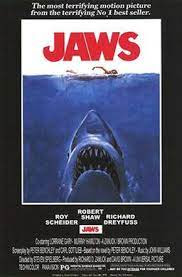
Over the past week or so I've watched almost the entire Jaws series, and have just begun Jaws the Revenge, given 0 and 15 ratings by Rotten Tomatoes.  Michael Caine and Mario Van Peebles are in it.  The headliner is Lorraine Gary, who was the wife of the sheriff in the original.  Not sure if I'll ever complete this one.  Jaws III, incidentally, got 11/17, II 62/30 and Jaws an outstanding 97/90.  Stars were Roy Scheider, Robert Shaw, Richard Dreyfuss, Lorraine Gary and Murray Hamilton.  Steven Spielberg directed.

-

Friday, July 7, 2023

FAT? SKINNY? NORMAL? APPARENTLY, NO EFFECT ON LONGEVITY.

Every so often, medical science announces something astounding.  Here is the latest.  It apparently does not matter if you're fat, skinny or normal, we all die at the same rate.  While this is a simplification of that article, this general thought is now probably closer to reality than the previous one, which says that being normal was by far the best weight. 

Most of my life I've noticed that extremely thin people tended to die early, while those who are far overweight, are more troubled by diabetes, heart problems and a range of other ailments, so therefore must have a lower longevity.  Was I imagining things?  Not really, for everything I also read said about the same thing.

Health publications in the past indicated that your Body Mass Index (BMI) determined your life expectancy.  

  • People live to be 100 and older by preventing chronic diseases.
  • Those overweight have more of these ailments.
  • The best way to avoid getting sick is to have a normal BMI.
  • In a nutshell, life expectancy and disease-free healthspan are on average 7 years longer in women and 9 years longer in men who maintain stable healthy BMI throughout their adult lives.
  • There was one exception.  For those over the age of 65, the 21-25 BMI should be increased to 26-29 BMI to minimize mortality risk.  The reason is that older people with more stored resources can better combat life-threatening illnesses.

Well, during the pandemic I changed my diet, eating mostly vegetables and proteins, to drop my weight from slightly overweight into the normal Body Mass Index range.  I was once 165 pounds at a height of 5'7".  It took me a couple of years to slim down to 152 pounds.  My BMI became a normal 24.  One other positive was that this 13 pound drop reduced knee pains.  But now that I am considerably over 65, I'm beginning wonder if I should raise my BMI to 25 or 26.

To calculate your BMI (in this American version), multiply your weight in pounds by 703, then divide by your height in inches, then finally divide that answer by your height in inches again.


If your BMI is higher than the normal range, you aren’t alone. A 2018 CDC survey found that over 42% of adults in the US are considered obese. But this trend comes with serious consequences. Studies show that a high BMI increases your risk of developing a number of diseases and serious health conditions. It also increases your risk of premature death.

As much as the above has held for all these years, there have been caveats.  For example:

In addition, and probably most importantly, BMI does not provide any direct information about metabolism. Research demonstrates that many people with a BMI >30 kg/m2 (which the CDC classifies as obese) can can also be metabolically healthy. Metabolically healthy obese individuals have lower risk and higher longevity potential across their lifespan than normal weight metabolically unhealthy individuals. Put another way, metabolic health matters more than weight when it comes to healthspan and lifespan.

BMI certainly isn’t perfect, as metabolic health is also clearly essential for assessing overall health and longevity. That said, BMI is superior to its “ideal body weight equation” predecessors. BMI is also less complicated (and less expensive) than measuring body composition, which requires specialized equipment, equations, and training. For most adults striving to extend healthspan and lifespan, BMI is an accessible way to assess health risk in relation to their body weight. This makes BMI a valuable tool for pursuing better health and longevity.  So it should not be a total surprise to read that:  A high BMI is not necessarily associated with a higher risk of death:

  • This new study just published in the journal PLOS One, found that a BMI in the overweight or obese range is NOT necessarily associated with a higher risk of death.
  • BMI alone is NOT an accurate indicator of a person's health.
  • This research assessed the relationship between BMI and the risk of death from any cause based on data from more than 550,000 U.S. adults over an overage of 9 years.
  • THE RESULTS SHOWED NO SIGNIFICANT INCREASE IN THE RISK OF DEATH FOR THOSE 65 AND OLDER WITH BMIS BETWEEN 22.5 AND 34.9, and the same for younger adults between 22.5 and 27.4.
  • A BMI of 25 and above is considered overweight, while 30 or above is obese.
  • Only last month the American Medical Association adopted a new policy advising physicians to use additional measures to assess a patient's health, like waist circumference, fat distribution and genetic factors.
  • In fact, it is appearing that waist circumference is a stronger indicator than BMI to predict longevity.
  • Additionally, substance abuse, tobacco use and disordered eating leading to a leaner physique is not healthy.
  • This might confuse you, but:
In a 2016 study, nearly half of the participants considered overweight and 29% of those considered obese were found to be metabolically healthy, while over 30% of people with weights considered “normal” were metabolically unhealthy.
  • To further befuddle you, one of the study researchers, Dr. Aayush Visaria of Rutgers, said people with normal BMIs may still be obese.
  • Comparing older studies to the most recent, one weakness of this latest study was that only 27% of the participants had a BMI greater than 30, but today 42% of U.S. adults are obese.
  • A second defect is that Whites were 85% of earlier studies, while this percentage has now dropped to 69%.
  • Also keep in mind that the CDC has reported that people with BMIs of 25 or higher do face an increase risk of high blood pressure, Type 2 diabetes and several types of cancer.
  • In other words, it might still be best to maintain a BMI of less than 25.
  • Keep in mind that this study also said that participants with a BMI of 30 or more did face a higher mortality risk, and among younger adults, anything over 27.5 was associated with a nearly 20% greater risk of death.
So what is the bottom line?  Is it okay to be fat or thin?  Almost every study, even the new one, indicates that at any age, it's best to avoid the low and high end of the BMI scale.  For older people like me, we need some added resources in time of serious illness, so I should not be too skinny.  But I also need to avoid serious maladies, so obese is definitely not where I should be.  Further, I would imagine that 15 pounds of added weight would seriously increase knee pain when I walk.  So for me, not you, I can probably go up from 152 to 155 pounds, or slightly higher, thereby enjoying more snacks and food to enhance my lifestyle, while tolerating some added knee pain.

Now that I can eat more, I would like to someday soon go to Three Peacocks in Singapore:
-

Thursday, July 6, 2023

SILENT SPREADING IS THE CURRENT COVID WORRY

From the beginning of this covid pandemic till a few months ago I weekly on Thursday showed a table of vital statistics.  I still on this day tend to feature some facet of this disease because it remains with us, and the older you are, the more prone you are to an earlier death.  In fact, at 15 Craigside, we have returned to wearing masks in the building because of a minor outbreak.  Not residents, but mostly dining staff members.

So today I'll show the latest weekly data on SARS-CoV-2 from Worldometer.  Note though that many countries no longer are even reporting.

  •  Most cases this past week:
    • World  149,666
    • #1      South Korea  82,165 (55% of all world cases)
    • #2      USA  18,654
    • #3      Brazil  9,634
  • Deaths this past week:
    • World  661
    • #1      Brazil  167
    • #2      USA  98
    • #3      Russia  86
  • Deaths this past week per million population
    • World  0.1
    • #1    Turks and Caicos  25
    • #2    Malta  7
    • #3    Singapore  6
    • #4    New Zealand  3
    • #7    Australia 2
    • #10  Brazil  0.8
    • #13  Thailand  0.6
    • #14  S. Korea  0.6
    • #21  USA  0.3
    • Note that South Korea had 4.4 times more cases than the USA, but  had only twice the number of deaths per million population.
Hawaii is probably typical of the state of COVID-19 today.  Not as bad as during the peak, but still a concern.
  • During the past week:  71 cases, 48 hospitalizations, 9 deaths and a positivity rate of 8.4%.  You can this to be less than 5%.  All the deaths were of people 60 and older.
  • The matter of long covid remains.  The estimate in Hawaii is 10%, but the CDC reports that since the beginning of the pandemic 6% of Americans got long covid.
  • The recommendation is for all to continue to wear masks in all forms of public transportation, and certainly in any crowded room.
  • The most common subvariant is  Kraken, the Omicron XBB.1.5 at 45%, XBB.2.3 16% and XBB.1.16 14%.
The Atlantic
 had a particularly interesting article by Katherine Wu:  No One Really Knows How Much COVID is Silently Spreading...Again.
  • During the early stage of the pandemic, medical science did not appreciate the danger of asymptomatic cases.  There was no pressure on those who tested positive but had no or little symptoms to wear a mask.  This is the group that spread the disease more than anything else.
  • Doubly troublesome was that it takes up to six days for an infected individual to show symptoms, but this person can begin spreading the infection as soon as two days after getting covid.
  • In summary, symptomless transmission was the problem.
  • Today, with vaccinations and herd immunity, fewer and fewer are being hospitalized and dying.
  • BUT, SILENT SPREAD IS STILL OCCURRING!
    • A big plus, though, is that one infected with the Omicron subvariant now tend to show symptoms in 3 days, so these individuals tend to wear masks and limit the spread.
    • This why the past winter was not so bad.
    • On the other hand, symptoms are now milder, and if no test is taken, this is the group that is spreading covid.
    • Even worse, many more who get infected show NO symptoms.  These are the most dangerous people.
    • The sense is that anyone with any kind of precondition, like old age, should be taking Paxlovid if they test positive.  Mild or no symptoms are preventing this treatment, and the weaker can actually show later more serious symptoms.
    • Adding to the current woe is that testing is now not free.

On the vaccination front, looks like that fall shot will include protection from the flu, covid and respiratory synctial virus (RSV).  Those with health insurance will get the tripledemic injection for free.


Also, the seasonal flu apparently returned this winter, but the peak was in December instead of February.  The estimate is that as many as 58,000 died in the U.S. from the flu during that period.  How much covid has decline, for the data at the top showed that only around a 100 died for the whole past week.  Dividing 58,000 by three months or 12 weeks gets a number close to 5000/week.  Interesting though that I don't know anyone who caught the flu this past winter.

- 

Wednesday, July 5, 2023

THE DEVELOPMENT OF ARTIFICIAL SKIN

I arrived on the Stanford University campus in September of 1958.  The first two years there all engineering students pretty much took the same courses.  According to this historic view of the Stanford Chemical Engineering Department, in 1960, Professor David Mason got a Ford Foundation grant to begin the program.  Those below have served as department chair:

Mason was chairman of the department when in our junior year he rushed into one of our ChE classes and proudly announced that we had gained accreditation.  First, I did not know that I was in the very first class, and second, I always thought we were already accredited.  Same for the rest of my classmates.  Informally, there were 75 or so of us who had selected chemical engineering as their major in our freshman year.  When I graduated in 1962, there were only 8 of us.  Ten years later, Stanford ranked #1 in all the chemical engineering departments of the country.  For the record, U.S. News and World Report still has Stanford (and CalTech) at #2, with MIT as #1.  And 65 years ago I almost went to CalTech instead of Stanford.

In that top photo-list towards the bottom right is now 53-year old Zhenan Bao, who was featured in the March issue of Stanford.  She was born in Nanjing, China and got her PhD at the University of Chicago.  She first joined Lucent Technologies at Bell Labs, where she was involved in a field that is leading to electronic paper.  Joined Stanford in 2004.  From research in organic subconductors and carbon nanotubes, she developed the background for electronic skin.  Bao has since co-founded two companies, Nano and PyrAmes Health in Silicon Valley.  She is married with two children.

  • She is leading a team that in time will have for sale a smart bandage that painlessly falls away from the skin with the application of a little heat.
  • Maybe more importantly, though, this bandage tracks recovery and infection resulting in 25% faster healing and less scarring.
  • This is just one of a range of re-imagined medical devices, including:
    • Heart sensors that adhere like a postage stamp to the beating organ to locate atrial fibrillation.
    • Wireless sensors to monitor tumor growth.
    • Implantable sensors tucked into the brain and gut to measure dopamine and serotonin levels.  
    • Stick-on sensors to measure skin conductivity, heart rate variance and cortisol levels for anxiety and stress.  This application will deal with depression.
  • Her work with other colleagues will someday lead to:
    • Conductive polymers to treat epilepsy.
    • Electronic skin.
    • A tattoo on the skin that will provide your information now carried in a wallet.
    • Artificial intelligence for a spray on skin so you can  type information without a keyboard.
How many of you have kept up with this esoteric development of artificial skin?  To close, as mentioned yesterday, 15 Craigside featured a special Independence day lunch  I first warmed up the food in some butter.  Then watched that CNN 6-hour July 4th marathon with this July 4th feast.
Earlier in the week, pork tonkatsu with ahi sashimi.  Note the sea asparagus and sea grapes.  Then artichoke with miso soup while watching Jeopardy.  No rice for weight maintenance.

-