Total Pageviews

Showing posts sorted by date for query chun, kim, hilton. Sort by relevance Show all posts

Wednesday, November 24, 2021

MY MEMORABLE DINNER WITH CHUN DOO-HWAN AND FRIENDS

The news shock of the day is that all three vigilantes were judged guilty of murdering Ahmaud Arbery, in varying degrees.  Sentencing to come later.  


Georgia has become a model transition state for Black Lives Mattering and Democracy.  This will be a peaceful Thanksgiving tomorrow.

Yesterday I advocated the use of home tests to determine whether you have COVID-19 or not to make yourself safe for your Thanksgiving family gathering.  From the New York Times this morning:

That approach is possible in other countries. In Britain, pharmacies offer free packs of seven tests that people can take at home. In Germany, rapid tests are also widely available and mostly free. In this country, the situation is different, largely because the F.D.A. has been slow to approve the tests.


The rapid tests — also known as antigen tests — are designed to tell whether you are infectious. That’s why they are such a powerful public-health tool. They can prevent somebody with the virus from spreading it to others.


In the U.S....


They typically cost about $25 for a pack of two. The combination of their cost and irregular availability means that Americans interested in rapid tests often must make choices about when to use them.


The most widely available antigen test seems to be BinaxNOW, from Abbott. You should also feel comfortable using QuickVue, Ellume and Flowflex, among others. If you search for one of these tests online and a website points you to a different brand, do some research. Others can be very expensive.


Both CVS and Walgreens have search engines that let you find tests for sale near you. I recommend calling the store to confirm it still has them in stock — and then immediately going to buy it. A store may limit you to buying one test pack at a time.
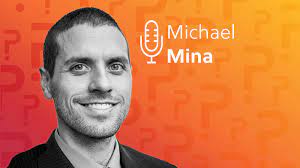

You will usually get a result within 15 minutes. Keep in mind that both false negatives and false positives are possible. Antigen tests typically identify 98 percent of infectious cases, according to Dr. Michael Mina, a Harvard University epidemiologist.


If you get a positive result, take it seriously, and quarantine yourself until you know more. Ideally, you would try to confirm the result with a PCR test or a second rapid test — from a different brand, my colleague Tara Parker-Pope says. If the second is negative and you are vaccinated, you can probably trust the negative.


Finally:


Probably, warmer weather is protecting the South.


Chun Doo-hwan, South Korea's vilified former military dictator from 1980 to 1988, passed away yesterday at the age of 90.  Most of you don't know and/or don't care about him.  I do because we once had a memorable dinner.

A lot of intrigue led to his becoming president, aided by a secret military club he formed called Hanahoe, composed of his fellow graduates from the 11th class of the Korea Military Academy.  After the assassination of Park Chung-hee in 1979, Chun positioned himself as director of the Korean CIA (KCIA--which is now called the National Intelligence Service).  Park's daughter, Geun-hye, became South Korea's 18th and first female president in 2012, and today is still in jail after being impeached in 2016.

While leading the KCIA, Chun was held responsible for the deaths of at least 200 protesters from Gwangju in 1980, and gained a title of The Butcher of Gwangju.  He later became president and in his attempt to quell rioting, sent more than 100,000 into hard labor and re-education camps under the name of social cleansing to minimize drugs, smuggling, etc.  He terminated his country's nuclear weapons program and formed professional baseball and soccer leagues.  The Korean Summer Olympics were held in 1988.  As he couldn't run after a seven year term, he just declared his military classmate Roh Tae-woo as the next president, through a process by which he was elected in the first presidential voting in 16 years.  The transfer of power was peaceful...for the first time in the history of South Korea.

When Kim Young-sam became president in 1993 he proceeded to investigate both Rho and Chun for corruption.  In 1997 Chun was convicted of a range of crimes and sentenced to life in prison.  However, the next president, Kim Dae-jung was instrumental in commuting the sentence.  Both Chun and Roh died this past month.

You can read my book the details, but here is an account from my blog on 16August2010.  The memorable part of this meal was not the dinner itself, but getting there:


An intermediary arranged for me to meet with some “important” people from his country at the Hilton. The information was sketchy as to the purpose of the gathering or who was to attend. The Lotte, where I was staying, was no more than a couple of miles from the Hilton, so I attempted to catch a taxi at 6:30 for the 7PM dinner.
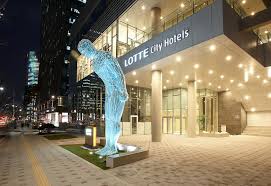

While traffic at 6:30PM can be a problem in Seoul, I had not in the past had difficulty. Well, it was raining, so that was a complication. The taxi stand had, perhaps, 25 people waiting, and after ten minutes, all of one cab showed up. I then walked to the street to try to hail one down. All the taxis were full. Nearly sopping wet, I came back to stand in line, which had grown. It was now 6:45PM.


I remembered that the hotel had a limousine service, so, at ten to seven, I arranged to be dropped off at the Hilton. The cost was manageable. The traffic was terrible, and if you have tried to navigate away from the Lotte, you might remember that you have to traverse through two full circles, to finally head in the right direction. At 7:35PM I finally arrived at the Hilton, and with some help from the staff, found the special room in which the dinner was to be held…..45 minutes late and somewhat bedraggled, being still wet.


All three individuals, who I had not previously met, were sitting over a drink waiting for me. They all knew each other very well. They were reasonably nice about my tardiness and introduced themselves. The first Kim was the current director of the Korean Intelligence Agency, the second Kim was a high level government official who was the first Minister of Science and Technology, and the Chun was none other than Doo Hwan, who was president of Korea from 1980 to 1988. The second Kim, Kee Hyong, mentioned that if he had known of my plight, he would have arranged something, as his wife was the brother of the person who owned the Lotte. While in an advanced state of shock, I somehow managed to survive the dinner
.

Till today, I don’t know if I, somehow, got shown into the wrong room, and these dignitaries were waiting for someone else. Certainly, they must have wondered why it was so important for all three at the same time to have dinner with me.


Have no idea what I ate.


Perhaps there was some good reason for that dinner, as I did get to become good friends with Kim Kee Hyong. He had obtained a PhD in materials science at Penn State University and at a very young age was summoned back to his country to become a Minister. He later became chairman of the board of the Korea Advanced Institute of Science and Technology, and was a key architect of technology development for his country. He came to Hawaii on several occasions and served on one of my advisory boards.


One of our later lunches was held at the Renaissance Hotel in Seoul, where, Kee, Kiryun Choi (a professor from Ajou University who at one time signed most of the research contracts for his government) and I came up with the Renaissance Project. You can go to Chapter 3 of Book 1 for some details on this hydrogen competition. Kee and I, until very recently, had dinner once or twice a year to discuss the future.

-

Saturday, July 14, 2018

AROUND THE WORLD FOOD TOUR

Day 73 of the Lower Puna Eruption, and activity continues, although this subject dropped off the list of major local headlines in the Star Advertiser.  Oh, but there is a new island off Kapoho, about 25 feet in diameter and only a few yards offshore.


********************
I spent most of yesterday putting together a PowerPoint for my talk to 15 Craigside this coming Tuesday, July 17:


Let me know if you want to come.  Security here is pretty tight, so you can't just show up.  Note the free food and drinks at 2:30PM.  The write-up is a bit too focused.  I'll start with what I ate growing up in Kakaako, and Matsuda Saimin is one beginning.  In fact, Fuj's family will be featured.  Also, it's more than the food that makes a meal memorable.  The setting, people involved and so on are more relevant than what you eat.

Let me quote just one anecdote:

Kee Hyong Kim obtained his PhD from Penn State University, and at a relatively young age, became the first Minister of Science and Technology for South Korea. Our first meeting was awkwardly disastrous, for I was staying at the Lotte Hotel, about three miles from the Hilton Hotel in Seoul, where dinner was to be held with Kim, another Kim, who was head of the Korean Intelligence Agency, and Doe Hwan Chun, who had recently stepped down as president of the country. I left my hotel half an hour before dinner time, but saw a long line waiting for taxis. It was raining. After ten minutes with the line not at all moving, I went to the streets, but only got wet attempting to flag a taxi down. In desperation, I hired a hotel car and chauffeur, who got me to the Hilton 35 minutes late, for the traffic was a mess. Visibly drenched, I charged into the dinner room to see them casually discussing national politics. No one seemed particularly upset about my tardiness. Dinner went well. Only a few weeks later, former President Chun was jailed on charges of corruption, treason and mutiny. He was sentenced to death, but was eventually pardoned by President-elect Dae Jung Kim. There are a lot of Kims in Korea.

That was a quarter century ago, Dae Jung Kim went on to win a Nobel Peace Prize in 2000 and Kee Hyong and I came great friends after that meal.  He is credited with spurring South Korea's advanced industries.  He was largely responsible for the formation of the Korea Advanced Institute of Science and Technology.


One problem with South Korea is that they have the highest suicide rate of industrial countries (the USA is half that of SK).  Another is that they have a penchant for throwing former presidents in jail.  

Here to the left are Chun and another, Roe-tae Woo.  Past President Park Geun-hye is now serving 24 years behind bars and additionally had to pay a fine of $16.9 million dollars.  You ask, why isn't Trump in jail?  Good question.

Just the above could have served as a whole lecture.  Or, what about my "Best" day, which occurred in Vienna three years ago, mostly around St. Marks Square, when I met my Blue-bar Pigeon at breakfast, had a lunch at Quadri, all featuring white truffles, and was visited by this pigeon.  I'll just show some photos:


I might add that virtually next door was a theater where three centuries ago Antonio Lucio Vivaldi composed most of his Four Seasons, and the San Marcos Chamber Orchestra was providing a one time only performance of this set, and tickets were long sold out.  But when I inquired, one was magically made available.  Photos and recordings were expressly forbidden, but I just had to sneak-in a shot.


On my walk back to my hotel, a moonlight setting.  What a day.  Again, just this few hours period could well have served as a full lecture.  But I need to crystallize everything I've ever eaten into 45 minutes or so.

Speaking of food, yesterday I joined my Blue-bar pigeon for lunch at Marukame:


To a bowl of Paitan Udon, I added an onion burst and ume/chiso musube.  Hidden in that cover is a bottle of beer.  I must have sat there for an hour, just watching humanity walk by.  This is essentially the main campus of Hawaii Pacific University, and the people didn't look as great those from Seattle, but much better than Anchorage.  There was an element of danger, for a few dregs of society sauntered through, including, by my guess, at least half a dozen who could have been criminally insane.  However, the positives made up for the worst.


-

Monday, August 16, 2010

THE BEST PLACE IN THE WORLD: Seoul (Part 8)


I can't underscore enough that these early pieces are sites that won't make the final list of best places.  The following continues the serialization of Chapter 6 from SIMPLE SOLUTIONS for Humanity.


My Seoul Dinner with Two Kims and a Chun


In 1990, wearing my vice-president for development hat in service to the Pacific International Center for High Technology Research, I went to Seoul, Korea to discuss cooperative ventures. I had frequently been to Korea, so the trip in itself was not supposed to be particularly memorable, but I earlier mentioned something about my dinner with a former president of the country, so here it is.

An intermediary arranged for me to meet with some “important” people from his country at the Hilton. The information was sketchy as to the purpose of the gathering or who was to attend. The Lotte, where I was staying, was no more than a couple of miles from the Hilton, so I attempted to catch a taxi at 6:30 for the 7PM dinner.

While traffic at 6:30PM can be a problem in Seoul, I had not in the past had difficulty. Well, it was raining, so that was a complication. The taxi stand had, perhaps, 25 people waiting, and after ten minutes, all of one cab showed up. I then walked to the street to try to hail one down. All the taxis were full. Nearly sopping wet, I came back to stand in line, which had grown. It was now 6:45PM.

I remembered that the hotel had a limousine service, so, at ten to seven, I arranged to be dropped off at the Hilton. The cost was manageable. The traffic was terrible, and if you have tried to navigate away from the Lotte, you might remember that you have to traverse through two full circles, to finally head in the right direction. At 7:35PM I finally arrived at the Hilton, and with some help from the staff, found the special room in which the dinner was to be held…..45 minutes late and somewhat bedraggled, being still wet.

All three individuals, who I had not previously met, were sitting over a drink waiting for me. They all knew each other very well. They were reasonably nice about my tardiness and introduced themselves. The first Kim was the current director of the Korean Intelligence Agency, the second Kim was a high level government official who was the first Minister of Science and Technology, and the Chun was none other than Doo Hwan, who was president of Korea from 1980 to 1988. The second Kim, Kee Hyong, mentioned that if he had known of my plight, he would have arranged something, as his wife was the brother of the person who owned the Lotte. While in an advanced state of shock, I somehow managed to survive the dinner.

Till today, I don’t know if I, somehow, got shown into the wrong room, and these dignitaries were waiting for someone else. Certainly, they must have wondered why it was so important for all three at the same time to have dinner with me. 

I never did see the KIA Kim, nor ex-President Chun, again, but in 1996 he was sentenced to death for the Gwangju massacre. Korean presidents have historically gone through this charade, for Chun was pardoned by President Kim Young-sam, just before Kim Dae-jung replaced him as president. Chun had two decades earlier sentenced Dae-jung to death. 

Perhaps there was some good reason for that dinner, as I did get to become good friends with Kim Kee Hyong. He had obtained a PhD in materials science at Penn State University and at a very young age was summoned back to his country to become a Minister. He later became chairman of the board of the Korea Advanced Institute of Science and Technology, and was a key architect of technology development for his country. He came to Hawaii on several occasions and served on one of my advisory boards.

One of our later lunches was held at the Renaissance Hotel in Seoul, where, Kee, Kiryun Choi (a professor from Ajou University who at one time signed most of the research contracts for his government) and I came up with the Renaissance Project. You can go to Chapter 3 of Book 1 for some details on this hydrogen competition. Kee and I, until very recently, had dinner once or twice a year to discuss the future.

-

The Dow Jones dropped all of a point to 10,302, while world markets were mostly up.  Gold jumped $9/toz to $1225 and crude oil remained at $75/barrel.


-

Tuesday, August 12, 2008

BLUE REVOLUTION IN THE ORIENT (Part 6)

The following is excerpted from Chapter 4 of SIMPLE SOLUTIONS for Planet Earth:

Japan has done more for the Blue Revolution than any country. While the Japan Marine Science and Technology Center, now under their department of education equivalent, is focused on ocean science, scattered researchers, all colleagues, have ventured forth:

o Takenobu Kajikawa, when he was a researcher at Tsukuba, conducted the initial at-sea artificial upwelling tests from 1989 to 1990 in Toyama Bay, next to where my mother grew up. From a depth of 250 meters (829 feet), 26,000 tons of deep ocean water were mixed each day with double the amount of surface water to determine if any additional growth could be observed. This was really only a small addition, as the Jinzu River, which flows into the bay, contributed 500 times more fluid. Alas, nothing of significance occurred, even with two weeks of continuous operation. Professor Kajikawa moved on to teach at Shonan Institute.

o The Marino-Forum 21 project, chaired by Professor Mac Takahashi, under the Fisheries Agency of Japan, advanced the Takumi Project to enhance marine productivity using artificial upwelling in demonstration from 2000 to 2004. The primary author, Kazuyuki Ouchi, passed on his paper to me at a next generation fisheries meeting held in Tokyo in 2005, and I noticed that the second author was Koji Otsuka of Osaka Prefecture University, who spent a sabbatical year a decade ago at the Institute I directed. Fuel oil is used in the process to suck up ocean water from 200 meters (656 feet) Sagami Bay (located just south of Tokyo Bay), and a density current generator releases this fluid and surface waters at a depth of 20 meters. The second phase of this project will run until 2008 and hopes to measure enhanced phytoplankton and fish production.

o Japan has several deep ocean water laboratories now producing marketable products. Kochi, Toyama, Okinawa and Shizuoka labs first came on line, and up to ten more are in various stages of construction or planning. As in Hawaii, potable water appears to be the main commodity, but there is also a range of seafood and sea vegetables being marketed. Precious coral is also being researched at Kochi.

My ocean presentations in the Orient, especially Japan and Korea, focused on the simple fact that they were #1 and #2 in shipbuilding, but with no natural resources. As their shipyards were looking for work, wouldn’t it make sense to build grazing platforms, powered by OTEC, to produce hydrogen or methanol from marine biomass or harvest marine hydrates, while creating next generation fisheries and new habitats for their growing population? While the U.S. only doubled our jurisdiction by proclamation of our Exclusive Economic Zone (the 200 nautical mile region around our coastlines) in 1983, Japan increased their owned space by a factor of 10. The Japan Marine Science and Technology Center (JAMSTEC), operating out of their Prime Minister’s Office, then, was supposedly charged to develop these programs. Unfortunately, it turned out that the United States so influenced Japanese marine policy, that all JAMSTEC wanted to do was to have the deepest presence (submersibles) and build a better science ship. They were convinced by our big ocean scientists to emulate them. As a result, Japan, too, had no interest in doing real things in the ocean. Remarkable!

The person I got closest to triggering more ocean development was Isamu Yamashita, who, like me, was a chemical engineer. He graduated from Tokyo University, became president of Mitsui Engineering and Shipbuilding, chairman of the Shipbuilders’ Association of Japan, vice-chairman of the Keidanren (Federation of Economic Organizations, that is, the voice of industrial Japan), and, at the age of 76, chairman of the East Japan Railway Company, the largest of the Japanese National Railway regions. For a time, he was also chairman of the board of JAMSTEC. I had first met Mr. Yamashita around 1980 when he visited Senator Spark Matsunaga in Washington, D.C., where we talked about OTEC. I had several dinners with him over time, even toured he and his wife around the Big Island of Hawaii, and just when he was so influential over JAMSTEC, I gave him my most eloquent pitch about why that organization only did marine science and would it not be more useful to shift their mission to develop ocean products for Japan and society at large? Being an engineer, he agreed with me, but the next time I saw him, I asked him how the conversion was proceeding. His expression was something on the order of, horrors, there is nothing I can do. And he was chairman of the board with incredible eminence.

South Korea, with an EEZ four times its land space, was another of my subjects. Japan had so many other options for economic development that they can be excused for their clueless waffling in the ocean. Korea is equally desperate for natural resources, has immense capability in building floating platforms, has a way of picking targets of opportunity and was an ideal candidate for ocean development. Over the years I must have traveled 25 times to Korea, toured their high tech facilities, struck up an alliance with several universities and became familiar with their governmental system.

Kee Hyong Kim obtained his PhD from Penn State University, and at a relatively young age, became the first Minister of Science and Technology for South Korea. Our first meeting was awkwardly disastrous, for I was staying at the Lotte Hotel, about three miles from the Hilton Hotel in Seoul, where dinner was to be held with Kim, another Kim, who was head of the Korean Intelligence Agency, and Doe Hwan Chun, who had recently stepped down as president of the country. I left my hotel half an hour before dinner time, but saw a long line waiting for taxis. It was raining. After ten minutes with the line not at all moving, I went to the streets, but only got wet attempting to flag a taxi down. In desperation, I hired a hotel car and chauffeur, who got me to the Hilton 35 minutes late, for the traffic was a mess. Visibly drenched, I charged into the dinner room to see them casually discussing national politics. No one seemed particularly upset about my tardiness. Dinner went well. Only a few weeks later, former President Chun was jailed on charges of corruption, treason and mutiny. He was sentenced to death, but was eventually pardoned by President-elect Dae Jung Kim. There are a lot of Kims in Korea.

Kee Hyong joined the Fellows in Renewable Energy Engineering Board at the Hawaii Natural Energy Institute and came to Hawaii for a couple of events. We began meeting for dinner on virtually all my trips to Korea. He helped form and became the first chairman of the board of the Korea Advanced Institute of Science and Technology, and toured me around their laboratories located in Taejon. We talked about colored pearls, materials from volcanoes, the Blue Revolution and sundry other fanciful topics. It was all very enjoyable, but the furthest we got in our planning was the Renaissance Project, mentioned in the previous hydrogen chapter.

Inha University is another story worthy of telling. Amazingly, on July 4, 2007, if you had typed “Inha University” and “Sigman Rhee” into Google, you would have gotten zilch. Same for Ask. Sigman Rhee received degrees from George Washington University, Harvard and Princeton, went back to Korea, got into political trouble, spent an exile period in Hawaii, and returned to become the first president of South Korea. He was said to be brutal and authoritarian, but in 1954, President Rhee formed Inha University, with some funds contributed from Hawaii. Inha is a combined contraction of Incheon (where the campus and new international airport is now located) and Hawaii.

Seoung-Yong Hong, in the mid-nineties (time, not age), then, a middle ranking administrator in the South Korean government, led a small group to the U.S. to explore the potential of their country forming a Ministry of the Ocean. One of their stops was in Honolulu, and I got to know Dr. Hong. Well, Japan does not have one, nor does the United States, but South Korea created a Ministry of Maritime Affairs and Fisheries in 1996. Soon after this formation, I gave a talk on the Blue Revolution to Seoung-Yong’s office staff when he was promoted to President of the Korea Maritime Institute. I went to visit him at Inha University nearly a decade later, for he had become president there, and he gleefully showed me the blueprint, he said, for the Blue Revolution, a report he had just received, the James Watkins U.S. Commission on Ocean Policy manuscript. I did not have the heart to tell him that, no, the reality is that the marine scientists pulled off another coup, and the Watkins report supports what amounts to an ultra global ocean observation system, Joe Vadus and I term as super GOOS. Yet, Dr. Hong could someday soon become minister of the ocean in South Korea. The Blue Revolution could well rest in his future hands because he seems to have that will.

Well, there is also China, which showed the earliest presence in international waters when Zheng He, a eunuch in the Imperial Court, supposedly six feet seven inches tall (about two meters), in the early to mid 1400s, before Columbus, supposedly circumnavigated the world and sailed to the Americas and the Persian Gulf with as many as 30,000 men and 300 ships. Thus, He might have discovered the New World. Columbus’ flagship, the Santa Maria, was all of 75 feet long, with 3 masts. Zheng’s commanding ship was 400 feet (120 meters) long, with nine masts. Perhaps someday I’ll make a China presence.
-
The price of crude oil dropped to $113/barrel today, but the DJI saw a 140 point fall to 11,642, one of the rare times both went in the same direction.
-
Most likely, Tropical Depression Kika, which is far away southwest of Hawaii, will further go west and dissipate. However, there is chance that it could strengthen and turn north. Tropical Depression Hernan, at 35 MPH, is 1300 miles east southeast of Hilo, and is expected to become a remnant.
-