Total Pageviews

Showing posts sorted by date for query A BETTER WAY TO SEARCH FOR EXTRASOLAR PLANETS. Sort by relevance Show all posts

Thursday, June 4, 2026

MY LIFE: Part 2a

 But first, some news of the day.

  • Cristopher Sánchez (Phillies):
    Leads the majors with a microscopic ERA among qualified starters. He made national headlines by racking up an incredible scoreless-innings streak, showcasing devastating command with his changeup.
    [1, 2]
  • Jacob Misiorowski (Brewers): The "The Miz" has been utterly electric, leading all of baseball in total strikeouts and routinely lighting up the radar gun with the hardest-throwing velocity in MLB history. [1, 2]
  • Cam Schlittler (Yankees):
    Emerged as the undisputed ace of the Yankees' rotation, placing near the top in ERA, FIP, and Pitching Run Value while pounding the zone with elite fastball shapes.
    [1, 2, 3]
  • Shohei Ohtani (Dodgers): Continues his two-way dominance, combining a historically low ERA and WHIP while limiting opponents to one of the lowest batting averages against in the sport. [1, 2]
      • Top hitters:  Yordan Alvarez of Houston and Ben Rice of the Yankees.  Fewer home runs this year, with Kyle Schwarber  of Philadelphia in the lead with 23.
      • Top teams:

  • Atlanta Braves (42-20):
    Currently holding the best record in baseball and leading the NL East.
  • Los Angeles Dodgers (40-22) A perennial powerhouse, consistently hovering at the top of the NL West.
  • Milwaukee Brewers (37-22): Surging into the top three with an elite pitching staff, they comfortably lead the NL Central. [1, 2, 3, 4, 5]
      • My two head-to-head fantasy baseball teams are undefeated and leading their league of 10.  My two Roto teams are at #3 and #4, so not doing well.

    If you keep track of these things, I changed my posting of two days ago from MY LIFE: Part 2, to Part 1b.  This is because Part 2, today, reports on my second 27-year period, and Part 3 will complete this series.  So on to my second 27-year period, which began when I started my career at the University of Hawaii, Manoa Campus in 1972.
    • I arrived as an assistant professor, and was assigned to teach Fortran IV programming.
      • Never took the course, but I had come from LSU, where Paul Murrill and Cecil Smith were members of the chemical engineering faculty, and were already famous for their 1968 textbook on this subject.
      • As I walked to the auditorium to meet with my 100 or so (class range from freshmen to graduate students) for my first attempt at teaching, I was still trying to decide whether to tell them I did not know the subject, or wing it as an "expert."
        • Chose to play professor, and when a question came up for which I did not know the answer, indicated in response that I did not want to confuse the class with that detail and to wait until I get to the subject.
        • At the end of the course, streams of students came to my office to tell me what a great course this was.
        • This never happened again, for all the other courses I taught were on topics where I was an expert.  
        • There is something important about this experience to make better teachers, but I never  was able to fine tune my lectures because the First Energy Crisis came in my second year of teaching, and I turned my focus into the research of renewable energy, was sent to work in the U.S. Senate for three years, and became an administrator.
    • In the mid-70s, I served as one of the reservoir engineers for the Hawaii Geothermal Project, and we succeeded in finding a site in Puna, where we drilled a hole:
      • Went down to a depth of 6450 feet (more than a mile) and found a production site with a temperature of 676 F, the hottest geothermal well in the world.
      • Built a 3 megawatt demonstration plant, and fed electricity into the Big Island grid from 1981 to 1989.
      • I created a program to utilize the deep ocean fluids for various applications, sort of similar to what we were doing on the other side of island with deep ocean water at the Natural Energy Laboratory of Hawaii.
      • This success led to the development of Puna Geothermal Venture, now producing 38 MW of firm power, about 20% of the electric capacity of the Big Island.
      • One important point about this option is that the electricity is baseload, available all the time, for both wind energy and solar power depend on the availability of winds and the sun. 
    • Soon after that First Energy Crisis of 1973, oil prices quadrupled from $3/barrel to $12/barrel.  There was a further leap to $34/barrel after the second Energy Crisis in 1979.
      • This jump triggered inflation, shortages and rationing of gasoline.
      • Created was the Hawaii Natural Energy Institute, which became the premiere research organization for renewable energy in the Pacific.
    • In parallel with the above, I could still spend my summers doing whatever I wanted.
      • In 1974, James Dator and I joined a group of faculty members from California to run a summer public education program sponsored by NASA entitled Earth 2020--Visions for Our Children's Children, the first part was my idea, while the theme was contributed by the wife of Hans Mark, then director of the NASA Ames Research Center, the sponsoring organization.
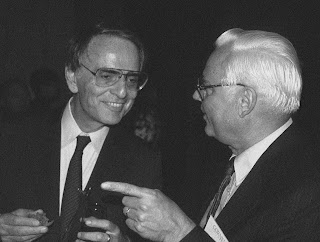
      • That experience led to my being invited in 1976 by that NASA Center to be part of a 20-professor team from across the nation on one of the first Search for Extraterrestrial Intelligence (SETI) initiatives, Project Orion, to detect an extrasolar planet (or exoplanet), that is, a planet revolving around another star, spearheaded by Barney Oliver and Jack Billingham. The first question asked of Cornell Professor Frank Drake was: “Extraterrestrial intelligence?  How do you know there are even other planets outside our solar system?” So the faculty group was tasked to design a system to accomplish this feat. Why me? Well, I had an idea on how to do this, plus I long harbored visions that the cure for cancer and the solution to world peace might be beaming unto Planet Earth from advanced civilizations.
        • Nobel Laureate Charles Townes had just come to the University of California at Berkeley, and had published a paper hinting that the potential for life on exoplanets could be determined by laser spiked starlight providing up to ten magnitudes of greater brilliance than the light that could be seen from telescopes.  
        • My contribution was to use a tunable laser as a key part of the system.
        • Our report to NASA was called, To See the Impossible Dream:  the Planetary Abstracting Trinterferometer (with an acronym of PAT), with a Man from La Mancha symbol on the cover, with a quote from Miguel de Cervantes:
                                  To Man, the Don Quixote of the Universe,
                                  May he succeed in his impossible dream.
        • Turned out that it was two decades years later, when extrasolar planet 51 Pegasi b was found by Michel Mayor and Didier Queloz, and they won the 2009 Nobel Prize in Physics.
        • Now, 6,298 exoplanets have been discovered across 4,700 different solar systems in the Universe.
    Something tells me that Part 2 will have several postings, for I went on to the Lawrence Livermore National Laboratory to work on laser fusion, the U.S. Senate, where I wrote the original legislation for hydrogen, my return to the University of Hawaii to help create the Pacific International Center for High Technology Research, my 15-year period as director of the Hawaii Natural Energy Institute, and formative period for the Blue Revolution.


    -

    Wednesday, March 20, 2024

    WE ARE IN TOKYO

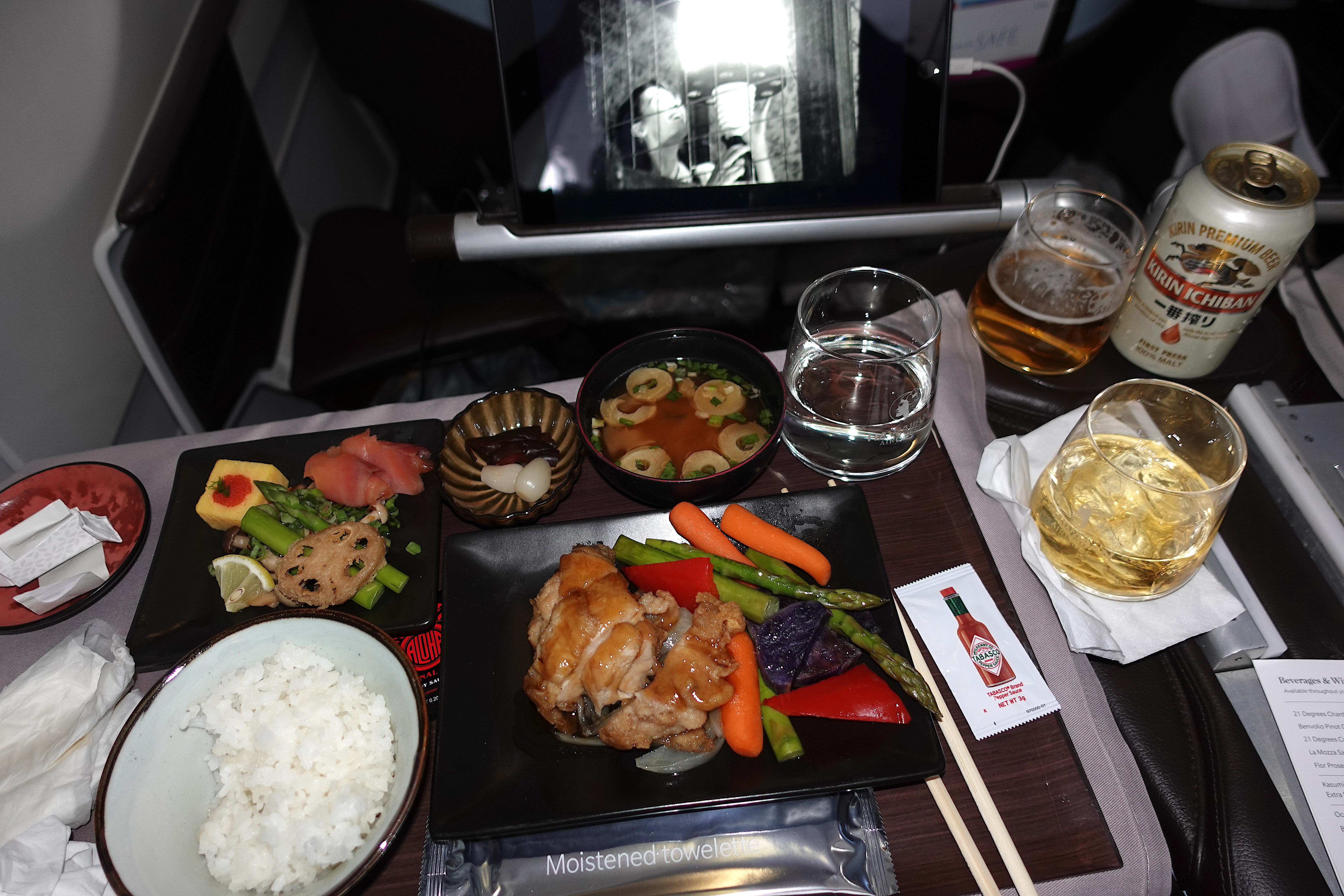
    Our flight to Tokyo on Hawaiian Airlines featured the ususal take-off view of Waikiki and Diamond Head.

    The food and service were great.  Started with prosecco, then went on to Johnny Walker Black, sake and Kirin Beer with a Japanese meal.  Followed by cheesecake, Bailey's and cognac.

    Saw three films.  Guy Richie's The Covenant, which got 83/98 ratings from Rotten Tomatoes, really good move, and Someone You Loved, a Korean romance film with a different kind of twist at the end.  Unexpected.
    The last one was Contact, but the iPad had to be turned off when the plane approached Haneda Airport, so I missed the last few minutes.
    • Left more questions about the reality, except that Jody Foster playing the role of a Search for Extraterrestial Intelligence (SETI) scientist, possibly went through a wormhole and returned back again, for this was recorded in 1's and 0's, but was classifed.
    • Could have been the premise for a second film.  
    • In any case, the 1997 film and 1985 book (by Carl Sagan) endings were different, and Sagan was an
      advisor to the production.  The concept of wormholes was suggested after the book was published, so was incorporated into the story for the movie
    • My Sunday posting is usually somewhat spiritual in nature, and this film attempts, like I do, to reconcile faith and science.
    • I have a special interest in the subject of SETI, for I once worked for the NASA Ames Research Center on the Orion Project, when Nobel laureate Charles Townes and I proposed a better way to detect extrasolar planets, and later when I was a Senate staff member, helped Sagan get the initial funding for this field.
    In any case, on the approach to Haneda Airport, I think that was Mount Fuji in the background.
    Turns out that the more official name is Tokyo International Airport at Haneda, or Tokyo-Haneda International Airport.
    We caught a cab to the Tokyo Westin for around $70.  The new executive club was still open, so we had a few drinks, salad, soup, nuts, cheese and other stuff.  Our view was of Tokyo Tower.

    Went to sleep at around 10PM, or 3AM Hawaii time.  Got up and saw Mount Fuji at dawn.
    Big day today, for we're off to view the cherry blossoms.  The, dinner tonight is at Robuchon's, located across the street just below our hotel room.  You can see both Mt. Fuji and that mansion where the restaurant is located.

    Read about various meals I've had there in the past.  If you keep scrolling, you will come to a Las Vegas Robuchon's.


    Yikes, we just had an earthquake.  The whole building shook.  I'll tomorrow report on how serious this was.  Tokyo has been on the brink of The Big One for a century now.
     -

    Saturday, October 9, 2021

    SEARCH FOR EXTRATERRESTRIAL INTELLIGENCE: Part One

    Scientist today are still not sure if any virus is actually alive.  Bacteria, yes, and so too humans.  All living forms are mostly water, from 60% in us to more than 90% in some plants.

    You might have thought that life needs oxygen, and most of us on Earth do.  However, some bacteria, such as E. coli, can survive on pure hydrogen.  This is crucial, for there is only 0.1% oxygen in the universe, but 92% hydrogen.  Thriving life has been found at a temperature above the boiling point of water.

    In 1877 Giovanni Schiaperelli of Italy mapped Mars, showing oceans and canals.  Somehow this nomenclature was mistakenly interpreted by some as evidence of life.  Percival Lowell of the U.S. in 1894, from observation he made, suggested that those canals were created by intelligent Martians to move water from ice caps.  H.G. Wells in 1898 then published War of the Worlds, launching a new genre of science fiction.  Then along came Orson Welles with his radio adaption in 1938 that panicked listeners.

    Then came an influx of films on invasion from Mars.  So many that there is a top ten.  #1?  Mars Attacks in 1996.  Rotten Tomatoes scores of 55/53.  But what a cast:  Jack Nicholson, Glenn Close, Pam Grier, Annette Bening, Pierce Brosnan, Danny Devito, Martin Short, Sarah Jessica Parker, Michael J. Fox, Rod Steiger, Tom Jones, Natalie Portman, Jim Brown, Jack Black and more...


    Enough of that.  More realistically:

    • We are trying to find life on Mars, and will send probes to Venus.  But these will almost surely fail.  
    • We can expand the search to extrasolar systems, but can you imagine the cost and time involved?  
      • Proxima Centauri is the closest, and a spacecraft the speed of light would take more than four years just to get there.  
      • The Parker Solar Probe was the fastest ever at 330,000 miles per hour.  At that speed, it would take almost 9000 years to get to Proxima Centauri.  9,000 years ago humanity was just transitioning from hunter-gatherer to farmer.  
      • In any case, the best potential exoplanet is something like one of the Glieses or Tau Cetis at 12 light years.  
      • Then you can try our neighboring galaxy, Andromeda, and your trip will be 2.5 million light years long...at the speed of light.
    So what is the conclusion?  Give up on space travel until someone finds a way to use a worm hole or some other exotic concept.

    So what do we do about finding life?  Forget microorganisms, hope that intelligent life is trying to contact us.

    This is where Frank Drakes' equation enters the discussion.  60 years ago, as a Cornell astronomer, he tossed together some possible factors to predict the number of advanced civilizations just in our Milky Way galaxy:

    You need to guess what the number is for each, so that when you do the calculations, you end up between one thousand and a hundred million civilizations.  

    Carl Sagan joined Drake at Cornell, and established the genre called the Search for Extraterrestrial Intelligence.  I joined these dreamers in 1976 on Project Orion at NASA's Ames Research Center, lived on the Stanford Campus adjacent to my freshman dormitory, and with Charles Townes, who was at Cal-Berkeley, designed a direct method to detect extrasolar planets.


    In those days no one had seen a planet outside our solar system.  We could have done it in a couple years, but didn't because NASA decided to only look in the microwave portion of the spectrum and chose indirect methods and transit to find them.  It took another 16 years in 1992 when the first was confirmed.  Thirty years later we are now approaching 5,000 extrasolar planets.


    We can now practically stop spending money on trying to find those exoplanets that show promise for harboring life, for it makes more sense to just detect possible signals coming from intelligent civilizations.  This what Project Cyclops attempted, run by Jack Billingham and Bernie Oliver, who became friends when I spent time at Ames.


    I later in the late '70's helped Carl Sagan gain initial funding for SETI when I worked in the U.S. Senate.  In 1997 came the movie Contact.  Rotten Tomatoes reviewers thought it was mediocre, rating it at 66, but audiences though better, with a 78.  Remains as one my favorites.


    In 1996 there was a blip of excitement when a so-called fragment of Mars was found in the Antarctic to harbor what looked like the remnant of a life form.  But Mars on Antarctica and wildly circumstantial evidence?  Come on.  Still actually controversial today.  More recently, phosphine was found in the atmosphere of Venus, which could only be there because of life.  However later measurements showed otherwise.


    Tomorrow, Part Two.

    -