Then There is Singapore
Singapore, with a population approaching 5 million with more than three-fourths third generation Chinese, is the closest thing to a benevolent dictatorship that calls itself a parliamentary democracy. First colonized by the British in 1819, it became an independent republic in 1965. It is the smallest country in Southeast Asia and the 18th wealthiest nation with an area about 3.5 times that of Washington, D.C. By all standards, Singapore is a remarkable marvel and deserves its reputation for order, prosperity and modernity. Like in Norway, everything works and is clean.
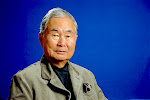
How did this happen? Lee Kuan Yew was its first prime minister in 1959, and his reign prospered until 1990, when he willingly stepped down at the age of 67. There is a president, but the PM runs the country. Lee’s eldest son, Hsien Loong, in 2004 became prime minister. The People’s Action Party has always controlled the politics. That continuity, clever planning and some ruthless control made the country. They set and meet goals.Singapore Airlines is the #1 airline, Changi Airport is always #1 or #2, the World Bank rates the country as #1 out of 175 in “doing business,” Foreign Policy Magazine ranks it #1 of 62 countries in globalization and Transparency International gives it a #5 (meaning good) rating among 163 countries in corruption.
While Singapore did not participate in the above (below, actually, in this blog) evaluation of 15 year olds, there is no great surprise, then, that their fourth and eighth grade students, in both math and science, ranked #1, followed by countries of the Orient: South Korea, Hong Kong, Chinese Taipei and Japan. The U.S. made it to #9 in 8th grade science. Maybe there is hope for the younger generation.
However, there is a reason why The Economist ranks Singapore as #84 out of 167 in their Index of Democracy and Reporters with Borders ranks them as #146 out of 168 in the Press Freedom Index. Singapore also has the highest execution rate per capita. Reference can be made to the tip of the iceberg represented in the Michael Fay case reported in Chapter 1.
There is a way any country can become the best, and Singapore has found a way to not only survive, but excel at it, through their form of government, whatever you want to call it. A book to read to gain understanding about the country is Economic Growth and Development in Singapore. Singapore, certainly, is worthy of consideration as the best place in the world to live, if you are willing to sacrifice some alienable civil rights...or was that inalienable.
-
The Dow Jones Industrials dropped 41 to 9779, while world markets, save for Hong Kong, all sank. Gold decreased $2/toz to $1005 and oil stayed at $70/barrel.
-
Except for a weak disturbance in the East Pacific, all is clear.
-



No comments:
Post a Comment