Total Pageviews

Sunday, August 8, 2010

*COUNTRY #150: JERSEY

Welcome, no, not New Jersey (population 8.4 million), but a tiny (#194) island, my 150th country to visit this site:


JERSEY POPULATION: 91,626


«  Previous Country | Next Country  »   Back to Top Countries
 Background
Jersey and the other Channel Islands represent the last remnants of the medieval Dukedom of Normandy that held sway in both France and England. These islands were the only British soil occupied by German troops in World War II. Jersey is a British crown dependency but is not part of the UK or of the European Union. However, the UK Government is constitutionally responsible for its defense and international representation.


Map data ©2010 AND, Geocentre Consulting, Tele Atlas - Terms of Use


Jersey is a U.K. dependency, and not really a country, but is counted by Google as a place.  It serves as sort of a corporate tax shelter location, but nothing compared to the British Virgin Islands, which has more than 500,000 registered offshore corporations.  Anyway, this means I have less than 50 entities left, and, maybe as few as 42.  Anyone reading this, please send to any contact you might have in the most exotic locale you can envision.  I would love to hear from them.  Refer your friends to:

http://planetearthandhumanity.blogspot.com

-
There are now five ocean storms being tracked, three in the Atlantic, none which looks particularly dangerous, although a disturbance did just pop up east of Florida, with computer models showing it to traipse over that state, then head for the Gulf spill area; one in the East Pacific, Tropical Storm Estelle; and a new one in the West Pacific, Tropical Typhoon Dianmu (Chinese goddess of thunder and lightning), now in the vicinity of Okinawa and headed for South Korea:


_
Visitors to this blog site:     46542
Visitors this week:                  620
Number of countries:             150

_

Saturday, August 7, 2010

THE BIOMETHANOL ECONOMY

As most of you know, I have a preference of methanol over ethanol, plug-in cars and hydrogen-powered vehicles.  I would like to share a letter I sent to John Bockris (who coined the term, The Hydrogen Economy, but is now also partial to methanol) and Irvin Barash, a Manhattan venture capitalist for the sustainables.  I don't think they will mind my showing my response to John's articulate case for methanol.  You can write to him ( jbockris@cox.net ) if you wish to learn more about his current thinking in this field.

Dear John and Irvin:

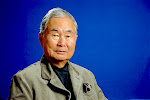
Excellent summary, John (photo on left).  You well-explained the case for biomethanol.  I even liked your insertion of future magic as part of the planning equation.

Let me further add these compelling points:

1.  Methanol is the ONLY liquid capable of reasonably efficiently being utilized by a fuel cell.  Other liquid fuels need first to be processed through an expensive reformer.

2.  In comparing a plug-in lithium battery car with one powered by a fuel cell, the latter will take the vehicle FIVE TIMES further.  This is why the Direct Methanol Fuel Cell will someday replace batteries for all portable applications.  Toshiba now markets this device.  Unfortunately, the USDOE remains somewhat allergic to developing the DMFC for transport applications.  I've blamed the Farm Lobby in the past, but there is more to this that I can't quite understand.

3.  A gallon of methanol has MORE ACCESSIBLE HYDROGEN than a gallon of liquid hydrogen.  In fact, 140% more.

It thus takes no particular vision to advance biomethanol as the mid-term replacement for gasoline, and a far better pathway through the rest of this century than a plug-in electric car, for the infrastructure is largely in place and economics seem sound.  The only technology absent is the DMFC, so a Manhattan Project for this widget is the solution.  Ultimately, the carbon for methanol will be absorbed from the atmosphere, but I think any commercial breakthrough is a century away.  That's Irvin to the right.

Hydrogen might someday play a role, but that is many generations away, and might never make any sense for ground transportation.  Hydrogen does have potential for sustainable aviation.

The question, then, is how to advance the biomethanol economy.  Irvin, the ball is in your court.

Aloha.

Pat

My dinner on the roof was greeted by a beautiful rainbow:

-
There remain three storms in the Atlantic, but none of them pose any threat to land.  Tropical Storm Estelle in the Pacific is up to 50 MPH, but not expected to strengthen much as she moves west:
-

Friday, August 6, 2010

THE STATE OF PLANET EARTH AND HUMANITY ON 6AUG2010

1.  ATOMIC BOMB OVER HIROSHIMA

     a.  Today is the 65th anniversary of Little Boy (above) over Hiroshima from the Enola Gay (B-29).  That Atomic Bomb involved the fission of U-235, where only 0.6 grams created the explosion of up to 18,000 tons of TNT.  This was the first time such a nuclear weapon was ever exploded, for Fat Man (below), dropped on Nagasaki three days later, and the earlier Trinity Test in New Mexico on July 16, involved Plutonium fission.  There was no pre-test for that uranium weapon because they had on hand so little enriched fuel. Little Boy was nearly 10 feet long, 28 inches in diameter and 8,800 pounds.  Ironically, part of the uranium came from Germany after VE Day on March 7.  Surely, they could not have had any advanced planning for that supply.  The Nagasaki A-Bomb, Fat Man, maybe named after Winston Churchill, but, more likely, Sidney Greenstreet, who appeared in all those Humphrey Bogart movies, was almost 11ft long, with a 5 ft diameter, weighing in at 10,200 pounds and with a yield of 21,000 tons of TNT.
It is estimated that 150,000 were killed in Hiroshima and 75,000 in Nagasaki.  The cenotaph now, though, lists 269,446 people, as every year, individuals are added where death was directly attributable to radiation poisoning from these bombs.


     b.  U.S. Ambassador to Japan John Roos attended the Hiroshima memorial ceremony, marking the very first time that an American official was ever present at this event. Ambassador Roos did not apologize because, while the facts are getting murkier, the official position was that Japan had vowed never to surrender, and the bomb saved American lives.  The current reality is that latest documents indicate some diplomatic treachery about America wanting to prolong this war, then changing our mind over the threat of an incoming Russia, for, indeed they declared war on Japan exactly on August 9, 1945.  According to the book by John McManus, General Douglas MacArthur told President Franklin Roosevelt as early in in January that Japan had asked to surrender.  Should peace have been reached then, there would have been no Iwo Jima (26,033 Americans killed) nor Okinawa (39,000 American dead, plus 109,000 Japanese), and, of course, no Hiroshima...no Nagasaki.


2.  GULF OIL SPILL AND BP: The capped BP well in the Gulf of Mexico has entered another continuing chapter.  Now, apparently, BP does not want to permanently seal the well, for there are 1.9 billion gallons left in that reservoir, and the Obama Administration will no doubt cave in and allow offshore drilling.  BP, learning something about PR, has decided to sell their rights, and want to make the sale as attractive as possible.  A further complicating factor is that BP will also want to destroy as much evidence as possible so that they can legally pass the blame to Halliburton and Transocean.  And you thought this was all over.  Finally, around 170,000 million gallons of oil leaked, which is more than 5 times that of the Alaskan Exxon Valdez spill.  However, 170,000 million gallons is what Americans use in two and a half hours.  All that agony over 2.5 hours???


3.  The Ground Zero mosque was approved.  Thomas Friedman has an excellent article on why this is good.  I agree with him.

4.  To no one's surprise, Elena Kagan was confirmed by the U.S. Senate.  She will be the fourth female of a total of 112 Supreme Court justices since the beginning.  As early as tomorrow, three of the nine will be women.  The conservatives will still have a 5-4 advantage. To no inside Democrat's surprise, Katherine Leonard will not be approved by the Hawaii Senate today to replace Hawaii Supreme Court Chief Justice Ronald Moon.  Just simple local politics.  All is not lost for Governor Linda Lingle, accept more of her face.  She can still appoint one of the remaining five candidates from the list of the Judicial Selection Commission.

5.  The $26 billion jobs bill will pass through Congress next week and be signed by President Obama.

6.  Slowly, but surely, any gay marriage ban will be reversed, as was the case in California this week.  Yes, Judge Vaughn Walker of the U.S. District Court for the Northern District of California is himself openly homosexual, but social standards are changing.  Perhaps another Constitutional amendment in the future?   Myself, I've long noticed that, while I can't quite yet appreciate how people can be so different, we are, and those who desire to to live with a person of the same sex for life  deserve to consummate a legal marriage.
The movie, The Kids are Alright, helped to further my understanding of what should be.  Part of this, I guess, is that I've become so disenchanted with the strictures of religion that much they advocate with zeal I now seem to be against.  Mind you, most of the morality principles are sound human traits, but issues such as abortion, cloning, evolution, gay marriage, women priests and the like just reveal the inability of churches to adjust to the times.

-
The Dow Jones Industrials fell 21 to 10,653, with world markets more down than up.  Gold jumped $12/toz to $1205 and crude oil is now under $81/barrel.

-
There are now two storms in the Pacific and three in the Atlantic.  Tropical Storm Estelle is moving to a point south of Baha and will go west.  The second one, just a disturbance, is further south and east.  In the Atlantic, that weakened disturbance is suddenly Tropical Storm Colin at 45 MPH, but moving north and EAST, so no threat to the eastern seaboard.  The other two are those I earlier mentioned as east of the Yucatan and north of South America heading west.

-

Thursday, August 5, 2010

OTEC AND HAWAII

The technology to power the Blue Revolution is ocean thermal energy conversion (OTEC).  Doug Carlson's OTEC blog carried a short article today, based on University of Hawaii's Gerard Nihous' article on the subject.  

The map that particularly caught my attention had to do with temperature:

  1.  Usually, in the northern hemisphere, temperature differentials (surface minus 1000 meter deep water in Celsius) increase from north to south.  This map indicates that Kauai and Oahu could well be better future OTEC sites than the Big Island, although there is that nice red band around Keahole Point.

  2.  This should have been intuitive, but it is true that the temperatures on the leeward side of an island are significantly higher than windward.  Thus, there seems to be at least a sub-optimal relationship between the placement of plantships relative to ocean depth and distance from land.  Of especial significance is that a 1 degree C higher differential can improve the net electricity production by 15%.  All this combined with the certainty that these floating facilities would have been be placed in these calmer lee waters anyway.

  3.  The fortuitous placement of islands and population centers in the middle of major oceans can thus serve as the bridge to a larger OTEC future, for initial commercial operations will start in the 10-100 MW range, then, as the technology improves, to mega 1000 MW plantships in the truly open ocean.  Yes, I have a feeling that this is, finally, The Dawn of the Blue Revolution.*

The Lockheed Martin five year plan for OTEC to supply Honolulu with baseload sustainable electricity and freshwater should certainly receive a boost with the above information.  What is OTEC?  Why Hawaii?  Watch Ted Johnson, leader of the LM team, articulate the future of OTEC and Hawaii.


* Reminder:  tonight at 6:30, my talk on the Blue Revolution at the Hanauma Bay Educational Center.

-
The Dow Jones Industrials edged down 5 to 10,675, while world markets were mixed and the Japan Nikkei had a healthy 165 jump to 9654.  Gold dropped a buck a troy ounce to $1196 and crude oil is at $82/barrel.  I should mention that the Chicago Mercantile Exchange has oil only at $95.59/barrel in December of 2018.  But how often have they been right eight years into the future?

-
There is now only one disturbance, in the East Pacific, and, if anything, possibly headed towards Baha rather than Hawaii.

-

Wednesday, August 4, 2010

THE BLUE REVOLUTION

I'm scheduled to provide a lecture on THE BLUE REVOLUTION tomorrow, Thursday, August 5, at 6:30PM, theater of the Hanauma Bay Educational Center.  I thought it would be appropriate to provide a quick summary of the concept.  Chapter 4 of SIMPLE SOLUTIONS for Planet Earth is so titled.

I first went to GOOGLE and typed in THE BLUE REVOLUTION.  At the top was THE BLUE REVOLUTION, an article from the New Internationalist.  However, the presentation was only on seafood.

The second entry was THE BLUE REVOLUTION by Scienceline.  Click on it and you receive a FORBIDDEN warning.  However, this is just a university portal which in this article talks about aquaculture.

The Promise of the Blue Revolution is a column by Jeffrey Sachs from Scientific American.  Again, only fish.

#4 was Blue Revolution by World Wide Words.  This one had only to do with drinking and irrigation water.

#5 is Blue Revolution, and the need for aquaculture to go green.

Finally, finally, #6 was Patrick Takahashi:  Blue Revolution, and clicking will lead to my second HuffPosting on the subject.  It specifically indicated that I (really, Leighton Chong, Chief Counsel for the Blue Revolution) trademarked (77/452663) the term.  A fuller treatment of the system can also be found in the Huffington Post as The Dawn of the Blue Revolution.

What this comes down to, I guess, is that The Blue Revolution is not a hot topic today.  I'm not referring to a DVD or a baby stroller.  If anything, with the Gulf Oil Spill, the overwhelming mandate today is to preserve, not develop, the ocean.  Otherwise, almost all references  to utilizing the seas around us pinpoint seafood or freshwater as the commodity.

My Blue Revolution is a full cornucopia of bioproducts, plus the potential of environmental remediation.  What exactly is this?  Well, you need to come to my lecture, or click on those articles above.

OH, HAPPY 49TH BIRTHDAY, MR. PRESIDENT!  David Plouffe reports to me and the world that more than a million have already signed a special birthday card, and it is still not too late.  Go to the Happy Birthday Barack web page.  It just occurred to me that I've never seen him in an aloha shirt.

-
The Dow Jones Industrials went up 44 to 10,690, with world markets also mostly increasing, save for the Japan Nikkei, sinking 205 to 9489.  Gold moved positively by $4/toz to $1194 and crude oil remained at $82/barrel.

-
That disturbance in the Caribbean remains iffy, but there are now two spots in the East Pacific, way south of Baha, and the other further east, both tentative, and currently projected to go anywhere from Mexico to Hawaii.

-

Tuesday, August 3, 2010

THE BEST PLACE IN THE WORLD (Part 7): Papua New Guinea

The following continues the serialization of Chapter 6 from SIMPLE SOLUTIONS for Humanity.  Again, don't be fooled by the above title.  Bombay, Moscow and Papua New Guinea are not my idea of terrific places.


My Adventures in Papua New Guinea


I traveled to the Independent State of Papua New Guinea (PNG) in 1989, no doubt one of the three most stressful experiences of my life. Most of what follows comes from pure memory, although I do keep files of all my trips, and I did obtain a conference proceedings of why I went there. The reason why I went had to do with a professor friend from Michigan who convinced me that I should give a talk at his energy conference in PNG, where he had temporarily moved.

To bring you up to date, PNG, located in the southwest Pacific Ocean just north of Australia and south of the equator, has a current population of 5.5 (now up to 6 in 2010) million with 600 islands and the land area the size of California. Port Moresby, the capital, has about a third of a million people and Lae of something just below 100,000. It is a constitutional monarchy, meaning that they recognize the Queen of England as their head of state, with an elected parliamentary democracy, and they mostly deal with Australia. “For each village, a different culture,” is an apt folk saying, as there are some 800 languages spoken. It is rich in natural mineral resources, and could well increase in importance because fossil fuel deposits are yet largely untapped. Interesting that Exxon Mobile and Chevron Texaco abandoned operations there, but I think I know why. Read on.  (Actually, as of 2010, they are both back...mostly for natural gas.)

The U.S. State Department now has online security information for Americans traveling abroad. This was not available then. Visitors in 2006 were warned, don’t go to PNG. Many incidents of assaults and robbery occur in Port Moresby and Lae, and individuals are especially at high risk.  Golf courses, parks and beaches are to be avoided, as are taxis and buses. In May 2006, the Australian government was a bit more descriptive, underscoring that there are high levels of serious crime, especially in Lae.  PNG is only #12 in murders/capita (U.S. is #24), and is not in the bottom of 10 of worst countries (#148 of 182 countries) according to the United Nations, but it is not a pleasant place to visit.

It was worse in 1989. A rebellion was running rampant on Bougainville Island and there was a series of no confidence votes against the government.

This visit should have taught me a lesson of never going anywhere unless you know where you are going. But there were extenuating circumstances. There was some combination of Nejat Veziroglu and F. Welt involved with the planning for the gathering in Lae, PNG. My original response was, no, sorry, can’t make it, but thanks for asking.  But persistence sometimes pays, and at the last moment, as the travel reimbursement seemed unusually attractive, I made a late booking and found myself going through customs at Jackson International Airport in Port Moresby.

As I was picking up my suitcase, I noticed a sign saying, “Don’t enter the country if you have not taken Malaria precautions!” My initial reaction was, whoa, go home. But I had to physically proceed through the process to get out, and the customs official asked me about my visa. Aha, I thought, become an arrogant American and let them kick you out. I had a good excuse, for I did not know I needed a visa. At least I could report to the conference sponsors the “I tried” part. I said, “I am an important speaker from the United States and you must let me through even though I don’t have a visa.” He said, “okay,” and I could not think quickly enough to irritate him any further.

After the hour flight to Lae on Air Niugini, I was picked up at the airport by conference planners. Professor S. L. Hall, Head of the Mechanical Engineering Department at the University of Technology from Australia, was on the plane. She casually mentioned that the president of Papua New Guinea University of Technology in Lae was the brother in law of the current head of state, and there was a move to evict him by the opposition party. At the hotel, over drinks, we were told don’t walk around in town, not even in the daytime. And don’t think of doing that at night. There are marauding packs called Rascals, who are mostly cannibals from the jungle who can’t find jobs in town and must rob and kill to stay alive. I thought they were exaggerating, but no one was smiling.

What really caught my attention, though, was when I mentioned that I had not bothered with malaria precautions and asked, “just how serious was it?” One of them dropped his drink and the others, wide-eyed, expressed alarm. First, Lae is a lot wetter than Port Moresby, and the problem is amplified here. Second, it was too late. Third, those trying to prevent malaria as a resident by taking medication can go blind.  However, S.L. (don’t remember her first name) gave me a bunch of pills and said, all things concerned, it might help. I asked one of them about the getting blind part and asked for some details. He said he decided not to take that chance, the blind chance. So, he had malaria.

I went back to my room and only then saw that can of insecticide and black splotches on the wall. I was so exhausted after a flight that took more than 30 hours that I quickly fell asleep.

We were picked up the next morning and taken to the conference, which was held in an open auditorium with a roof. As I was glancing at the program, a strange brown mosquito wafted unto the page. Before I could panic, it flew off somewhere. Just then, the moderator opened the program and mentioned that some of the out of country conferees might be concerned about malaria. He said not to worry, for the only mosquitoes to give you malaria suck you just around sunset.  And don’t worry about the male of the species. He was trying some humor. I later learned that there are various anopheles varieties capable of inflicting this disease, and they sort of look like those found in Hawaii.

I made one of those command decisions, and this time, to be smart and decisive about it. I remembered that someone in my family was sick with something more serious than a cold and went up to my friend the organizer, F. Welt, and said that I noticed my talk was to be at the banquet two days away. Unfortunately, there was a sickness in the family and I had to leave first thing tomorrow, so could I give my talk today. This was not an outright lie, but close. After some anguishing and discussions, we agreed on my presenting my message at the morning session the next day so I could catch a noon flight to Port Moresby and connect to a Quantas flight to Brisbane. He would be glad to make the adjustments for me. It was difficult for me to disagree with this kind of cooperation.  So I was stuck at least a second night.

The foreign guests were invited to dinner at one of the professor’s home after the end of the meetings that day. We dawdled around for a while and walked to his residence. He was not there. No one was there. After waiting for an hour, I noticed that dusk was approaching, and imagined that those malaria mosquitoes were readying themselves for their evening meal. Then the family returned with groceries. Waiting outside did not matter much because the home was open to the elements. At some point a siren sounded and the local staff began to exhibit a high sense of anxiety. Finally, a phone call came and we were “reassured” that the problem was that students advocating the fall of their university president had invaded the faculty club and had stolen all the liquor. In addition, there was a riot in town and those with hotel rooms there were told to remain overnight at this home. The campus was a barbed-wire enclosure, not unlike a jail.

Unexpectedly, at about 10 PM, a government official showed up in an open air jeep and said that he would take S.L. and me back to the hotel. They were more apprehensive about her, being female. I asked, what about those rioting protesters, and he said he thinks we’re covered, as he had a case of beer in the back and if a group attacks us, we give them the beer. He was serious. But we made it back without incident.

The next morning, I gave my talk and was rushed to the airport. The plane was late. I was worried about the connecting flight, for if we left at noon, the 1:30 connecting flight time seemed awfully close. The uneasy state of politics was such that this was to be the last plane out of New Guinea that day. I was told that on Fridays (which it was) those who worked get paid, and become drunk and dangerous. Whatever happens, they said, don’t get stranded at the airport.  

Finally at 12:30 PM the plane came and immediately left with me. We landed at Jackson at 1:35 and that Quantas plane was still there. I grabbed my luggage and began running to the plane…but was told I first had to go through customs. Well, it took a long time to clear, as first, they wondered about my visa. Finally, finally, I was allowed to board the flight. It turned out the airline was waiting just for me, and till today, I have joyful feelings about Quantas. Brisbane is, maybe, among the most boring cities in the world. Those three days there were about the best I spent anywhere in my life. This is part of the reason why Australia is way up there as among the best places to live. However, scratch PNG from the list.

There are now eight sunbursts in bloom on the roof:


-
The Dow Jones Industrials dropped 38 to 10,636, while world markets were mixed.  Gold went up $7/toz to $1190 and crude oil is now up to $82/barrel.

-
Tropical Storm Colin is up to 40 MPH, and is headed for the Eastern Seaboard.  However, all indications that it will weaken over the next few days.  There is, though, a second disturbance that just appeared, and at this early stage, could read the Gulf of Mexico.


There is a disturbance in the East Pacific, but it does not look threatening.

-

Monday, August 2, 2010

COOLING AT CLIMATE CHANGE AND TURNING AT WIND MILLS

Two interesting items have been accumulating on my desk worthy of sharing:

1.  I've been railing for years that our Congress won't pass a useful energy/climate package until either oil prices skyrocket again or tens of millions die one hot summer.  I'm more and more inclined to believe that the latter will not occur, for global warming is a slow process, maybe up 3 F by the year 2100.  There is that danger of a cascade effect as precipitated by THE VENUS SYNDROME, of course, but chances are, we will just become a lot more uncomfortable.  Let's take Baghdad, for example.  Today, the temperature only went up to 116 F, will dip down to 113 as the high tomorrow, but will rise again to 116 on Thursday.  The U.S. opened a swimming pool a couple of years ago in Zawra Park, which was a hit.  However, picture being at these temperatures in the middle of the afternoon, as I was in Las Vegas a couple of years ago and there is a blackout.  No problem, we just went to a casino, which had their own power facility.  A small child or very elderly person just would not have survived if there was no option...I think.  Well, maybe they can get used to this condition because Baghdad is noted for spotty electricity.  They too have young and old people and you can see what some them wear on the streets of Baghadad:

They just find a way to continue living.  So, if the Greenhouse Effect descends with a vengeance this month, first, very few population locations will experience 100 F + temperatures.  Even those at 116 F will find a way to cope.  I don't think tens of millions will ever perish from a truly hot summer.


2.  The 10 MW Brittania offshore wind turbine above will be turning in 2013.  The current largest windmill is located at Emden, Germany, 413 feet tip to tip blades and rated at 7 MW.  This system would power close to 2000 homes in the USA.  The Arup/Rolls Royce/Shell/BP "Aerogenerator" scheduled to be built along the northeast coast of England will have blades 900 feet across--three football fields.  I still remember that it was in 1987 when Hawaiian Electric (the $58 million largely paid for by the Department of Energy and the National Aeronautics and Space Administration) dedicated their 3.2 MW MOD 5B Boeing wind machine with a propeller diameter of 420 feet.  I felt that my life was being threatened by the whoosh of the rotation. It was frightening.  This was Boeing's last wind system.  The technology and materials were not good enough and the relative low cost of oil ($20/barrel in 1987, which dropped even further into the late 1990's)  killed the field for more than a decade.  Note that the Emden and Hawaii wind energy conversion devices are similar, except the former has three blades and latter had two.  The rated power means nothing, for this all depends on what wind speed you are talking about, as the power varies with the cube of the velocity.  Thus, the same wind mill that can generate 1 MW at 10 MPH would produce 8 MW at 20 MPH.  I expect the German system to get, maybe, at best, half, and probably average only a third (because a two-bladed machine is more efficient than one with 3 blades) the announced 7 MW when the wind is blowing. 

Where is General Electric, which "invented" the modern wind mill?  Well, in June they announced their intent to build four 4MW wind systems....in Scandinavia!  An investment of nearly half a billion dollars!  Finally we are exporting wind mills to Europe (that photo on the left shows these turbines operating in Germany), plus, last year GE committed to 368 2.5 MW wind energy conversion systems for a $2 billion Oregon wind farm.

The latest world's largest wind project has been initiated (as opposed to "only" announced) at Tehachapi Pass in California.  Terra-Gen Power and the Alta Wind Energy Center will install 300 turbines at a cost of $1.2 billion...pending action by Congress.

Aside from hydroelectric power (which will not expand much anymore), WIND and GEOTHERMAL POWER ARE THE ONLY RENEWABLES COMPETITIVE WITH COAL AND NUCLEAR ELECTRICITY.  Solar photovoltaics reman two to three times those costs, and solar thermal, maybe about double.

Well, all the above reads well.  The reality is that wind power is in the doldrums, for the American Wind Energy Association reports that 1239 MW of wind systems were installed in the first half of the year, and this is 71% below that of 2009.  The prognosis for next year is worse, as there is huge uncertainty on Congressional policy for incentives, plus the continuing economic downturn, which seems not to be improving much.


Governments the world over provided around $45 billion to renewable energy technologies in 2009.  Terrific?  Well, no.  Fossil fuel subsidies got $557 billion in 2008, reported the International Energy Agency.  (You might want to click on Green Scissors to gain some details on misplaced priorities, courtesy of Madeleine Austin.)
-
The Dow Jones Industrials surged 208 to 10,674, with world markets, save for Canada, also up.  Something to do with strong manufacturing and bank numbers.  Gold was up a buck per troy ounce to $1182 and crude oil is up to $81/barrel.

-
That disturbance in the Atlantic is now taking shape, and continues to head for the Eastern Seaboard, while that spot below Hawaii seems to be dissipating.

-

Sunday, August 1, 2010

*THE BEST PLACE IN THE WORLD (Part 6): MOSCOW

The following continues the serialization of Chapter 6 from SIMPLE SOLUTIONS for Humanity.  Mind you, Part 5 looks like Bombay (Mumbai), and today, Moscow, are being touted as among the best places.  Nope, I'm starting with particularly terrible locations I've experience, those certainly not being considered among the elite best.


Moscow was an Experience


The 7th World Hydrogen Energy Conference was held in Moscow in September of 1988. With my wife and several of my staff in the travel party, we flew first to London, then on to Moscow. David Block, director of Florida Solar Energy Center, and his wife Sharon, also attended, and joined us on our trip back. We stayed at the Hotel Rossia, then, the largest hotel in the world with 5,000 rooms. Picture a gigantic World War I military barracks and you get a sense of the accommodations.  However, the rooms were really cheap.  How cheap?  I don't remember, but I just went to Google and found the hotel was shut down in 2006.

From the first morning session to the final at the end, the conference room was packed with mostly Russians. I guess in those days anyone who received permission to join the meeting felt committed to be present at all times. In other worldwide technical conferences, many times the speakers were the only ones in attendance, and by the last gathering, most would have left town.

There was one incident where our group missed our subway stop and got lost. We walked up to the street level, and a very nice gentleman in a black leather jacket topped with a furry cap inquired if we needed help. We explained our plight and he so courteously guided us back down and, even, paid for our trip to the correct stop. I later learned that he worked for the KGB.

The one factor still sticking with me, though, is that all the Soviet delegates were very cordial and competent. The Seoul Olympics were being held at the same time, and one morning, a Russian scientists came up to us and painfully reported that they had beaten the American basketball team, eliminating us from the gold medal. It wasn’t sarcasm. He truly felt terrible that they had won.

However, the food was dreadful (the best vodka and caviar were exported). We pretty much were forced to eat at the conference and hotel, featuring rubber chicken and cold oil slabs. There were no such things as restaurants then.

We had one final ghastly experience, but, nothing like what was to come in Cairo. There were no real lines at the airport. You had to fight to get to the window for changing money and the like.

We boarded Aeroflot, which took me back to those movies of World War II bombers. Well, we made it to East Berlin, and were able view a tad of this grayish town before checking through to West Berlin, almost like Dorothy stepping from the black and white of Kansas to the colored land of Oz. After a couple of days, we picked up two cars and drove through the corridor to the real West Germany. We were twice stopped by the East German police: first, for missing a turnoff, and a second time, for pausing at a rest stop, but where buses are supposed to park. Totally unnerved by then, at the gate to freedom, we passed on six passports, but the guard counted seven people, so there was a frantic search, only because I had dropped one on the floor of the van. We then found our way to Kiel, a picturesque harbor town. The rest of the trip was wonderful, but uneventful. Moscow is never on a list of best places to live, for good reason.

-
There is a new storm in the Atlantic projected to bypass the Caribbean and head toward the Carolinas.  That Pacific disturbance now seems inclined to move west considerably south of Hawaii.

-
Number of visitors to this blog site       45,922

Visitors this week                                      546

Number of countries                                 149

-