
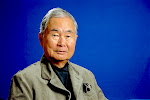
- I'm 86 years old, healthy and happy.
- I have not yet spent a night as a patient in any hospital.
- I've had two personal relationships that were important to what I am today. I'll keep these private.
- I've accumulated more than 3 million air miles, mostly on Star Alliance.
- Been on a dozen, or two, cruises.

- Have had maybe 15 around the world trips.
- Written five books.
- Worked on the Search for Extraterrestrial Intelligence for NASA.
- Wrote the the legislation that became law for hydrogen when I worked in the U.S. Senate.
- In my 27th year of retirement.


In a way, though, that thought has driven me through most of my life. The first time was when I was a junior in high school.
 That was 70 years ago.
- Through all of my life as a student, I was just above average. In my sophomore year at McKinley High School in Honolulu I was not in the top English/Social Studies class.
- I have noticed that I don't one day just try something new. Something traumatic needs to happen to my life to kick me out of my normal ennui. In 1956 my family got evicted from our home in Kakaako by Ward Estates when they began to develop what is now Ward Village.


- We moved to Kalihi, and I had to catch a bus my final two years at McKinley.

- In my junior year, I had two fabulous teachers, Mildred Kosaki in English/Social Studies (I must have done reasonably well in my sophomore year because I was promoted to this top junior class) and Sueko Hirokawa in the sciences. I have a posting about these two teachers, titled CROSSROADS: Stanford University.
- This article also traced why I chose to even try to get into Stanford.

- A second trauma occurred, breaking my wrist, which led me into more magic.
- I end with the rest of this story from that posting.


An incredible series of luck helped. First, my family was forced to move away from Kakaako at the end of my sophomore year at McKinley. (This was the necessary trauma.) My gang was just a bunch of loyal friends. There was a dozen of us and by the time everyone got together we were almost always late to our home rooms. This meant we were penalized by being kept after school for an hour. Frankly, there was nothing in their attitude that compromised my studies, but the physical separation I think was a factor in changing my general attitude about my future.

Second, students (from public schools in Honolulu) normally worked in the pineapple cannery between their junior and senior years. I broke my wrist playing basketball in April. (The trauma.) This resulted in, perhaps, two most important consequences:
- I had never run for any kind of office in my life (and since then never did again). I don't know how this happened, but I found myself campaigning for Senior Class vice president against three females, one who was heavily favored, and went on to later becoming Narcissus Queen. The combination of gender ratio advantage and the cast on my wrist was just enough for me to prevail. As vice president I also was to become chairman of the commencement and a bunch of other leadership roles.
- As I couldn't work in the cannery, I decided to memorize the words in a guide on how to do well on the Scholastic Aptitude Test. After just a couple of months of this intensive activity, my verbal score improved from the 200's to high 600's, with my math score close to 800, the maximum.

In my sophomore year some of my friends on the tennis team asked me to join them, as they were short of members. Never having played before, from the end of my sophomore year to much of my senior year I must have spent 690 out of 700 days on the courts, which was the norm for the group. In those days McKinley and Roosevelt were the only public schools competing against Punahou, Iolani, Kamehameha and Mid-Pac. Those private schools gave tennis scholarships, so we should have had no real chance of beating them. But we did, and by, again, a fate of luck, I was the third singles, which meant I was the fifth best player on the team, as the third and fourth served as the first doubles. Each private school only had a few scholarship players, and when it came to their fifth best, they were no better than I was. So I proceeded to win most of my matches, if not all of them, even though I would not have been able to beat the top players from McKinley. (This was the only athletic activity I had in my Stanford application form. This box had to be checked.)

While in my sophomore year I was a below average student, by the end of my senior year, I was among the best students in the state, for I went on to win various honors, like the Bausch and Lomb Science medal, an Elks Scholarship, a Science Fair award, had both a poem and an essay published in a national anthology and carried pretty much a straight A average.
A school like Stanford not only looks at your grade average and SAT scores. The extra-curricula activities are maybe more important. It was not like in high school I had reached a certain crossroad and dedicated my life to accumulating all these impacting factors like class officership, success on my tennis team and high college board scores. Those things, mostly through luck and circumstances, just happened. (Again, traumas and acts of magic.)


Thus, I never even bothered to apply to the University of Hawaii. I just took a chance on Stanford and the California Institute of Technology. CalTech accepted me, and that was my first choice, for they only accepted around 250/year and was generally considered to be the most difficult school to get into. However, their financial package was limited. Luckily, Stanford provided a full scholarship with tuition waiver, room and board paid and a part time job working in the library. In follow-up discussions with teachers and counselors I picked Stanford. CalTech would have led me into a totally different way of life.

If I had at the beginning analyzed the reality and also the economics of going away to college, any kind of common sense would have convinced me to stay home for college. This experience of shooting for the best against all odds, and succeeding, changed my whole life attitude. Then, graduating from Stanford provided the most important payoff: CONFIDENCE.

Even worked on laser fusion at the Lawrence Livermore National Laboratory. But my time there was just another eventual act of magic.

A lot more magic after I graduated, which could form the basis of a future posting. A more recent bit of magic was moving into 15 Craigside, a senior's community.
- I've now been here 12 years.
- Life is secure and comfortable.
- Here is our meal schedule for this week.

- Not quite CHOCOLATE, CAVIAR, FOIE GRAS AND TRUFFLES EXTRAVAGANZA ON THE SILVER WHISPER, the title of a day on our cruise from which we returned earlier this month. And I should add champagne, vodka, wine and more.


- But too much of that kind of food is just good for my body. The five-week trip we took to the Total Solar Eclipse in Iceland and Greenland resulted in my gaining 12 pounds, which I was shocked to learn was physically possible for me. How did that trip go?


- The good news is that through simple dieting, still consuming meals like what you see above, plus a lot of soup and salad meals, I lost 12.5 pounds in 9 days at 15 Craigside. By all measures, this was like magic, for I didn't think this was attainable.

- I also found out why my knees ached when I walked. I was too heavy. The pain went away when I lost 12.5 pounds. Can you image how much added stress carrying a ten pound bag of sugar, and two additional pounds, can do to your joints?
- My next bit of magic?

To close, a few cartoons from the Stanford Daily.


Stanford and Cal Berkely are close rivals.


-



No comments:
Post a Comment